
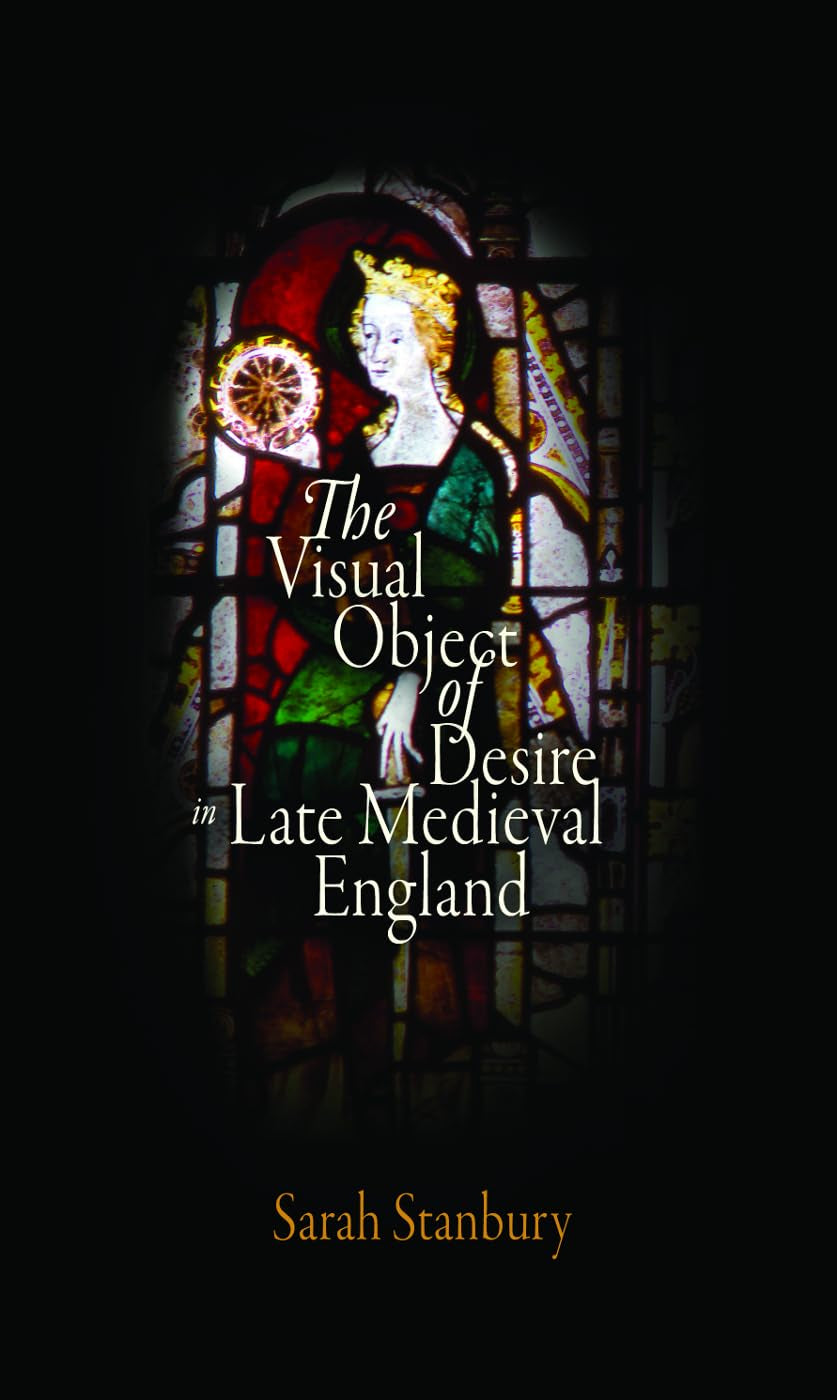
Title
The Visual Object Of Desire In Late Medieval England (The Middle Ages Series),Used
Sold by Ergodebooks, an authorized reseller.
Returns accepted within 30 days | support@ergodebooks.com
Shipping Information
- Free Standard Shipping — United States only
- Processing Time: 3–5 business days
- Estimated Delivery: 6–10 business days after dispatch
- Double-boxed, fully insured & discreetly packaged
- Tracking number sent via email once dispatched
Returns & Refund
Returns accepted within 30 days of delivery.
Damaged or Defective Item
Free return shipping + replacement or full refund
Wrong Item Received
Free return shipping + replacement or full refund
Change of Mind
Return shipping at customer's expense · 25% restocking fee applies
Payment Option

Little remains of the rich visual culture of late medieval English piety. The century and a half leading up to the Reformation had seen an unparalleled growth of devotional arts, as chapels, parish churches, and cathedrals came to be filled with images in stone, wood, alabaster, glass, embroidery, and paint of newly personalized saints, angels, and the Holy Family. But much of this fell victim to the Royal Injunctions of September 1538, when parish officials were ordered to remove images from their churches.In this highly insightful book Sarah Stanbury explores the lost traffic in images in late medieval England and its impact on contemporary authors and artists. For Chaucer, Nicholas Love, and Margery Kempe, the image debate provides an urgent language for exploring the demands of a material devotional culturethough these writers by no means agree on the ethics of those demands. The chronicler Henry Knighton invoked a statue of St. Katherine to illustrate a lurid story about imagebreaking Lollards. Later John Capgrave wrote a long Katherine legend that comments, through the drama of a saint in action, on the powers and uses of religious images. As Stanbury contends, England in the late Middle Ages was keenly attuned to and troubled by its 'culture of the spectacle,' whether this spectacle took the form of a newly made queen in Chaucer's Clerk's Tale or of the animate Christ in Norwich Cathedral's Despenser Retable. In picturing images and icons, these texts were responding to reformist controversies as well as to the social and economic demands of things themselves, the provocative objects that made up the fabric of ritual life.
⚠️ WARNING (California Proposition 65):
This product may contain chemicals known to the State of California to cause cancer, birth defects, or other reproductive harm.
For more information, please visit www.P65Warnings.ca.gov.