If you have any questions, you are always welcome to contact us. We'll get back to you as soon as possible, withing 24 hours on weekdays.
Customer service
All questions about your order, return and delivery must be sent to our customer service team by e-mail at yourstore@yourdomain.com
Sale & Press
If you are interested in selling our products, need more information about our brand or wish to make a collaboration, please contact us at press@yourdomain.com
Help
If you have any questions, you are always welcome to contact us. We'll get back to you as soon as possible, withing 24 hours on weekdays.
Customer service
All questions about your order, return and delivery must be sent to our customer service team by e-mail at yourstore@yourdomain.com
Sale & Press
If you are interested in selling our products, need more information about our brand or wish to make a collaboration, please contact us at press@yourdomain.com
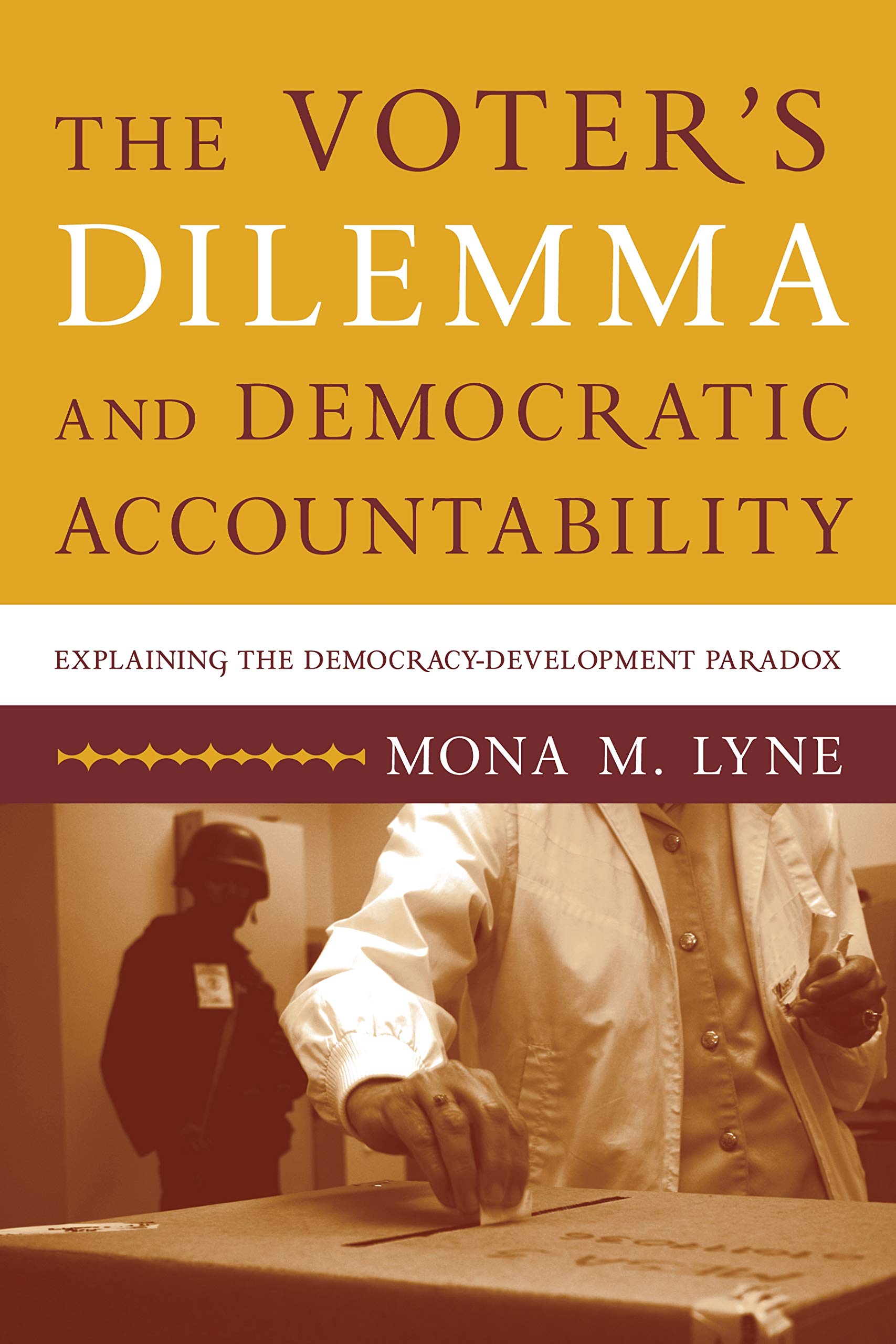
Why do some democracies adopt effective development policies while others remain mired in stagnation or suffer cyclic crises? Previous studies have emphasized poverty or institutional weakness, but weak accountability and development failure are not limited to lowincome countries or to any specific institutional choices. A better explanation, Mona Lyne argues, is provided by her theory of the voters dilemma: where structural conditions render quid pro quo, or clientelistic, politics viable on a national scale, voters have insufficient incentive to support politicians promising national public goods policies. Under these conditions, Lyne argues, electoral accountability falls prey to the same nperson prisoners dilemma that plagues any other largescale decentralized attempt to procure collective goods. The theory is tested through an examination of four prominent cases. A comparison of postwar Brazil and preChvez Venezuela shows that clientelism debilitated both countries postwar development programs, despite Venezuelas historically strong institutions and abundant oil revenues. Two comparisonsone between contemporary Brazil and preChvez Venezuela, and another between postwar and contemporary Brazilhighlight factors that reduce the risks of rejecting clientelism as providing the best account of contemporary Brazils success. Finally, a comparison of preChvez and contemporary Venezuela explains the continuity in flawed institutional and policy choices as a result of continuity in clientelistic politics driven by the voters dilemma.
⚠️ WARNING (California Proposition 65):
This product may contain chemicals known to the State of California to cause cancer,
birth defects, or other reproductive harm.
For MAP (Minimum Advertised Price) violations and Intellectual Property (IP) or Trademark concerns, please contact:
support@ergodebooks.com
⚠️ California Proposition 65 Warning: Some products sold on this website may expose you to chemicals known to the State of California to cause cancer, birth defects, or other reproductive harm. For more information, visit www.P65Warnings.ca.gov.