
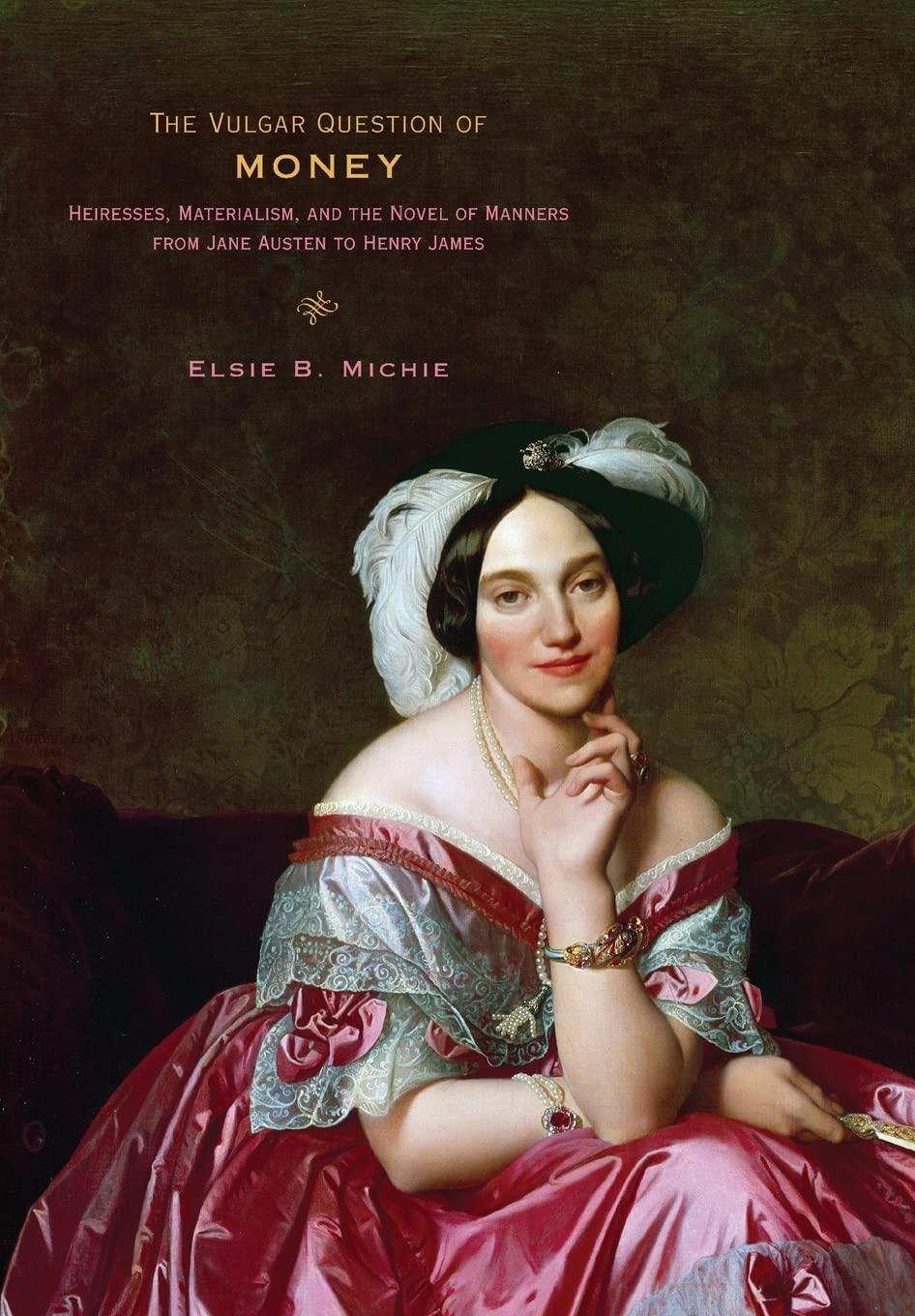
Title
The Vulgar Question Of Money: Heiresses, Materialism, And The Novel Of Manners From Jane Austen To Henry James
Sold by Ergodebooks, an authorized reseller.
Returns accepted within 30 days | support@ergodebooks.com
Shipping Information
- Free Standard Shipping — United States only
- Processing Time: 3–5 business days
- Estimated Delivery: 6–10 business days after dispatch
- Double-boxed, fully insured & discreetly packaged
- Tracking number sent via email once dispatched
Returns & Refund
Returns accepted within 30 days of delivery.
Damaged or Defective Item
Free return shipping + replacement or full refund
Wrong Item Received
Free return shipping + replacement or full refund
Change of Mind
Return shipping at customer's expense · 25% restocking fee applies
Payment Option

It Is A Familiar Story Line In Nineteenthcentury English Novels: A Hero Must Choose Between Money And Love, Between The Wealthy, Materialistic, Statusconscious Woman Who Could Enhance His Social Position And The Poorer, Altruistic, Independentminded Woman Whom He Loves. Elsie B. Michie Explains What This Common Marriage Plot Reveals About Changing Reactions To Money In British Culture.It Was In The Novel That Writers Found Space To Articulate The Anxieties Surrounding Money That Developed Along With The Rise Of Capitalism In Nineteenthcentury England. Michie Focuses In Particular On The Character Of The Wealthy Heiress And How She, Unlike Her Male Counterpart, Represents The Tensions In British Society Between The Desire For Wealth And Advancement And The Fear That Economic Development Would Blur The Traditional Boundaries Of Social Classes.Michie Explores How Novelists Of The Period Captured With Particular Vividness Englands Ambivalent Emotional Responses To Its Own Financial Successes And Engaged Questions Identical To Those Raised By Political Economists And Moral Philosophers. Each Chapter Reads A Novelist Alongside A Contemporary Thinker, Tracing The Development Of Capitalism In Britain: Jane Austen And Adam Smith And The Rise Of Commercial Society, Frances Trollope And Thomas Robert Malthus And Industrialism, Anthony Trollope And Walter Bagehot And The Political Influence Of Money, Margaret Oliphant And John Stuart Mill And Professionalism And Managerial Capitalism, And Henry James And Georg Simmel And The Shift Of Economic Dominance From England To America.Even The Great Romantic Novels Of The Nineteenth Century Cannot Disentangle Themselves From The Vulgar Question Of Money. Michies Fresh Reading Of The Marriage Plot, And The Choice Between Two Women At Its Heart, Shows It To Be As Much About Politics And Economics As It Is About Personal Choice.
⚠️ WARNING (California Proposition 65):
This product may contain chemicals known to the State of California to cause cancer, birth defects, or other reproductive harm.
For more information, please visit www.P65Warnings.ca.gov.
- Q: How many pages does the book have? A: This book has three hundred twenty pages. It offers an in-depth exploration of the themes of money and love in nineteenth-century English novels.
- Q: What is the binding type of this book? A: The book is bound in hardcover. This durable binding is ideal for frequent handling and ensures longevity.
- Q: What are the dimensions of the book? A: The book measures six inches in length, nine inches in height, and zero point nine two inches in width. These dimensions make it easy to handle and store.
- Q: Who is the author of this book? A: The author of this book is Elsie B. Michie. She provides a critical analysis of money and social class in literature.
- Q: What genre does this book belong to? A: This book falls under the genre of Criticism and Theory. It critiques the intersection of economics and literature in the nineteenth century.
- Q: Is this book suitable for academic use? A: Yes, this book is suitable for academic use. Its scholarly analysis and critical perspectives make it valuable for students and researchers.
- Q: How should I care for this book? A: To care for this book, store it upright in a cool, dry place. Avoid exposing it to direct sunlight to preserve the cover and pages.
- Q: Can this book be easily damaged? A: Hardcover books are generally more resistant to damage. However, it's important to handle it carefully to avoid wear and tear.
- Q: Is this book appropriate for young readers? A: This book is generally aimed at adult readers. Its themes of materialism and social critique may not be suitable for younger audiences.
- Q: What should I do if the book arrives damaged? A: If the book arrives damaged, contact the seller immediately for a return or exchange. Most retailers have a policy for handling damaged goods.
- Q: What if I have trouble understanding the content? A: If you have trouble understanding the content, consider reading supplementary materials or discussing the themes with peers or instructors. It can enhance comprehension.
- Q: How does this book compare to other literary critiques? A: This book offers unique insights into the relationship between wealth and personal choice. Its focus on specific novelists sets it apart from more general critiques.
- Q: Is there a specific audience for this book? A: Yes, the book targets academics, literary critics, and readers interested in the intersection of economics and literature. It invites thoughtful engagement with its themes.
- Q: Are there any notable themes discussed in the book? A: Yes, the book discusses themes of money, love, social class, and the evolving nature of capitalism. These themes are explored through various nineteenth-century novels.
- Q: What are the key topics covered in the chapters? A: The chapters cover topics such as the marriage plot, the role of the wealthy heiress, and the social implications of economic development in literature.