
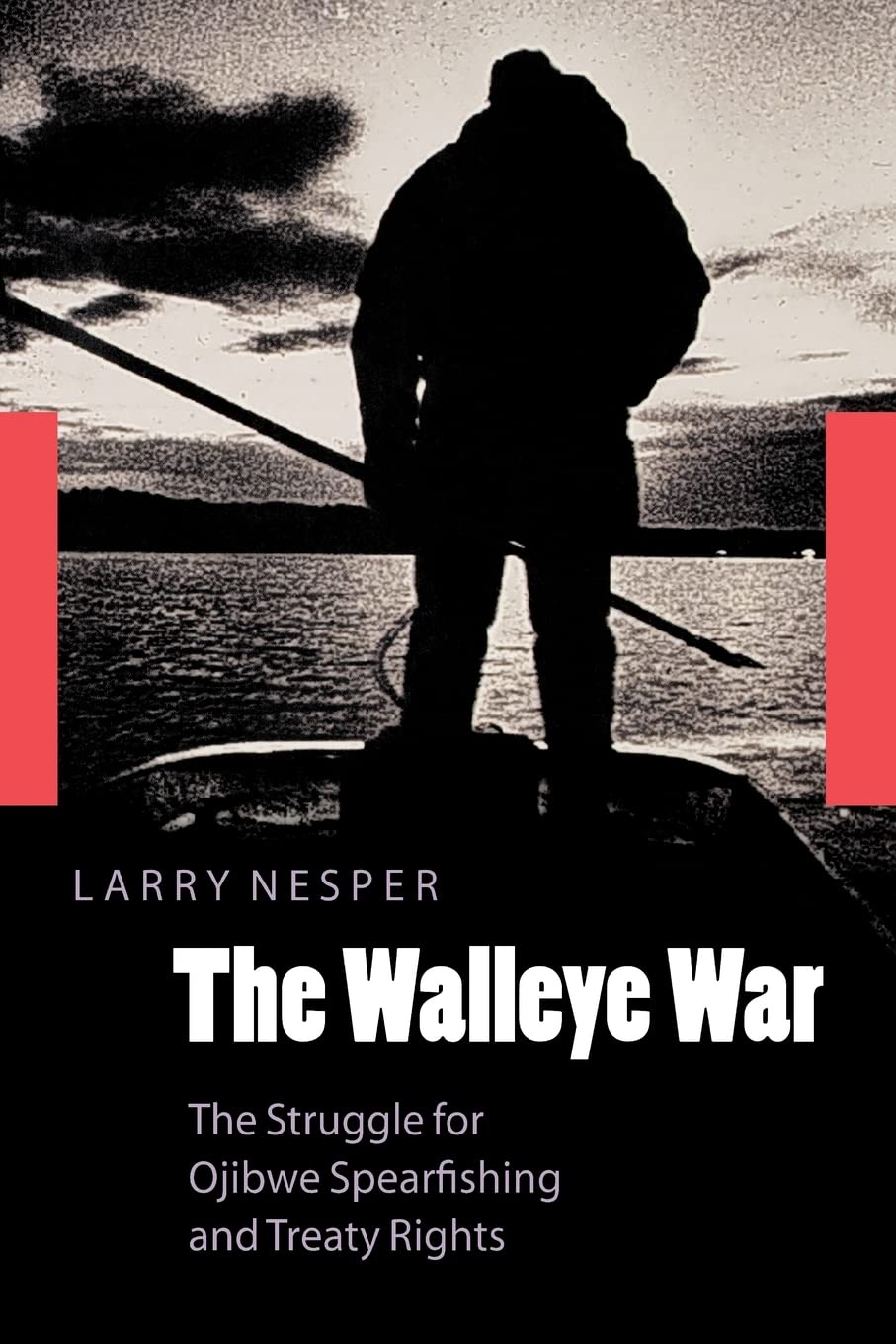
Title
The Walleye War: The Struggle For Ojibwe Spearfishing And Treaty Rights
Sold by Ergodebooks, an authorized reseller.
Returns accepted within 30 days | support@ergodebooks.com
Shipping Information
- Free Standard Shipping — United States only
- Processing Time: 3–5 business days
- Estimated Delivery: 6–10 business days after dispatch
- Double-boxed, fully insured & discreetly packaged
- Tracking number sent via email once dispatched
Returns & Refund
Returns accepted within 30 days of delivery.
Damaged or Defective Item
Free return shipping + replacement or full refund
Wrong Item Received
Free return shipping + replacement or full refund
Change of Mind
Return shipping at customer's expense · 25% restocking fee applies
Payment Option

For Generations, The Ojibwe Bands Of Northern Wisconsin Have Spearfished Spawning Walleyed Pike In The Springtime. The Bands Reserved Hunting, Fishing, And Gathering Rights On The Lands That Would Become The Northern Third Of Wisconsin In Treaties Signed With The Federal Government In 1837, 1842, And 1854. Those Rights, However, Would Be Ignored By The State Of Wisconsin For More Than A Century. When A Federal Appeals Court In 1983 Upheld The Bands' Offreservation Rights, A Deep And Farreaching Conflict Erupted Between The Ojibwe Bands And Some Of Their Nonnative Neighbors.Starting In The Mid1980S, Protesters And Supporters Flocked To The Boat Landings Of Lakes Being Spearfished; Ojibwe Spearfishermen Were Threatened, Stoned, And Shot At. Peace And Protest Rallies, Marches, And Ceremonies Galvanized And Rocked The Local Communities And Reservations, And Individuals And Organizations From Across The Country Poured Into Northern Wisconsin To Take Sides In The Spearfishing Dispute.From The Front Lines On Lakes To Tense, Behindthescenes Maneuvering On And Off Reservations, The Walleye War Tells The Riveting Story Of The Spearfishing Conflict, Drawing On The Experiences And Perspectives Of The Members Of The Lac Du Flambeau Reservation And An Anthropologist Who Accompanied Them On Spearfishing Expeditions. We Learn Of The Historical Roots And Cultural Significance Of Spearfishing And Offreservation Treaty Rights And We See Why Many Modern Ojibwes And Nonnatives View Them In Profoundly Different Ways. We Also Come To Understand Why The Flambeau Tribal Council And Some Tribal Members Disagreed With The Spearfishermen And Pursued A Policy Of Negotiation With The State To Lease The Offreservation Treaty Rights For Fifty Million Dollars. Fought With Rocks And Metaphors, The Walleye War Is The Story Of A Native People'S Struggle For Dignity, Identity, And Selfpreservation In The Modern World.
⚠️ WARNING (California Proposition 65):
This product may contain chemicals known to the State of California to cause cancer, birth defects, or other reproductive harm.
For more information, please visit www.P65Warnings.ca.gov.
- Q: What is the page count of 'The Walleye War'? A: This book has two hundred forty-five pages. It provides a comprehensive look into the conflict regarding Ojibwe spearfishing rights.
- Q: What is the binding type of this book? A: The binding type is paperback. This makes it lightweight and easy to handle for reading.
- Q: Who is the author of 'The Walleye War'? A: The author is Larry Nesper. He provides unique insights into the Ojibwe community and their treaty rights.
- Q: What genre does 'The Walleye War' belong to? A: This book falls under the Native American genre. It focuses on cultural rights and historical perspectives.
- Q: Is 'The Walleye War' suitable for young readers? A: Yes, it is suitable for young readers interested in history and Native American culture. However, parental guidance is advised due to mature themes.
- Q: How can I read 'The Walleye War' effectively? A: To read effectively, find a quiet space and take notes on key events. Understanding the historical context enhances the reading experience.
- Q: How should I store 'The Walleye War'? A: Store this book in a cool, dry place, away from direct sunlight. This helps preserve the book's condition and prevents fading.
- Q: Can 'The Walleye War' be returned if damaged? A: Yes, it can be returned if damaged. Check the seller's return policy for specific instructions and timelines.
- Q: How do I keep 'The Walleye War' in good condition? A: To keep it in good condition, avoid bending the cover and store it upright. Regularly clean dust off the cover.
- Q: Is 'The Walleye War' a good choice for learning about treaty rights? A: Yes, it is an excellent choice for understanding treaty rights. The book delves into the history and implications of these rights.
- Q: Does 'The Walleye War' include personal stories? A: Yes, it includes personal stories from the Ojibwe community members. These narratives provide a deeper understanding of the conflict.
- Q: Is there a glossary or index in 'The Walleye War'? A: No, there is no glossary or index. The narrative flows continuously, focusing on storytelling rather than reference.
- Q: What themes are explored in 'The Walleye War'? A: The themes include cultural identity, treaty rights, and community struggle. It highlights the ongoing conflict between Ojibwe bands and the state.
- Q: Can I find academic references in 'The Walleye War'? A: Yes, the book includes references to treaties and court cases. This adds credibility and context to the narrative.
- Q: Is 'The Walleye War' based on true events? A: Yes, it is based on true events surrounding the Ojibwe spearfishing conflict. It captures real-life struggles faced by the community.
- Q: What insights can I gain from reading 'The Walleye War'? A: You can gain insights into the cultural significance of spearfishing and the complexities of treaty rights. It offers a unique perspective on Native American issues.