
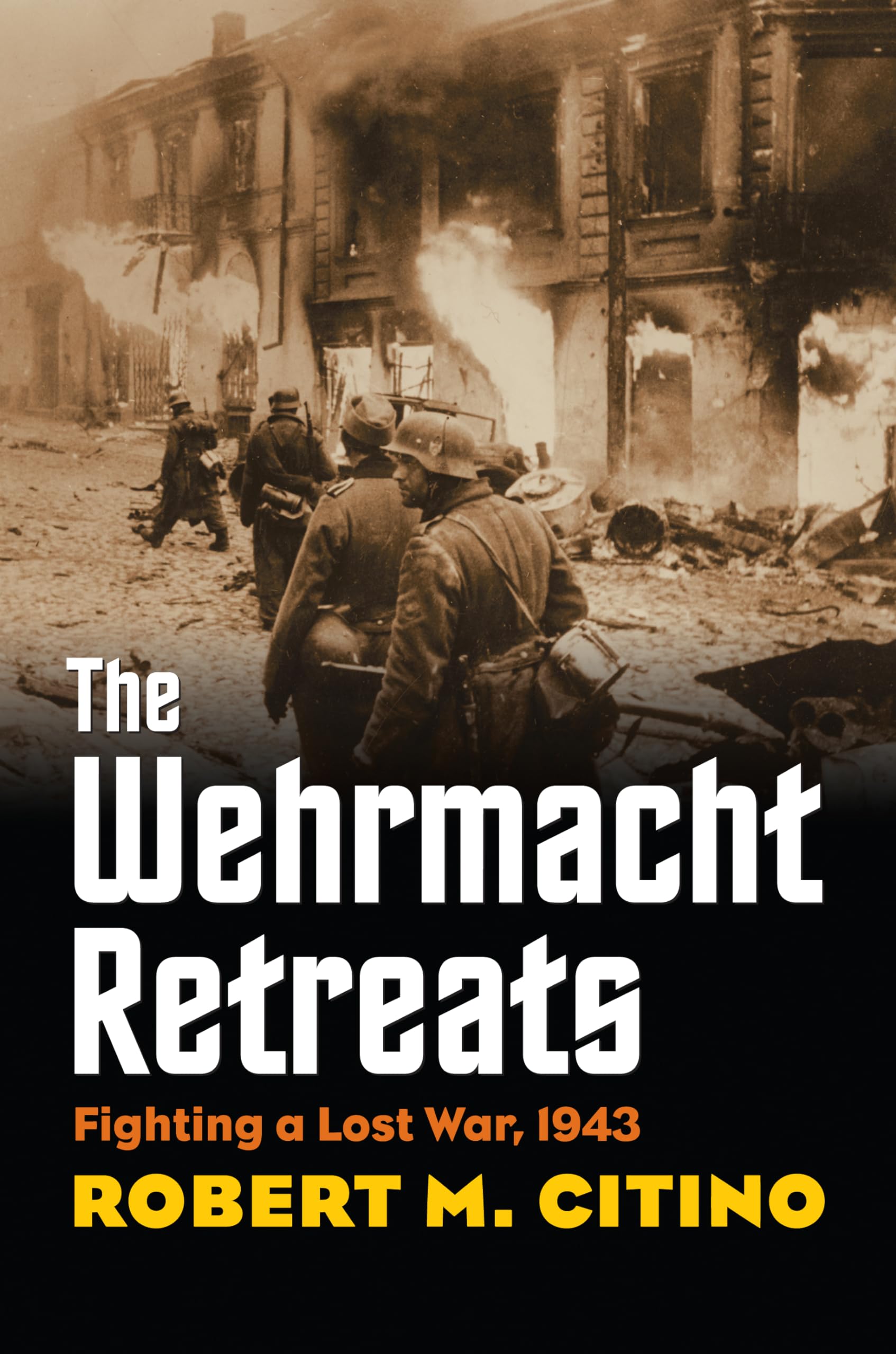
Title
The Wehrmacht Retreats: Fighting A Lost War, 1943 (Modern War Studies)
Sold by Ergodebooks, an authorized reseller.
Returns accepted within 30 days | support@ergodebooks.com
Shipping Information
- Free Standard Shipping — United States only
- Processing Time: 3–5 business days
- Estimated Delivery: 6–10 business days after dispatch
- Double-boxed, fully insured & discreetly packaged
- Tracking number sent via email once dispatched
Returns & Refund
Returns accepted within 30 days of delivery.
Damaged or Defective Item
Free return shipping + replacement or full refund
Wrong Item Received
Free return shipping + replacement or full refund
Change of Mind
Return shipping at customer's expense · 25% restocking fee applies
Payment Option

Arthur Goodzeit Awardthroughout 1943, The German Army, Heirs To A Military Tradition That Demanded And Perfected Relentless Offensive Operations, Succumbed To The Realities Of Its Own Overreach And The Demands Of Twentiethcentury Industrialized Warfare. In His New Study, Prizewinning Author Robert Citino Chronicles This Weakening Wehrmacht, Now Fighting Desperately On The Defensive But Still Remarkably Dangerous And Lethal.Drawing On His Impeccable Command Of Germanlanguage Sources, Citino Offers Fresh, Vivid, And Detailed Treatments Of Key Campaigns During This Fateful Year: The Allied Landings In North Africa, General Von Manstein'S Great Counterstroke In Front Of Kharkov, The German Attack At Kasserine Pass, The Titanic Engagement Of Tanks And Men At Kursk, The Soviet Counteroffensives At Orel And Belgorod, And The Allied Landings In Sicily And Italy. Through These Events, He Reveals How A Military Establishment Historically Configured For Violent Aggression Reacted When The Tables Were Turned; How German Commanders Viewed Their Newest Enemy, The U.S. Army, After Brutal Fighting Against The British And Soviets; And Why, Despite Their Superiority In Materiel And Manpower, The Allies Were Unable To Turn 1943 Into A Much More Decisive Year.Applying The Keen Operational Analysis For Which He Is So Highly Regarded, Citino Contends That Virtually Every Flawed German Decisionto Defend Tunis, To Attack At Kursk And Then Call Off The Offensive, To Abandon Sicily, To Defend Italy High Up The Boot And Then Down Much Closer To The Toehad Strong Supporters Among The Army'S Officer Corps. He Looks At All Of These Engagements From The Perspective Of Each Combatant Nation And Also Establishes Beyond A Shadow Of A Doubt The Synergistic Interplay Between The Fronts.Ultimately, Citino Produces A Grim Portrait Of The German Officer Corps, Dispelling The Longstanding Tendency To Blame Every Bad Decision On Hitler. Filled With Telling Vignettes And Sharp Portraits And Copiously Documented, The Wehrmacht Retreats Is A Dramatic And Fastpaced Narrative That Will Engage Military Historians And General Readers Alike.
⚠️ WARNING (California Proposition 65):
This product may contain chemicals known to the State of California to cause cancer, birth defects, or other reproductive harm.
For more information, please visit www.P65Warnings.ca.gov.
- Q: How many pages are in 'The Wehrmacht Retreats'? A: This book contains four hundred forty pages. It provides an in-depth analysis of the German military's strategies during World War II.
- Q: What is the binding type of this book? A: This book is a paperback edition. It is designed for easy handling and reading.
- Q: What are the dimensions of 'The Wehrmacht Retreats'? A: The book measures six inches in length, one inch in width, and eight point seventy-five inches in height. These dimensions make it a portable read.
- Q: Who is the author of this book? A: The author is Robert M. Citino. He is a prizewinning historian known for his expertise in military history.
- Q: What historical topics does the book cover? A: It covers key campaigns of World War II in 1943, including battles in North Africa, Italy, and the Eastern Front. Citino examines the German military's transition from offense to defense.
- Q: Is 'The Wehrmacht Retreats' suitable for casual readers? A: Yes, it is suitable for both military historians and general readers. The narrative is engaging and accessible to those interested in World War II.
- Q: What is the primary focus of the book? A: The primary focus is on the German army's strategies and decisions during a critical year of World War II. It analyzes the shifts from aggressive tactics to defensive positions.
- Q: How does the book portray German commanders? A: It portrays them as complex figures who made decisions based on the realities of war, often influenced by their military tradition. Citino offers insights into their perspectives.
- Q: Is there a specific narrative style used in the book? A: Yes, the narrative is dramatic and fast-paced. Citino uses vivid descriptions and detailed accounts to engage readers.
- Q: What kind of research did the author conduct for this book? A: Citino drew on German-language sources for his research. This allows for fresh insights into the military strategies and decisions of the time.
- Q: Are there any prominent battles discussed in the book? A: Yes, notable battles include Kursk, Kasserine Pass, and the Allied landings in Sicily and Italy. Each battle is analyzed in detail.
- Q: What themes are explored in 'The Wehrmacht Retreats'? A: Themes include military overreach, the complexity of decision-making, and the interplay between different fronts in the war. The book also discusses the consequences of strategic choices.
- Q: Is the book primarily focused on the German perspective? A: Yes, it primarily focuses on the German military perspective while also examining the Allied responses. This dual analysis enhances the understanding of the conflict.
- Q: What awards has Robert Citino received? A: Robert Citino has received the Arthur Goodzeit Award. This recognition highlights his contributions to the field of military history.
- Q: Will I find references and documentation in the book? A: Yes, the book is copiously documented with references. Citino provides sources to support his analysis and conclusions.