
Title
The West the Railroads Made,Used
Sold by Ergodebooks, an authorized reseller.
Returns accepted within 30 days | support@ergodebooks.com
Shipping Information
- Free Standard Shipping — United States only
- Processing Time: 3–5 business days
- Estimated Delivery: 6–10 business days after dispatch
- Double-boxed, fully insured & discreetly packaged
- Tracking number sent via email once dispatched
Returns & Refund
Returns accepted within 30 days of delivery.
Damaged or Defective Item
Free return shipping + replacement or full refund
Wrong Item Received
Free return shipping + replacement or full refund
Change of Mind
Return shipping at customer's expense · 25% restocking fee applies
Payment Option

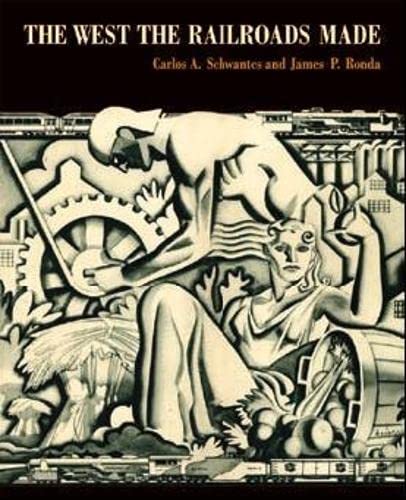
Named an 'Outstanding Title' in University Press Books for Public and Secondary School Libraries, 2009America's Railroad Age was little more than a decade old when Ralph Waldo Emerson uttered these prophetic words: 'Railroad iron is a magician's rod in its power to evoke the sleeping energies of land and water.' Railroads exercised a remarkable hold on the imagination. The railroad was not merely transportation; it was a technology that promised to transform the world. Railroads were second only to the federal government in shaping the West, and nowhere was that shaping more visible than on the Great Plains and in large parts of the Pacific Northwest.The West the Railroads Made recounts the stories of visionaries such as Henry Harmon Spalding, Samuel Parker, and Asa Whitney, who imagined the railroad as a new Northwest Passage, an iron road through the West to the Orient. As the idea of a Pacific Railroad grew in the 1840s and 1850s, many Americans imagined the West as a fertile garden or a treasure chest of priceless minerals. Railroads could deliver the riches of that West into the hands and pockets of the modern world. These two compelling ideasthe railroad and the Westcame together to create an irresistible dream. Filled with contemporary accounts, illustrations, and photographs, The West the Railroads Made offers a fresh look at what the iron road created.If railroads brought the West into the world, they also brought the world to the West. In less than half a century, railroads made the West a permanent extension of the modern, capitalist world. Washington Territory governor Marshall F. Moore got it right when he described railroads as the 'vast machinery for the building up of empires.' The West the Railroads Made portrays the size and complexity of that railroad empire. Railroads brought immigrants by the thousands, forever changing the character of the West's human population. Railroads also promoted agriculture, ranching, and mining on a grand scale. They constructed their own landscapes filled with depots, roundhouses, bridges, and tunnels. Through the depot came mailorder treasures, the latest newspapers, and letters from distant friends. Beyond the rightofway, the presence of the railroad was felt every day in hundreds of small towns.The railroad West sprang to life with amazing speed. Overnight a windswept stretch of Wyoming became Cheyenne. Prairies were fenced or plowed to make rangeland or farmland. New plants and animals shoved aside those that did not fit marketplace needs. All of this was touted as the new West, the railroad West. But all too often, the railroad West promised prosperity and security but delivered hard times and bitterness. By the middle of the twentieth century, many parts of the West were filled with empty farmhouses, nearly abandoned towns, and boardedup stations.For more than a century the American West was the Railroad West. While the railroad's influence was challenged in the twentieth century by automobiles and the interstate highway system, railroads did not vanish from the landscape. Instead, they reinvented themselves. Companies merged to create superrailroads, service on unprofitable routes was ended, and trademark passenger trains vanished. In their place came milelong trains hauling coal, grain, and lumber. Containers stacked with consumer goods from Asia rode on tracks that were the modern version of the Northwest Passage. The iron road had once defined the West; now it was part of a larger landscape.
⚠️ WARNING (California Proposition 65):
This product may contain chemicals known to the State of California to cause cancer, birth defects, or other reproductive harm.
For more information, please visit www.P65Warnings.ca.gov.