
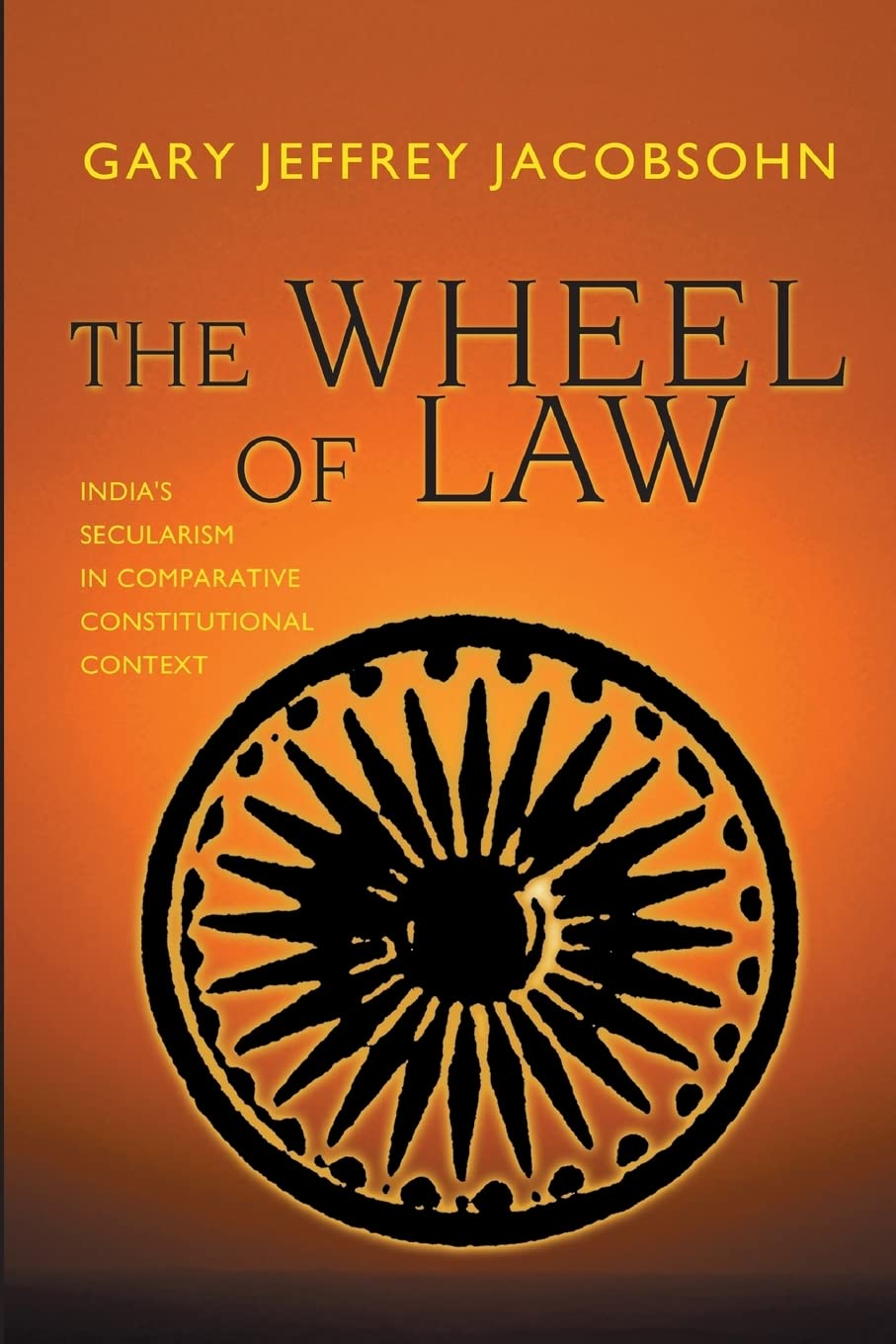
Title
The Wheel Of Law: India'S Secularism In Comparative Constitutional Context,Used
Sold by Ergodebooks, an authorized reseller.
Returns accepted within 30 days | support@ergodebooks.com
Shipping Information
- Free Standard Shipping — United States only
- Processing Time: 3–5 business days
- Estimated Delivery: 6–10 business days after dispatch
- Double-boxed, fully insured & discreetly packaged
- Tracking number sent via email once dispatched
Returns & Refund
Returns accepted within 30 days of delivery.
Damaged or Defective Item
Free return shipping + replacement or full refund
Wrong Item Received
Free return shipping + replacement or full refund
Change of Mind
Return shipping at customer's expense · 25% restocking fee applies
Payment Option

How can religious liberty be guaranteed in societies where religion pervades everyday life? In The Wheel of Law, Gary Jacobsohn addresses this dilemma by examining the constitutional development of secularism in India within an unprecedented crossnational framework that includes Israel and the United States. He argues that a country's particular constitutional theory and practice must be understood within its social and political context. The experience of India, where religious life is in profound tension with secular democratic commitment, offers a valuable perspective not only on questions of jurisprudence and political theory arising in countries where religion permeates the fabric of society, but also on the broader task of ensuring religious liberty in constitutional polities.India's social structure is so entwined with religion, Jacobsohn emphasizes, that meaningful social reform presupposes state intervention in the spiritual domain. Hence India's 'ameliorative' model of secular constitutionalism, designed to ameliorate the disabling effects of the caste system and other religiously based practices. Jacobsohn contrasts this with the 'visionary' secularism of Israel, where the state identifies itself with a particular religion, and with America's 'assimilative' secularism.Constitutional globalization is as much a reality as economic globalization, Jacobsohn concludes, and within this phenomenon the place of religion in liberal democracy is among the most vexing challenges confronting us today. A richly textured account of the Indian experience with secularism, developed in a broad comparative framework, this book is for all those seeking ways to respond to this challenge.
⚠️ WARNING (California Proposition 65):
This product may contain chemicals known to the State of California to cause cancer, birth defects, or other reproductive harm.
For more information, please visit www.P65Warnings.ca.gov.