
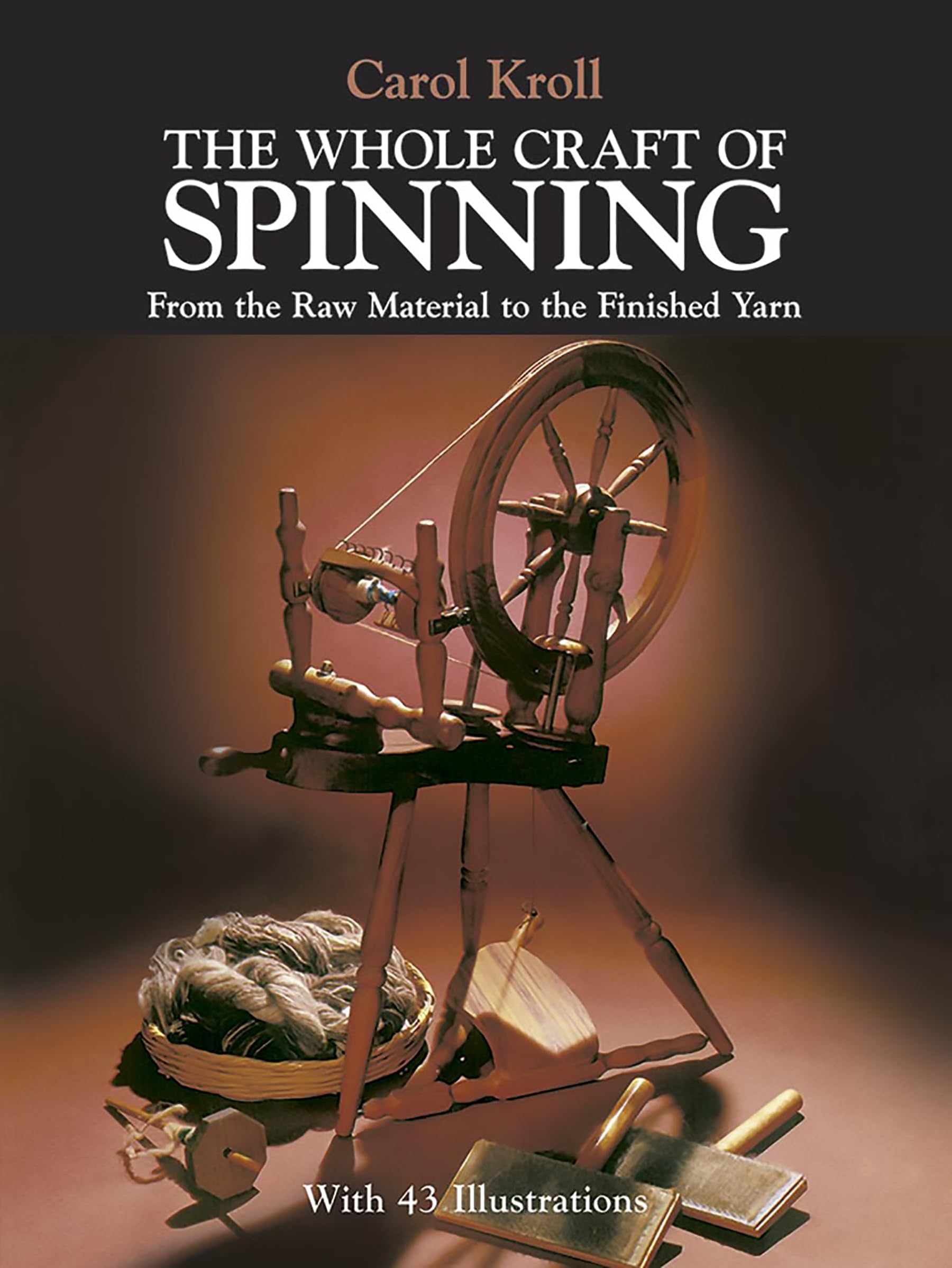
Title
The Whole Craft Of Spinning: From The Raw Material To The Finished Yarn (Dover Crafts: Weaving & Dyeing)
Sold by Ergodebooks, an authorized reseller.
Returns accepted within 30 days | support@ergodebooks.com
Shipping Information
- Free Standard Shipping — United States only
- Processing Time: 3–5 business days
- Estimated Delivery: 6–10 business days after dispatch
- Double-boxed, fully insured & discreetly packaged
- Tracking number sent via email once dispatched
Returns & Refund
Returns accepted within 30 days of delivery.
Damaged or Defective Item
Free return shipping + replacement or full refund
Wrong Item Received
Free return shipping + replacement or full refund
Change of Mind
Return shipping at customer's expense · 25% restocking fee applies
Payment Option

The Ancient Craft Of Spinning Is Becoming Increasingly Popular With Today'S Modern Craft Enthusiasts As It Provides A Method Of Creating Unique, Personal And Unusual Yarns That Can Be Used In Contemporary Weaving, Knitting, Crocheting, Needlepoint, Embroidery And Macram. It Is A Highly Creative Craft, Yet Simple To Learn, And Therein Lies Both Its Fascination And Challenge. The Story Of Spinning Is Interwoven With The History Of Man. The First Attempt At Spinning Probably Consisted Of Twisting Animal Fibers With Suitable Plant Material. Some Forms Of Hand Spinning Existed As Early As 15,000 Years Ago In Asia, And 12,000 Years Ago In North Africa. Many Of The Earliest Methods And Tools Are Still In Use To This Day, Especially The Various Drop Spindles, And The Indian And Navajo Types Of Spindles. The Spinning Wheel Itself Is Believed To Have Evolved In India 800 To 1,000 Years Ago.Now You Can Master This Timeless Craft Through The Clear Instructions And Easytofollow Directions Of Wellknown Spinning Authority Carol Kroll. Drawing Upon Her Years Of Valuable Experience, The Author Shows You Everything You Need To Know From Setup To Finished Product. You'Ll Learn About The Different Kinds Of Spindles And Spinning Wheels, Their History, Development, And Modern Applications. Her Lucid Text Demonstrates The Proper Methods Of Preparing The Fiber For Spinning Including: Selecting The Fiber, Sorting, Washing, Adding Oil, And Carding.Whether You'Re A Novice Or An Experienced Hand, Carol Kroll'S Expert Advice Shows You The Ins And Outs Of: Spinning With A Drop Spindle; Spinning On A Treadle Wheel; Finishing The Yarn; How To Shop For A Spinning Wheel; Spinning With Wool And Making The Most Of Natural And Other Animal Fibers; Synthetic Fibers; Making Your Own Spindle; And The Fun Of Creating Novelty Yarns.Plus, An Access And Resources Section With Suggested Further Reading, Supplies, Services, And Much More To Get You Started Making Something That Is Truly Your Own, From The First Step To The Last.
⚠️ WARNING (California Proposition 65):
This product may contain chemicals known to the State of California to cause cancer, birth defects, or other reproductive harm.
For more information, please visit www.P65Warnings.ca.gov.
- Q: How many pages does this book have? A: This book has forty-eight pages. It provides detailed instructions and illustrations to help you master the craft of spinning.
- Q: What is the binding type of this book? A: This book is paperback bound. The paperback format makes it lightweight and easy to handle during your crafting sessions.
- Q: What are the dimensions of this book? A: This book measures eight and a half inches in length and eleven inches in height. Its slim quarter-inch width makes it easy to store on a shelf.
- Q: How can I learn to spin yarn? A: You can learn to spin yarn by following the clear instructions provided in this book. It covers everything from fiber preparation to finishing your yarn.
- Q: Is this book suitable for beginners? A: Yes, this book is suitable for beginners. It provides easy-to-follow directions that cater to both novice and experienced spinners.
- Q: What tools do I need to start spinning? A: To start spinning, you'll need a spindle or spinning wheel, fiber, and basic tools for preparation like carders. The book guides you on selecting these tools.
- Q: How should I store this book? A: You should store this book upright on a shelf or in a bookcase. This prevents damage and keeps it easily accessible for your crafting needs.
- Q: Is this book safe for children? A: Yes, this book is safe for children. It focuses on a creative craft that can be enjoyed by crafters of all ages, with adult supervision recommended.
- Q: How do I care for my spinning equipment? A: You should clean your spinning equipment regularly by removing fiber residue and dust. Proper maintenance ensures longevity and optimal performance.
- Q: Can I use synthetic fibers for spinning? A: Yes, you can use synthetic fibers for spinning. The book covers how to work with various fiber types, including natural and synthetic options.
- Q: What if I need more resources on spinning? A: The book includes an access and resources section. It suggests further reading, supplies, and services to expand your spinning knowledge.
- Q: Are there illustrations in this book? A: Yes, the book contains illustrations. These visuals aid in understanding techniques and methods for spinning yarn effectively.
- Q: Can I make my own spindle using this book? A: Yes, the book includes instructions for making your own spindle. This allows for customization and personal creativity in your spinning projects.
- Q: What historical information is included in the book? A: The book includes historical context about the evolution of spinning tools and techniques. It connects the craft to ancient practices and cultures.
- Q: Is there a section on shopping for a spinning wheel? A: Yes, there is a section dedicated to shopping for a spinning wheel. It provides tips on what to look for when choosing the right wheel for your needs.