If you have any questions, you are always welcome to contact us. We'll get back to you as soon as possible, withing 24 hours on weekdays.
Customer service
All questions about your order, return and delivery must be sent to our customer service team by e-mail at yourstore@yourdomain.com
Sale & Press
If you are interested in selling our products, need more information about our brand or wish to make a collaboration, please contact us at press@yourdomain.com
Help
If you have any questions, you are always welcome to contact us. We'll get back to you as soon as possible, withing 24 hours on weekdays.
Customer service
All questions about your order, return and delivery must be sent to our customer service team by e-mail at yourstore@yourdomain.com
Sale & Press
If you are interested in selling our products, need more information about our brand or wish to make a collaboration, please contact us at press@yourdomain.com
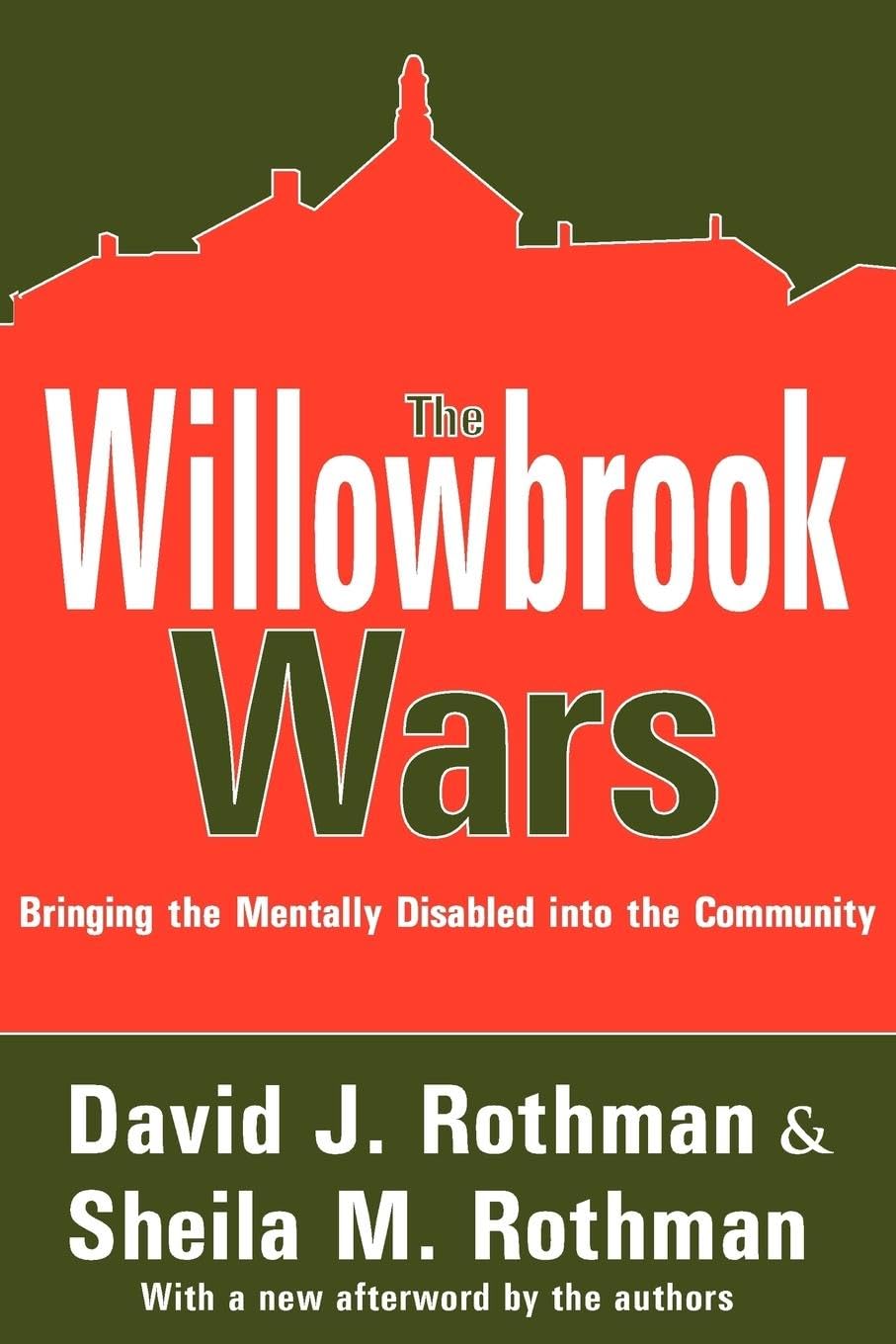
The Willowbrook Wars is a dramatic and illuminating account of the effort to close down a scandalridden institution and return its 5,400 handicapped residents to communities in New York. The wars began in 1972 with Geraldo Rivera's televised raid on the Willowbrook State School. They continued for three years in a federal courtroom, with civil libertarian lawyers persuading a conservative and consciencestricken judge to expand the rights of the disabled, and they culminated in a 1975 consent decree, with the state of New York pledging to accomplish the unprecedented assignment in six years.From 1975 to 1982, David and Sheila Rothman observed this remarkable chapter in American reform of mental disabilities care. Would the state live up to its agreement without 'dumping' residents into other nightmarish institutions? Would the lawyers prove as interested in meeting client needs as in securing client rights? Could a traditionbound bureaucracy create a new network of community services? And finally, would a governor and a legislature tolerate such outside intervention, and if so, for how long? In answering these questions,The Willowbrook Wars takes us behind the scenes to clarify the role of the judiciary, the fate of the underprivileged, and the potential for social justice. In their new afterword, the authors bring the story up to date, describing the results of the closing of the institution in 1987 from the experiences of integrating the former residents into communities to the legal battles between the state of New York and advocates for the mentally handicapped.
⚠️ WARNING (California Proposition 65):
This product may contain chemicals known to the State of California to cause cancer,
birth defects, or other reproductive harm.
For MAP (Minimum Advertised Price) violations and Intellectual Property (IP) or Trademark concerns, please contact:
support@ergodebooks.com
⚠️ California Proposition 65 Warning: Some products sold on this website may expose you to chemicals known to the State of California to cause cancer, birth defects, or other reproductive harm. For more information, visit www.P65Warnings.ca.gov.