
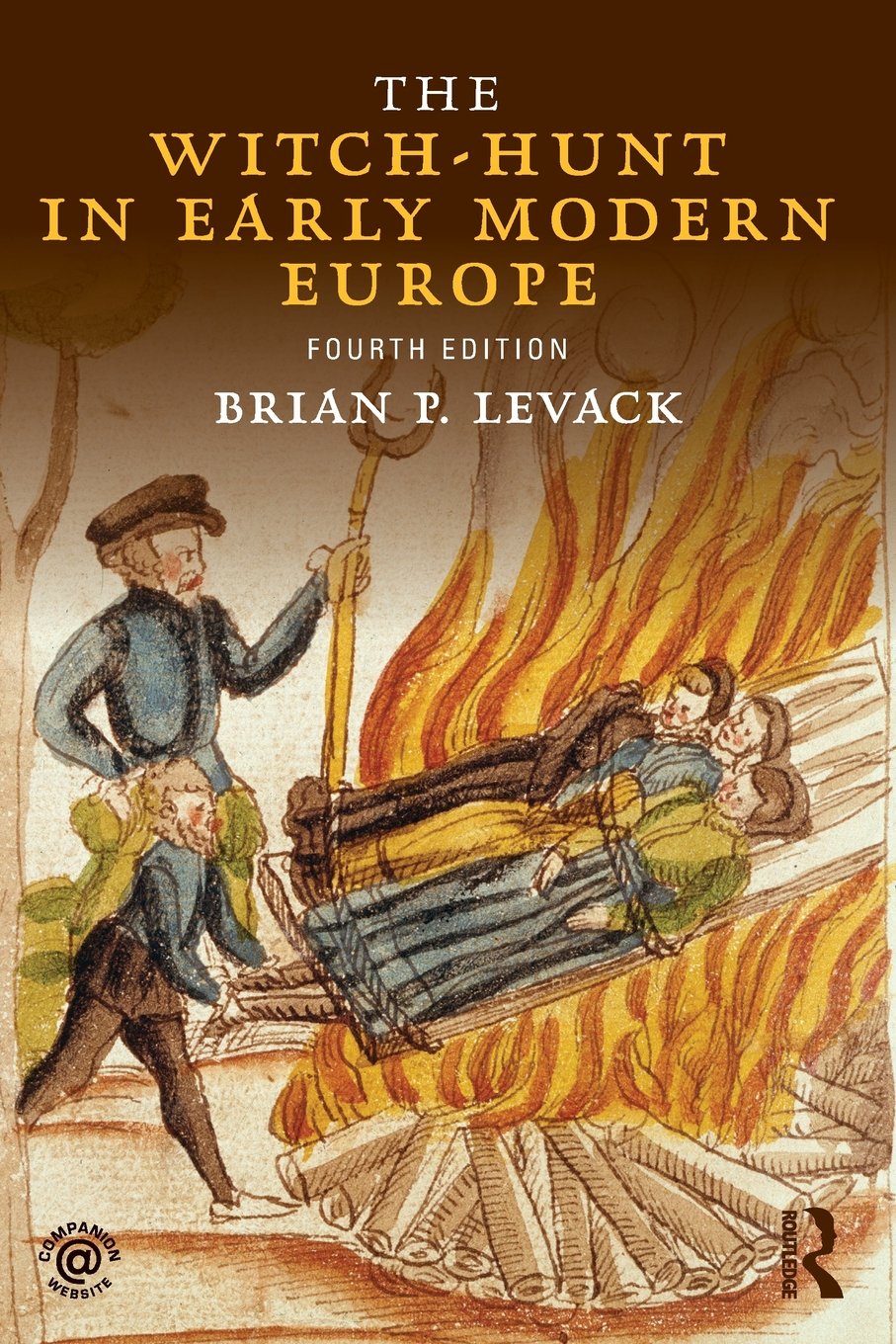
Title
The WitchHunt in Early Modern Europe,New
Sold by Ergodebooks, an authorized reseller.
Returns accepted within 30 days | support@ergodebooks.com
Shipping Information
- Free Standard Shipping — United States only
- Processing Time: 3–5 business days
- Estimated Delivery: 6–10 business days after dispatch
- Double-boxed, fully insured & discreetly packaged
- Tracking number sent via email once dispatched
Returns & Refund
Returns accepted within 30 days of delivery.
Damaged or Defective Item
Free return shipping + replacement or full refund
Wrong Item Received
Free return shipping + replacement or full refund
Change of Mind
Return shipping at customer's expense · 25% restocking fee applies
Payment Option

The WitchHunt in Early Modern Europe, now in its fourth edition, is the perfect resource for both students and scholars of the witchhunts written by one of the leading names in the field. For those starting out in their studies of witchbeliefs and witchcraft trials, Brian Levack provides a concise survey of this complex and fascinating topic, while for more seasoned scholars the scholarship is brought right up to date. This new edition includes the most recent research on children, gender, male witches and demonic possession as well as broadening the exploration of the geographical distribution of witch prosecutions to include recent work on regions, cities and kingdoms enabling students to identify comparisons between countries.Now fully integrated with Brian Levacks The Witchcraft Sourcebook, there are links to the sourcebook throughout the text, pointing students towards key primary sources to aid them in their studies. The two books are drawn together on a new companion website with supplementary materials for those wishing to advance their studies, including an extensive guide to further reading, a chronology of the history of witchcraft and an interactive map to show the geographical spread of witchhunts and witch trials across Europe and North America.A longstanding favourite with students and lecturers alike, this new edition of The WitchHunt in Early Modern Europe will be essential reading for those embarking on or looking to advance their studies of the history of witchcraft
⚠️ WARNING (California Proposition 65):
This product may contain chemicals known to the State of California to cause cancer, birth defects, or other reproductive harm.
For more information, please visit www.P65Warnings.ca.gov.
- Q: What is the main focus of 'The Witch-Hunt in Early Modern Europe'? A: The book provides a comprehensive overview of the witch-hunts in early modern Europe, covering historical events, societal beliefs, and significant trials, making it suitable for both beginners and advanced scholars.
- Q: Who is the author of 'The Witch-Hunt in Early Modern Europe'? A: The author is Brian P. Levack, a leading scholar in the field of witchcraft studies.
- Q: What edition is currently available for this book? A: The current edition is the fourth edition, published on October 5, 2015.
- Q: How many pages does the book contain? A: The book contains a total of 310 pages.
- Q: Is 'The Witch-Hunt in Early Modern Europe' suitable for students? A: Yes, it is designed to be a valuable resource for students and scholars, providing insights into witchcraft beliefs and trials.
- Q: What supplementary materials are available for this book? A: The book is integrated with 'The Witchcraft Sourcebook' and offers access to a companion website with further reading, a chronology, and an interactive map of witch-hunts.
- Q: What topics are covered in this edition? A: This edition includes recent research on gender, male witches, demonic possession, and geographical distribution of witch prosecutions.
- Q: What is the condition of the book? A: The book is in brand new condition.
- Q: What type of binding is used for this edition? A: This edition is available in paperback binding.
- Q: Can this book help in understanding the geographical spread of witch trials? A: Yes, it broadens the exploration of witch trials across regions, cities, and kingdoms, allowing for comparisons between different countries.