
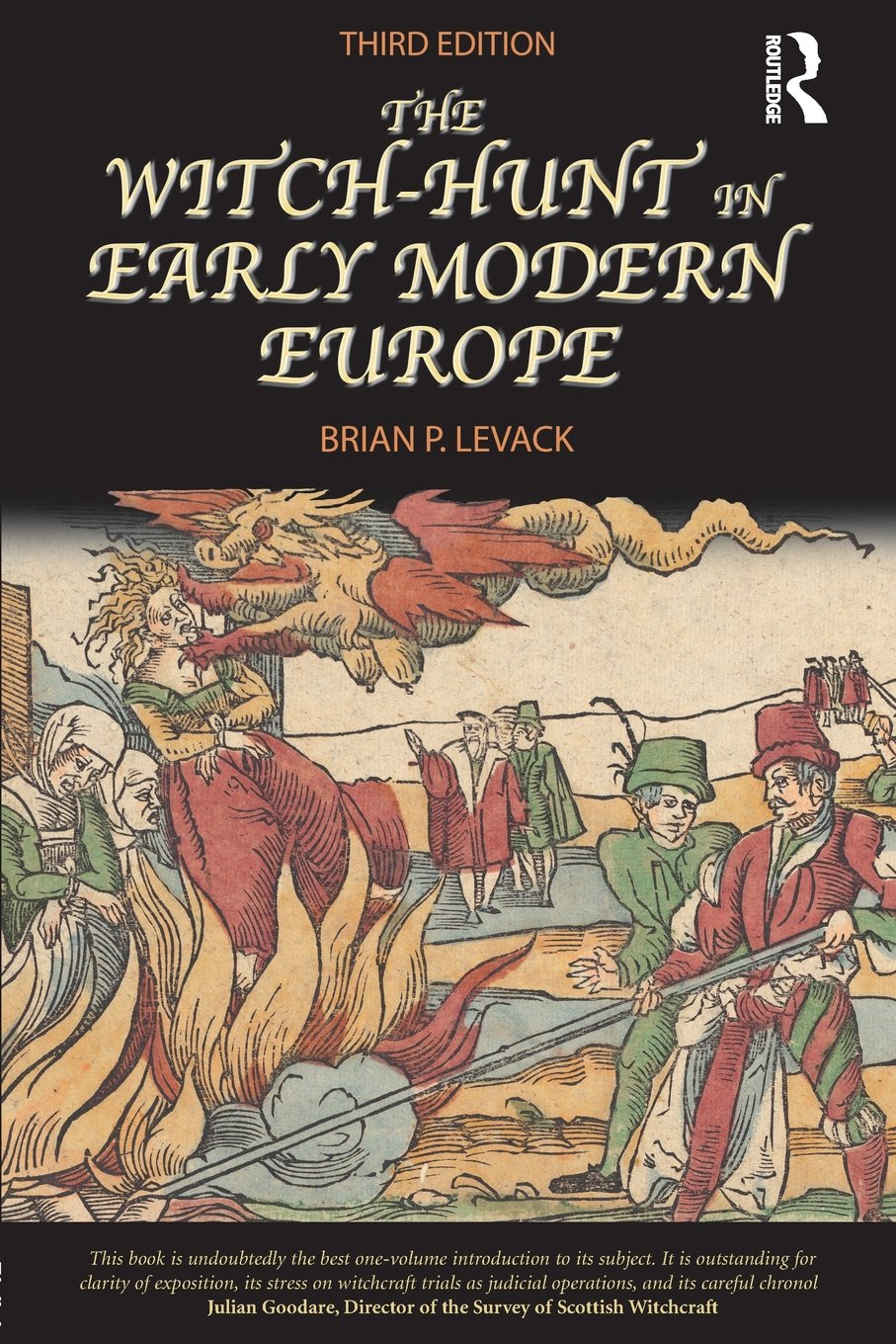
Title
The WitchHunt in Early Modern Europe,Used
Sold by Ergodebooks, an authorized reseller.
Returns accepted within 30 days | support@ergodebooks.com
Shipping Information
- Free Standard Shipping — United States only
- Processing Time: 3–5 business days
- Estimated Delivery: 6–10 business days after dispatch
- Double-boxed, fully insured & discreetly packaged
- Tracking number sent via email once dispatched
Returns & Refund
Returns accepted within 30 days of delivery.
Damaged or Defective Item
Free return shipping + replacement or full refund
Wrong Item Received
Free return shipping + replacement or full refund
Change of Mind
Return shipping at customer's expense · 25% restocking fee applies
Payment Option

Between 1450 and 1750 thousands of people, most of them women, were accused, prosecuted and executed for the crime of witchcraft. The witchhunt was not a single event; it comprised thousands of individual prosecutions, each shaped by the religious and social dimensions of the particular area as well as political and legal factors. Brian Levack sorts through the proliferation of theories to provide a coherent introduction to the subject, as well as contributing to the scholarly debate. The book: Examines why witchcraft prosecutions took place, how many trials and victims there were, and why witchhunting eventually came to an end. Explores the beliefs of both educated and illiterate people regarding witchcraft. Uses regional and local studies to give a more detailed analysis of the chronological and geographical distribution of witchtrials. Emphasises the legal context of witchcraft prosecutions. Illuminates the social, economic and political history of early modern Europe, and in particular the position of women within it.In this fully updated third edition of his exceptional study, Levack incorporates the vast amount of literature that has emerged since the last edition. He substantially extends his consideration of the decline of the witchhunt and goes further in his exploration of witchhunting after the trials, especially in contemporary Africa. New illustrations vividly depict beliefs about witchcraft in early modern Europe.
⚠️ WARNING (California Proposition 65):
This product may contain chemicals known to the State of California to cause cancer, birth defects, or other reproductive harm.
For more information, please visit www.P65Warnings.ca.gov.
- Q: What is the main subject of 'The Witch-Hunt in Early Modern Europe'? A: The book explores the phenomenon of witch-hunts in Europe between 1450 and 1750, detailing the accusations, prosecutions, and executions related to witchcraft, particularly focusing on the social and political factors involved.
- Q: Who is the author of this book? A: The author of 'The Witch-Hunt in Early Modern Europe' is Brian P. Levack.
- Q: How many pages does the book have? A: The book contains 360 pages.
- Q: What edition of the book is available? A: This is the third edition of 'The Witch-Hunt in Early Modern Europe'.
- Q: When was this edition published? A: The third edition was published on April 13, 2006.
- Q: Does the book include recent research on witch hunts? A: Yes, the third edition incorporates extensive literature that has emerged since the last edition, providing updated insights into the decline of witch-hunting.
- Q: What themes does the book address regarding women? A: The book emphasizes the position of women within the context of early modern Europe and examines their roles in witchcraft accusations and prosecutions.
- Q: Are there illustrations included in the book? A: Yes, the book features new illustrations that depict beliefs about witchcraft in early modern Europe.
- Q: What kind of analysis does the book provide? A: The book offers regional and local studies that analyze the chronological and geographical distribution of witch trials.
- Q: Is 'The Witch-Hunt in Early Modern Europe' suitable for academic study? A: Yes, the book serves as a coherent introduction to the subject and contributes to scholarly debates, making it suitable for academic study.