
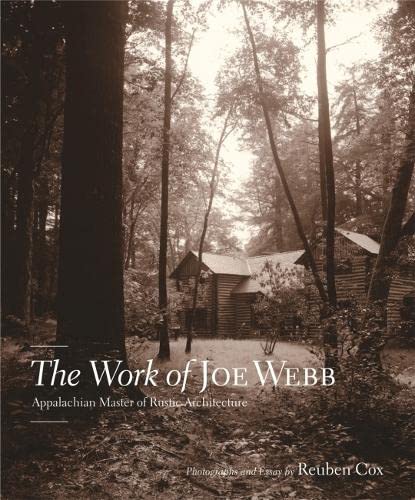
Title
The Work Of Joe Webb: Appalachian Master Of Rustic Architecture,Used
Sold by Ergodebooks, an authorized reseller.
Returns accepted within 30 days | support@ergodebooks.com
Shipping Information
- Free Standard Shipping — United States only
- Processing Time: 3–5 business days
- Estimated Delivery: 6–10 business days after dispatch
- Double-boxed, fully insured & discreetly packaged
- Tracking number sent via email once dispatched
Returns & Refund
Returns accepted within 30 days of delivery.
Damaged or Defective Item
Free return shipping + replacement or full refund
Wrong Item Received
Free return shipping + replacement or full refund
Change of Mind
Return shipping at customer's expense · 25% restocking fee applies
Payment Option

During The 1920S And 1930S, Builder Joe Webb Constructed Nearly Three Dozen Log Homes In The Tiny Appalachian Town Of Highlands, North Carolina. The Cabins Were Built Without The Aid Of Power Toolsor Architectural Plansand All Of These Exquisite Structures Are Located Within A Fivemile Radius.In The Work Of Joe Webb, Photographer Reuben Cox Captures The Atmosphere And Ambience Of These Idiosyncratic And Important Historic Buildings. Using A Largeformat Field Camera, Cox Has Documented All Of Webb'S Extant Cabins. Beautifully Presented In Tritone, His Images Explore The Lush, Rhododendronfilled Settings Of Webb'S Constructions As Well As The Rich Grain Of Their Chestnut And Pine Posts And Beams. Cox, A Highlands Native, Also Includes An Essay That Places The Work Within A Regional And Historical Context. Yet This Is Less An Analytical Taxonomy Of Webb'S Cabins Than An Expansive Meditation In Which Cox Employs His Own Art To Understand Another Man'S Life Work And The Extraordinary Qualities Of That Which Is Handmade And Unique.
⚠️ WARNING (California Proposition 65):
This product may contain chemicals known to the State of California to cause cancer, birth defects, or other reproductive harm.
For more information, please visit www.P65Warnings.ca.gov.
- Q: What are the dimensions of this book? A: The book measures ten inches in length, zero point seventy-five inches in width, and twelve point zero one inches in height. It is a hardcover edition, making it durable and suitable for display.
- Q: How many pages does the book contain? A: The book contains one hundred twenty pages. This length provides a comprehensive look at Joe Webb's work without overwhelming the reader.
- Q: What type of binding does this book have? A: This book features hardcover binding. This type of binding enhances its longevity and gives it a premium feel.
- Q: Who is the author of this book? A: The author of this book is Reuben Cox. He is known for his photography and has a personal connection to the Appalachian region.
- Q: What is the category of this book? A: This book falls under the category of photo essays. It combines visual art with narrative to explore architectural history.
- Q: Is this book suitable for all ages? A: Yes, this book is suitable for all ages. It presents historical and artistic content in a manner accessible to a general audience.
- Q: How does the author present the photographs? A: The author presents the photographs in tritone. This method enhances the depth and richness of the images, showcasing the cabins' details.
- Q: Is there an essay included in the book? A: Yes, the book includes an essay by the author. This essay provides context about Joe Webb's work and its significance in architectural history.
- Q: What condition is the book in? A: The book is used but in good condition. It has been well-preserved for readers who appreciate vintage works.
- Q: What is the primary focus of the book? A: The primary focus of the book is Joe Webb's log cabins. It highlights their unique construction methods and the surrounding Appalachian landscape.
- Q: Who published this book? A: The book is published by the University of Georgia Press. This publisher is known for its scholarly and artistic works.
- Q: What makes this book unique? A: This book is unique due to its blend of photography and architectural history. It offers a deep dive into handmade craftsmanship and regional heritage.
- Q: Can I find this book in libraries? A: Yes, many libraries may carry this book. It is a valuable resource for those interested in Appalachian culture and architecture.
- Q: What photography technique is used in the book? A: The book uses large-format photography. This technique captures intricate details and provides a high-quality visual experience.
- Q: Are there any notable features of the cabins highlighted? A: Yes, the cabins feature chestnut and pine posts and beams, showcasing unique craftsmanship and natural materials.
- Q: Is this book focused on a specific historical period? A: Yes, the book focuses on the construction of cabins during the 1920s and 1930s. It explores a significant period in Appalachian architecture.