
Title
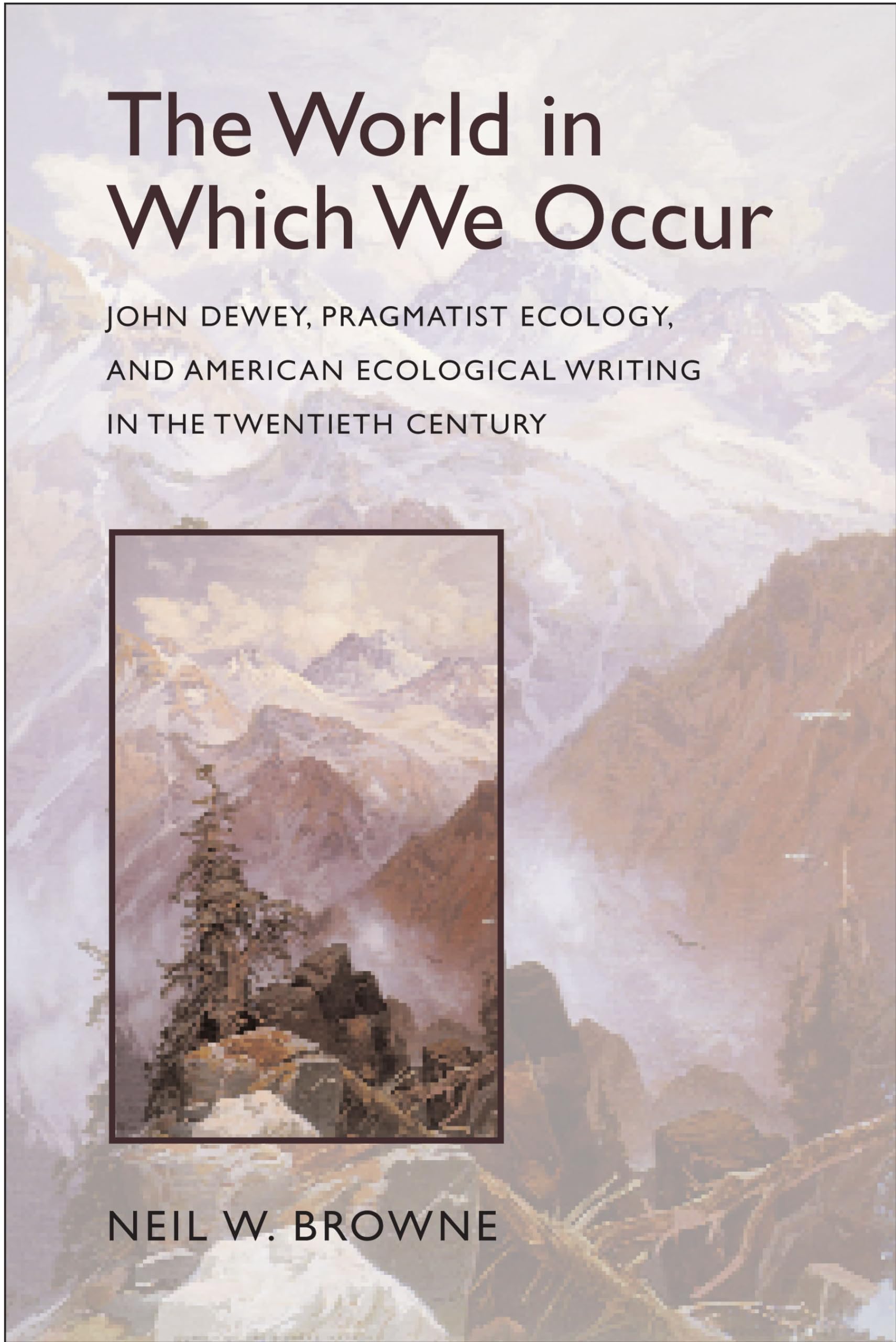
The World in Which We Occur: John Dewey, Pragmatist Ecology, and American Ecological Writing in the Twentieth Century,Used
Sold by Ergodebooks, an authorized reseller.
Returns accepted within 30 days | support@ergodebooks.com
Shipping Information
- Free Standard Shipping — United States only
- Processing Time: 3–5 business days
- Estimated Delivery: 6–10 business days after dispatch
- Double-boxed, fully insured & discreetly packaged
- Tracking number sent via email once dispatched
Returns & Refund
Returns accepted within 30 days of delivery.
Damaged or Defective Item
Free return shipping + replacement or full refund
Wrong Item Received
Free return shipping + replacement or full refund
Change of Mind
Return shipping at customer's expense · 25% restocking fee applies
Payment Option

American philosopher John Dewey considered all human endeavors to be one with the natural world. In his writings, particularly Art as Experience (1934), Dewey insists on the primacy of the environment in aesthetic experience. Deweys conception of environment includes both the natural and the manmade. The World in Which We Occur highlights this notion in order to define pragmatist ecology, a practice rooted in the interface of the cultural and the natural. Neil Browne finds this to be a significant feature of some of the most important ecological writing of the last century.To fully understand human involvement in the natural world, Browne argues that disciplinary boundaries must be opened, with profound implications for the practice of democracy. The degradation of the physical environment and democratic decay, for Browne, are rooted in the same problem: our persistent belief that humans are somehow separate from their physical environment.Browne probes the work of a number of major American writers through the lens of Deweys philosophy. Among other texts examined are John Muirs My First Summer in the Sierra (1911); Sea of Cortez (1941) by John Steinbeck and Edward Ricketts; Rachel Carsons three books about the sea, Under the SeaWind (1941), The Sea Around Us (1951), and The Edge of the Sea (1955); John Hainess The Stars, the Snow, the Fire (1989); Barry Lopezs Arctic Dreams (1986); and Terry Tempest Williamss Refuge (1991). Together, these textswith their combinations of scientific observation and personal meditationchallenge the dichotomies that we have become accustomed and affirm the principles of a pragmatist ecology, one in which ecological and democraticvalues go hand in hand.
⚠️ WARNING (California Proposition 65):
This product may contain chemicals known to the State of California to cause cancer, birth defects, or other reproductive harm.
For more information, please visit www.P65Warnings.ca.gov.