
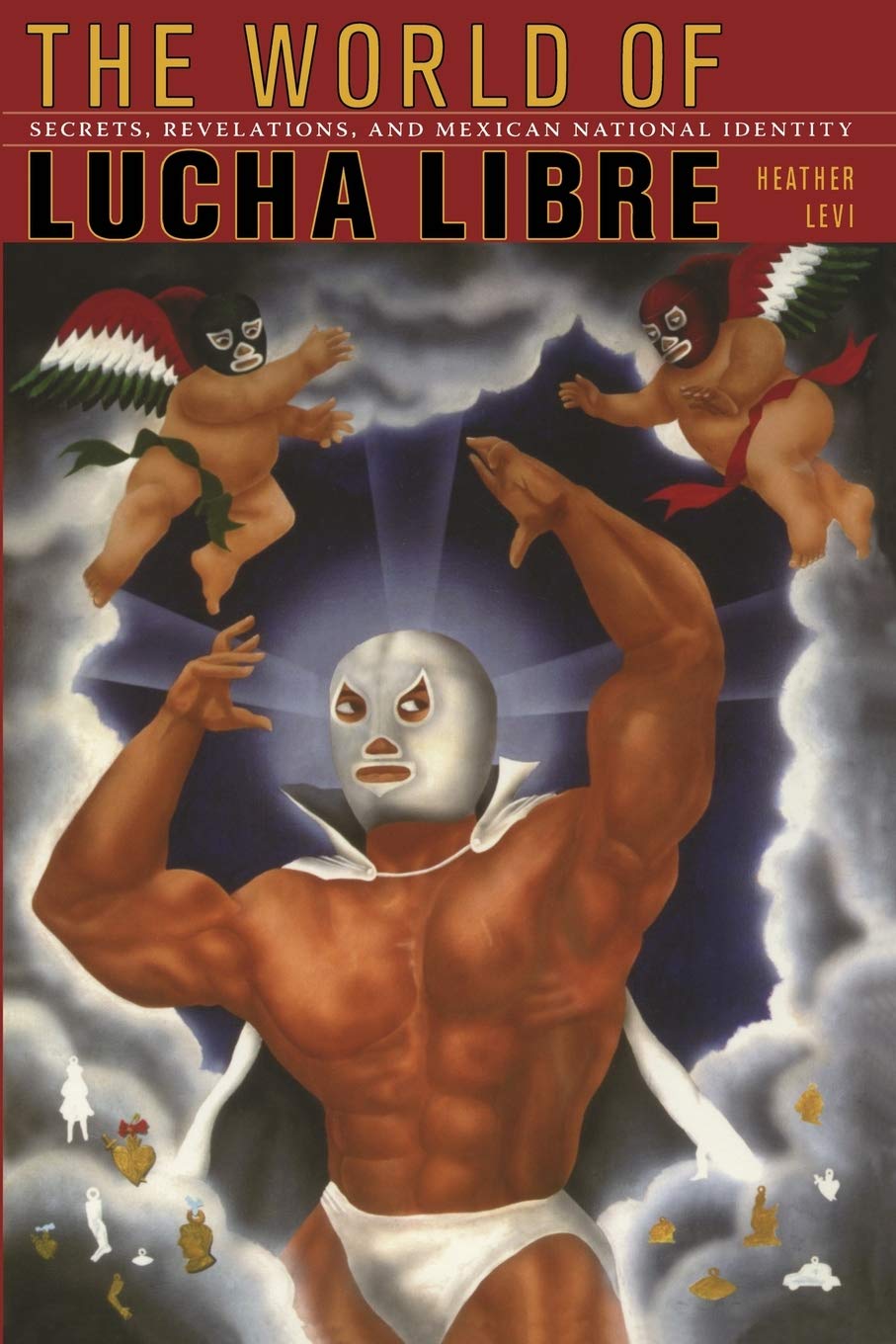
Title
The World of Lucha Libre: Secrets, Revelations, and Mexican National Identity,Used
Sold by Ergodebooks, an authorized reseller.
Returns accepted within 30 days | support@ergodebooks.com
Shipping Information
- Free Standard Shipping — United States only
- Processing Time: 3–5 business days
- Estimated Delivery: 6–10 business days after dispatch
- Double-boxed, fully insured & discreetly packaged
- Tracking number sent via email once dispatched
Returns & Refund
Returns accepted within 30 days of delivery.
Damaged or Defective Item
Free return shipping + replacement or full refund
Wrong Item Received
Free return shipping + replacement or full refund
Change of Mind
Return shipping at customer's expense · 25% restocking fee applies
Payment Option

The World of Lucha Libre is an insiders account of lucha libre, the popular Mexican form of professional wrestling. Heather Levi spent more than a year immersed in the world of wrestling in Mexico City. Not only did she observe live events and interview wrestlers, referees, officials, promoters, and reporters; she also apprenticed with a retired luchador (wrestler). Drawing on her insiders perspective, she explores lucha libre as a cultural performance, an occupational subculture, and a set of symbols that circulate through Mexican culture and politics. Levi argues that the broad appeal of lucha libre lies in its capacity to stage contradictions at the heart of Mexican national identity: between the rural and the urban, tradition and modernity, ritual and parody, machismo and feminism, politics and spectacle.Levi considers lucha libre in light of scholarship about sport, modernization, and the formation of the Mexican nationstate, and in connection to professional wrestling in the United States. She examines the role of secrecy in wrestling, the relationship between wrestlers and the characters they embody, and the meanings of the masks worn by luchadors. She discusses male wrestlers who perform masculine roles, those who crossdress and perform feminine roles, and female wrestlers who wrestle each other. Investigating the relationship between lucha libre and the mass media, she highlights the history of the sports engagement with television: it was televised briefly in the early 1950s, but not again until 1991. Finally, Levi traces the circulation of lucha libre symbols in avantgarde artistic movements and its appropriation in leftwing political discourse. The World of Lucha Libre shows how a sport imported from the United States in the 1930s came to be an iconic symbol of Mexican cultural authenticity.
⚠️ WARNING (California Proposition 65):
This product may contain chemicals known to the State of California to cause cancer, birth defects, or other reproductive harm.
For more information, please visit www.P65Warnings.ca.gov.