If you have any questions, you are always welcome to contact us. We'll get back to you as soon as possible, withing 24 hours on weekdays.
Customer service
All questions about your order, return and delivery must be sent to our customer service team by e-mail at yourstore@yourdomain.com
Sale & Press
If you are interested in selling our products, need more information about our brand or wish to make a collaboration, please contact us at press@yourdomain.com
Help
If you have any questions, you are always welcome to contact us. We'll get back to you as soon as possible, withing 24 hours on weekdays.
Customer service
All questions about your order, return and delivery must be sent to our customer service team by e-mail at yourstore@yourdomain.com
Sale & Press
If you are interested in selling our products, need more information about our brand or wish to make a collaboration, please contact us at press@yourdomain.com
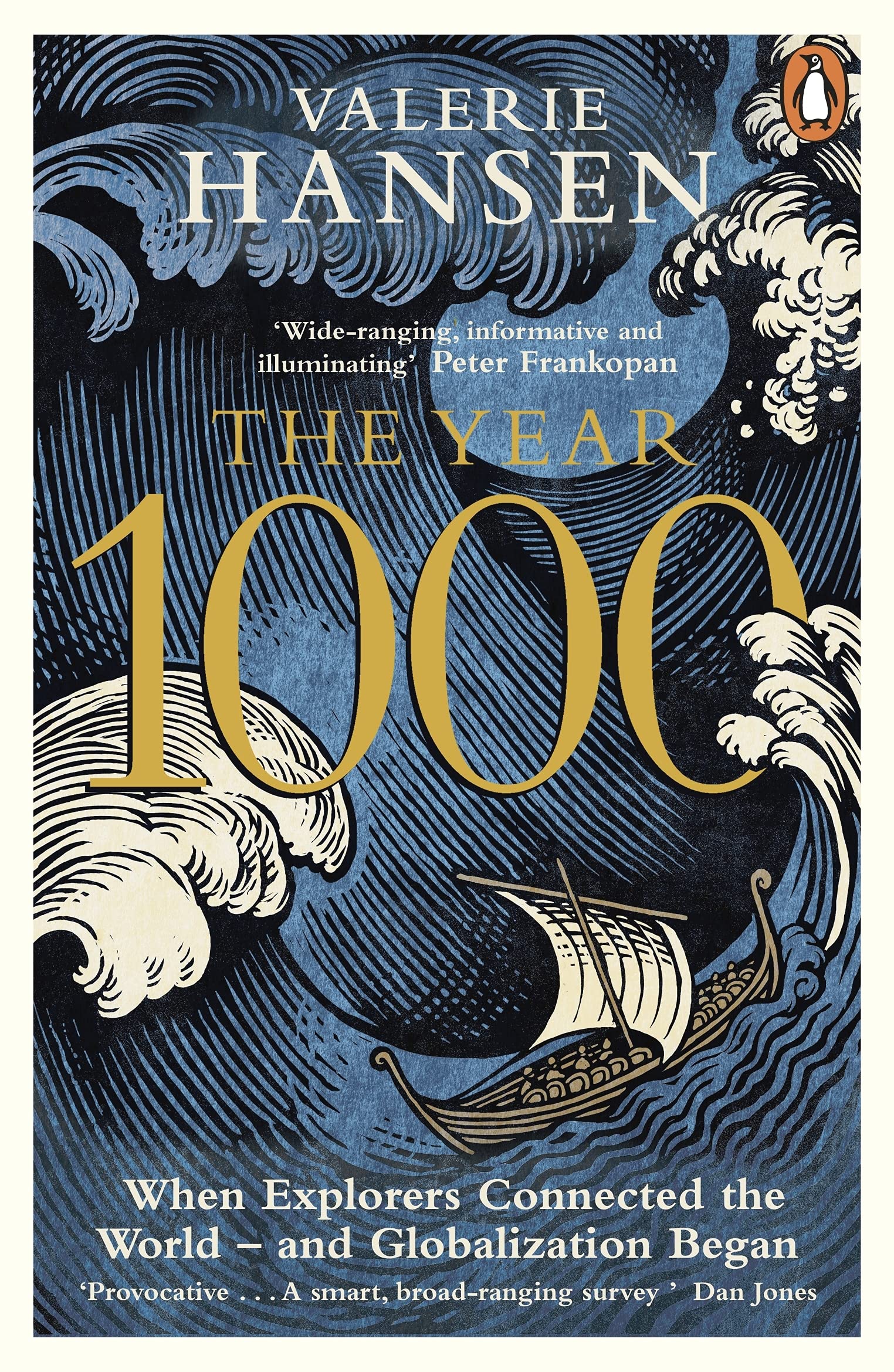
Typically wideranging, informative, and illuminating . . . a lovely book' Peter FrankopanWhen did globalization begin? Most observers have settled on 1492, the year Columbus discovered America. But as celebrated Yale professor Valerie Hansen shows, it was the year 1000, when for the first time new trade routes linked the entire globe, so an object could in theory circumnavigate the world. This was the 'big bang' of globalization, which ushered in a new era of exploration and trade, and which paved the way for Europeans to dominate after Columbus reached America.Drawing on a wide range of new historical sources and cuttingedge archaeology, Hansen shows, for example, that the Maya began to trade with the native peoples of modern New Mexico from traces of theobromine the chemical signature of chocolate and that frozen textiles found in Greenland contain hairs from animals that could only have come from North America.Moreover, Hansen turns accepted wisdom on its head, revealing not only that globalization began much earlier than previously thought, but also that the world's first antiglobalization riots did too, in cities such as Cairo, Constantinople, and Guangzhou.Introducing players from Europe, the Islamic world, Asia, the Indian Ocean maritime world, the Pacific and the Mayan world who were connecting the major landmasses for the first time, this compelling revisionist argument shows how these encounters set the stage for the globalization that would dominate the world for centuries to come.
⚠️ WARNING (California Proposition 65):
This product may contain chemicals known to the State of California to cause cancer,
birth defects, or other reproductive harm.
For MAP (Minimum Advertised Price) violations and Intellectual Property (IP) or Trademark concerns, please contact:
support@ergodebooks.com
⚠️ California Proposition 65 Warning: Some products sold on this website may expose you to chemicals known to the State of California to cause cancer, birth defects, or other reproductive harm. For more information, visit www.P65Warnings.ca.gov.