
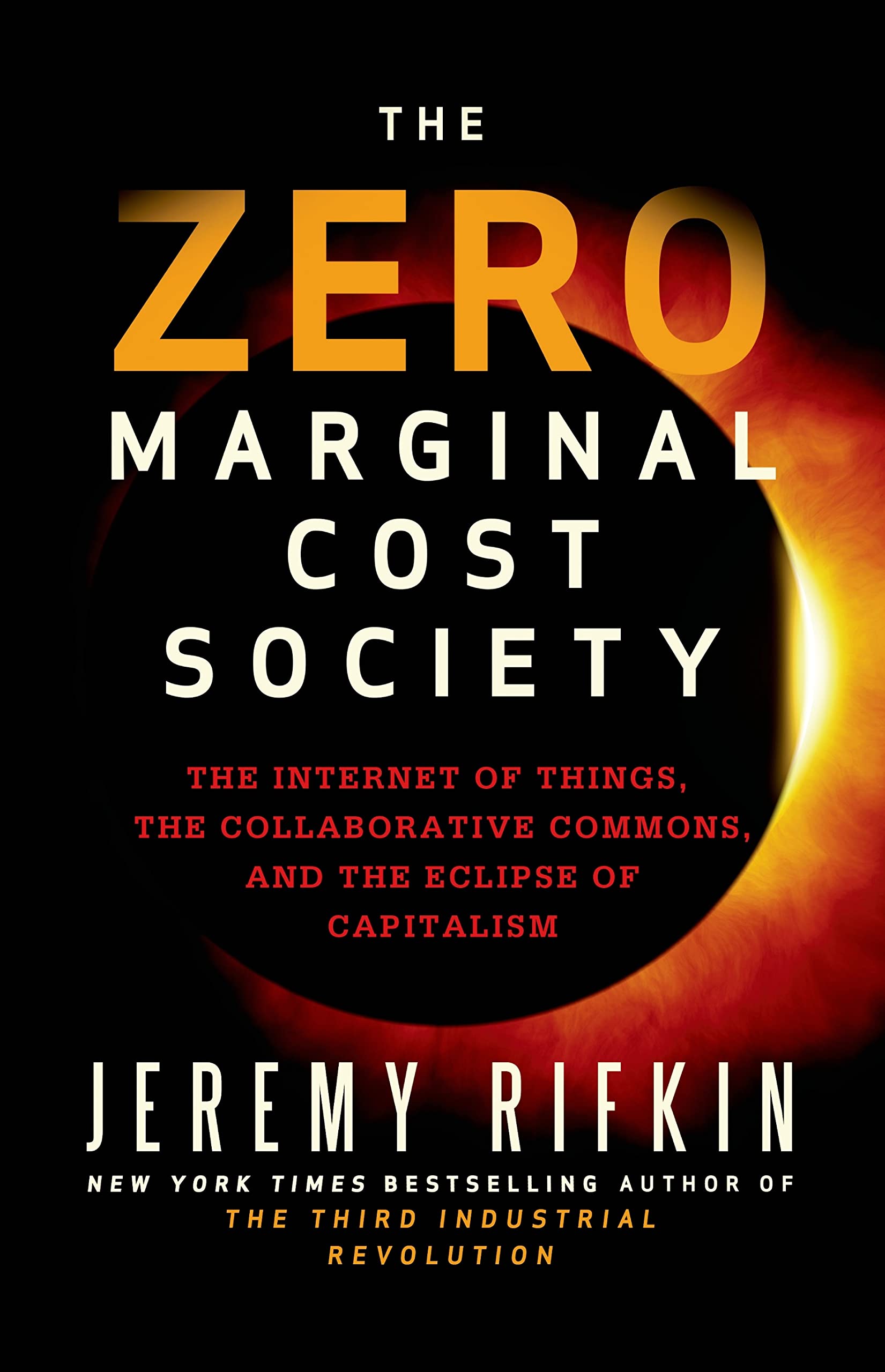
Title
The Zero Marginal Cost Society: The Internet Of Things, The Collaborative Commons, And The Eclipse Of Capitalism
Sold by Ergodebooks, an authorized reseller.
Returns accepted within 30 days | support@ergodebooks.com
Shipping Information
- Free Standard Shipping — United States only
- Processing Time: 3–5 business days
- Estimated Delivery: 6–10 business days after dispatch
- Double-boxed, fully insured & discreetly packaged
- Tracking number sent via email once dispatched
Returns & Refund
Returns accepted within 30 days of delivery.
Damaged or Defective Item
Free return shipping + replacement or full refund
Wrong Item Received
Free return shipping + replacement or full refund
Change of Mind
Return shipping at customer's expense · 25% restocking fee applies
Payment Option

In The Zero Marginal Cost Society, New York Times Bestselling Author Jeremy Rifkin Describes How The Emerging Internet Of Things Is Speeding Us To An Era Of Nearly Free Goods And Services, Precipitating The Meteoric Rise Of A Global Collaborative Commons And The Eclipse Of Capitalism.Rifkin Uncovers A Paradox At The Heart Of Capitalism That Has Propelled It To Greatness But Is Now Taking It To Its Deaththe Inherent Entrepreneurial Dynamism Of Competitive Markets That Drives Productivity Up And Marginal Costs Down, Enabling Businesses To Reduce The Price Of Their Goods And Services In Order To Win Over Consumers And Market Share. (Marginal Cost Is The Cost Of Producing Additional Units Of A Good Or Service, If Fixed Costs Are Not Counted.) While Economists Have Always Welcomed A Reduction In Marginal Cost, They Never Anticipated The Possibility Of A Technological Revolution That Might Bring Marginal Costs To Near Zero, Making Goods And Services Priceless, Nearly Free, And Abundant, And No Longer Subject To Market Forces.Now, A Formidable New Technology Infrastructurethe Internet Of Things (Iot)Is Emerging With The Potential Of Pushing Large Segments Of Economic Life To Near Zero Marginal Cost In The Years Ahead. Rifkin Describes How The Communication Internet Is Converging With A Nascent Energy Internet And Logistics Internet To Create A New Technology Platform That Connects Everything And Everyone. Billions Of Sensors Are Being Attached To Natural Resources, Production Lines, The Electricity Grid, Logistics Networks, Recycling Flows, And Implanted In Homes, Offices, Stores, Vehicles, And Even Human Beings, Feeding Big Data Into An Iot Global Neural Network. Prosumers Can Connect To The Network And Use Big Data, Analytics, And Algorithms To Accelerate Efficiency, Dramatically Increase Productivity, And Lower The Marginal Cost Of Producing And Sharing A Wide Range Of Products And Services To Near Zero, Just Like They Now Do With Information Goods.The Plummeting Of Marginal Costs Is Spawning A Hybrid Economypart Capitalist Market And Part Collaborative Commonswith Far Reaching Implications For Society, According To Rifkin. Hundreds Of Millions Of People Are Already Transferring Parts Of Their Economic Lives To The Global Collaborative Commons. Prosumers Are Plugging Into The Fledgling Iot And Making And Sharing Their Own Information, Entertainment, Green Energy, And 3Dprinted Products At Near Zero Marginal Cost. They Are Also Sharing Cars, Homes, Clothes And Other Items Via Social Media Sites, Rentals, Redistribution Clubs, And Cooperatives At Low Or Near Zero Marginal Cost. Students Are Enrolling In Free Massive Open Online Courses (Moocs) That Operate At Near Zero Marginal Cost. Social Entrepreneurs Are Even Bypassing The Banking Establishment And Using Crowdfunding To Finance Startup Businesses As Well As Creating Alternative Currencies In The Fledgling Sharing Economy. In This New World, Social Capital Is As Important As Financial Capital, Access Trumps Ownership, Sustainability Supersedes Consumerism, Cooperation Ousts Competition, And Exchange Value In The Capitalist Marketplace Is Increasingly Replaced By Sharable Value On The Collaborative Commons.Rifkin Concludes That Capitalism Will Remain With Us, Albeit In An Increasingly Streamlined Role, Primarily As An Aggregator Of Network Services And Solutions, Allowing It To Flourish As A Powerful Niche Player In The Coming Era. We Are, However, Says Rifkin, Entering A World Beyond Markets Where We Are Learning How To Live Together In An Increasingly Interdependent Global Collaborative Commons.
⚠️ WARNING (California Proposition 65):
This product may contain chemicals known to the State of California to cause cancer, birth defects, or other reproductive harm.
For more information, please visit www.P65Warnings.ca.gov.
- Q: How many pages does this book have? A: This book has three hundred sixty-eight pages. It provides an in-depth analysis of capitalism and the emerging Collaborative Commons.
- Q: What is the binding type of this book? A: The binding type is hardcover. This ensures durability and a premium feel for readers.
- Q: What are the dimensions of this book? A: The dimensions are six point four two inches in length, one point two six inches in width, and nine point four one inches in height. These measurements make it a standard-sized hardcover book.
- Q: Who is the author of this book? A: The author is Jeremy Rifkin. He is a well-known figure in discussions about economics and technology.
- Q: What genre does this book belong to? A: This book belongs to the genre of Free Enterprise and Capitalism. It explores the intersection of technology and economic theory.
- Q: Is this book suitable for beginners? A: Yes, this book is suitable for beginners. It presents complex ideas in an accessible manner, making it easy to understand for general readers.
- Q: How does this book explain the Internet of Things? A: This book explains the Internet of Things as a transformative technology that connects various aspects of economic life. It emphasizes how it lowers costs and enhances efficiency.
- Q: Can I share this book with my friends? A: Yes, you can share this book with your friends. However, it is recommended to discuss the ideas presented to foster meaningful conversations.
- Q: Is this book appropriate for young adults? A: Yes, this book is appropriate for young adults. Its themes of economics and technology are relevant for a wide audience.
- Q: How should I store this book? A: Store this book in a cool, dry place, upright or flat. This will help maintain its condition and longevity.
- Q: How should I clean this book? A: To clean this book, gently wipe the cover with a soft, dry cloth. Avoid using water or cleaning solutions that could damage the binding.
- Q: What if the book arrives damaged? A: If the book arrives damaged, you should contact the seller for a return or exchange. Most sellers have policies in place for such situations.
- Q: Can I return this book if I don’t like it? A: Yes, you can typically return this book if you don’t like it, as long as you follow the seller's return policy. Check the specific terms for details.
- Q: Is there a warranty for this book? A: No, books generally do not come with a warranty. However, return policies may offer some protection against defects.
- Q: What is the main theme of this book? A: The main theme of this book is the evolution of capitalism in the context of the Internet of Things and Collaborative Commons. It discusses how technology reshapes economic systems.
- Q: Does this book contain any illustrations? A: No, this book does not contain illustrations. It focuses primarily on text-based analysis and arguments regarding economic theory.