
Title
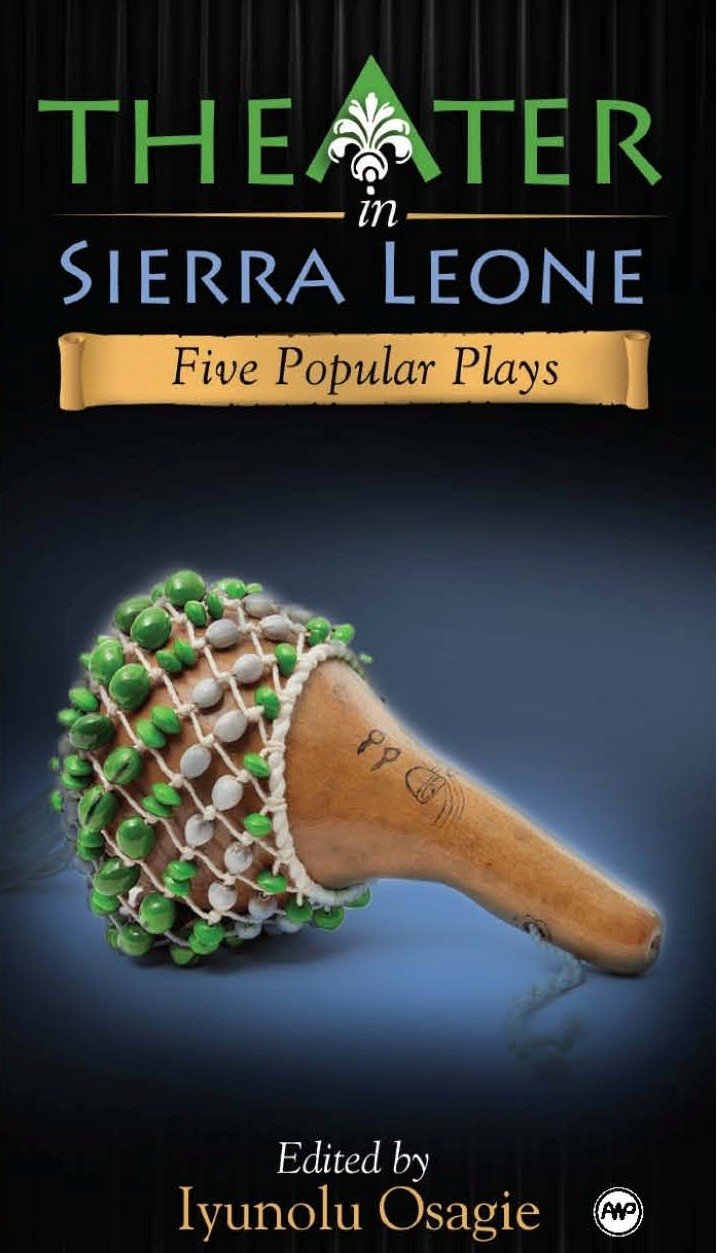
Theater In Sierra Leone: Five Popular Plays,Used
Sold by Ergodebooks, an authorized reseller.
Returns accepted within 30 days | support@ergodebooks.com
Shipping Information
- Free Standard Shipping — United States only
- Processing Time: 3–5 business days
- Estimated Delivery: 6–10 business days after dispatch
- Double-boxed, fully insured & discreetly packaged
- Tracking number sent via email once dispatched
Returns & Refund
Returns accepted within 30 days of delivery.
Damaged or Defective Item
Free return shipping + replacement or full refund
Wrong Item Received
Free return shipping + replacement or full refund
Change of Mind
Return shipping at customer's expense · 25% restocking fee applies
Payment Option

The growing corpus of published Sierra Leonean literature would not be complete without the inclusion of plays by Sierra Leonean dramatists. Scholars, such as Eldred Durosimi Jones, generally agree that the vibrancy of drama in Sierra Leone has not been recognized outside the country and scarcely engaged by the intellectual community. This situation is palpable because of the weak publication history in the field. Although playwright Sarif Easmon put Sierra Leone on the artistic map with the publication of his two major plays in the 1960s, followed by Yulisa Amadu Maddys collection of plays, Obasai and Other Plays, in 1971, other artists did not follow suit with this publishing trend. In reality, theatre as a positive developmental force began in the 1970s with Raymond DeleCharleys classic The Blood of a Stranger and continued unabated until the civil war reached Freetown, the capital city, in the 1990s. Sierra Leone enjoyed a thirtyyear period of immense growth in terms of the proliferation of amateur and quasiprofessional theatre groups, the quality of written plays both in the vernacular and in English, and the record number of performances. Theater in Sierra Leone: Five Popular Plays, a collection of plays in English, is an attempt to revisit that remarkable era, the 1970s, 80s, and 90s, and to make some of the plays accessible to a world audience, to scholars, and to College and High school students. The five plays in the volume are from some of the most recognizable dramatists in the country, dramatists who have made the most significant contributions to the climate of theater in Sierra Leone since the 1960s: Dele Charley, John Kolosa Kargbo, Julius Spencer, Tonie French and Mohamed Sheriff. The collection begins with a very succinct introduction by the editor, placing the plays within the context of the historical development of Sierra Leonean drama. Offering a brief critical analysis of each play, the editor also highlights some of the social, political, and historical issues that playwrights have grappled with, such as colonial arrogance, the ambivalence of history, the exploitation of African womanhood, and the consequences of modernity.
⚠️ WARNING (California Proposition 65):
This product may contain chemicals known to the State of California to cause cancer, birth defects, or other reproductive harm.
For more information, please visit www.P65Warnings.ca.gov.
- Q: How many pages is 'Theater In Sierra Leone: Five Popular Plays'? A: This book has three hundred twelve pages. It includes five plays by significant Sierra Leonean dramatists.
- Q: What type of binding does this book have? A: The book is paperback bound. This makes it lightweight and easy to handle for reading.
- Q: Who is the author of this collection? A: The book is edited by Iyunolu Osagie. He provides critical insights into the plays and their historical context.
- Q: What themes do the plays in this collection explore? A: The plays address themes such as colonialism, the exploitation of women, and modernity. They reflect significant social and political issues in Sierra Leone.
- Q: Is this book suitable for high school students? A: Yes, it is suitable for high school students. The plays are accessible and provide valuable historical and cultural insights.
- Q: How do the plays in this book relate to Sierra Leonean history? A: The plays reflect the historical development of Sierra Leonean drama from the 1960s to the 1990s. They highlight the impact of social and political changes in the country.
- Q: How should I store this book to keep it in good condition? A: Store the book in a cool, dry place away from direct sunlight. This prevents damage to the pages and cover.
- Q: Can I clean the pages if they get dirty? A: No, it is not advisable to clean the pages. Instead, keep the book in a protective cover to avoid dirt.
- Q: What should I do if the book arrives damaged? A: If the book arrives damaged, contact the seller immediately for a return or exchange. Most sellers have specific policies for damaged items.
- Q: Is this collection good for someone unfamiliar with Sierra Leonean literature? A: Yes, this collection serves as a great introduction. It showcases important works and provides context for understanding Sierra Leonean drama.
- Q: Are there any notable playwrights featured in this book? A: Yes, notable playwrights include Dele Charley, John Kolosa Kargbo, and Julius Spencer. Each has made significant contributions to Sierra Leonean theatre.
- Q: What is the significance of the introduction in the book? A: The introduction provides critical context for the plays. It highlights key historical developments in Sierra Leonean drama.
- Q: Does this book contain any illustrations or photographs? A: No, this book does not contain illustrations or photographs. It focuses on the text of the plays.
- Q: Is there a glossary or index in the book? A: No, there is no glossary or index. The content primarily consists of the plays and their analyses.
- Q: What is the publication date of this book? A: The publication date is not specified in the details. It is important to check with the seller for additional information.