If you have any questions, you are always welcome to contact us. We'll get back to you as soon as possible, withing 24 hours on weekdays.
Customer service
All questions about your order, return and delivery must be sent to our customer service team by e-mail at yourstore@yourdomain.com
Sale & Press
If you are interested in selling our products, need more information about our brand or wish to make a collaboration, please contact us at press@yourdomain.com
Help
If you have any questions, you are always welcome to contact us. We'll get back to you as soon as possible, withing 24 hours on weekdays.
Customer service
All questions about your order, return and delivery must be sent to our customer service team by e-mail at yourstore@yourdomain.com
Sale & Press
If you are interested in selling our products, need more information about our brand or wish to make a collaboration, please contact us at press@yourdomain.com
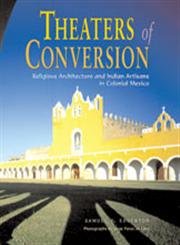
Mexico's churches and conventos display a unique blend of European and native styles. Missionary Mendicant friars arrived in New Spain shortly after Cortes's conquest of the Aztec empire in 1521 and immediately related their own European architectural and visual arts styles to the tastes and expectations of native Indians. Right from the beginning the friars conceived of conventos as a special architectural theater in which to carry out their proselytizing. Over four hundred conventos were established in Mexico between 1526 and 1600, and more still in New Mexico in the century following, all built and decorated by native Indian artisans who became masters of European techniques and styles even as they added their own influence. The author argues that these magnificent sixteenth and seventeenthcentury structures are as much part of the artistic patrimony of American Indians as their preConquest temples, pyramids, and kivas. Mexican Indians, in fact, adapted European motifs to their own pictorial traditions and thus made a unique contribution to the worldwide spread of the Italian Renaissance.The author brings a wealth of knowledge of medieval and Renaissance European history, philosophy, theology, art, and architecture to bear on colonial Mexico at the same time as he focuses on indigenous contributions to the colonial enterprise. This groundbreaking study enriches our understanding of the colonial process and the reciprocal relationship between European friars and native artisans.
⚠️ WARNING (California Proposition 65):
This product may contain chemicals known to the State of California to cause cancer,
birth defects, or other reproductive harm.
For MAP (Minimum Advertised Price) violations and Intellectual Property (IP) or Trademark concerns, please contact:
support@ergodebooks.com
⚠️ California Proposition 65 Warning: Some products sold on this website may expose you to chemicals known to the State of California to cause cancer, birth defects, or other reproductive harm. For more information, visit www.P65Warnings.ca.gov.