
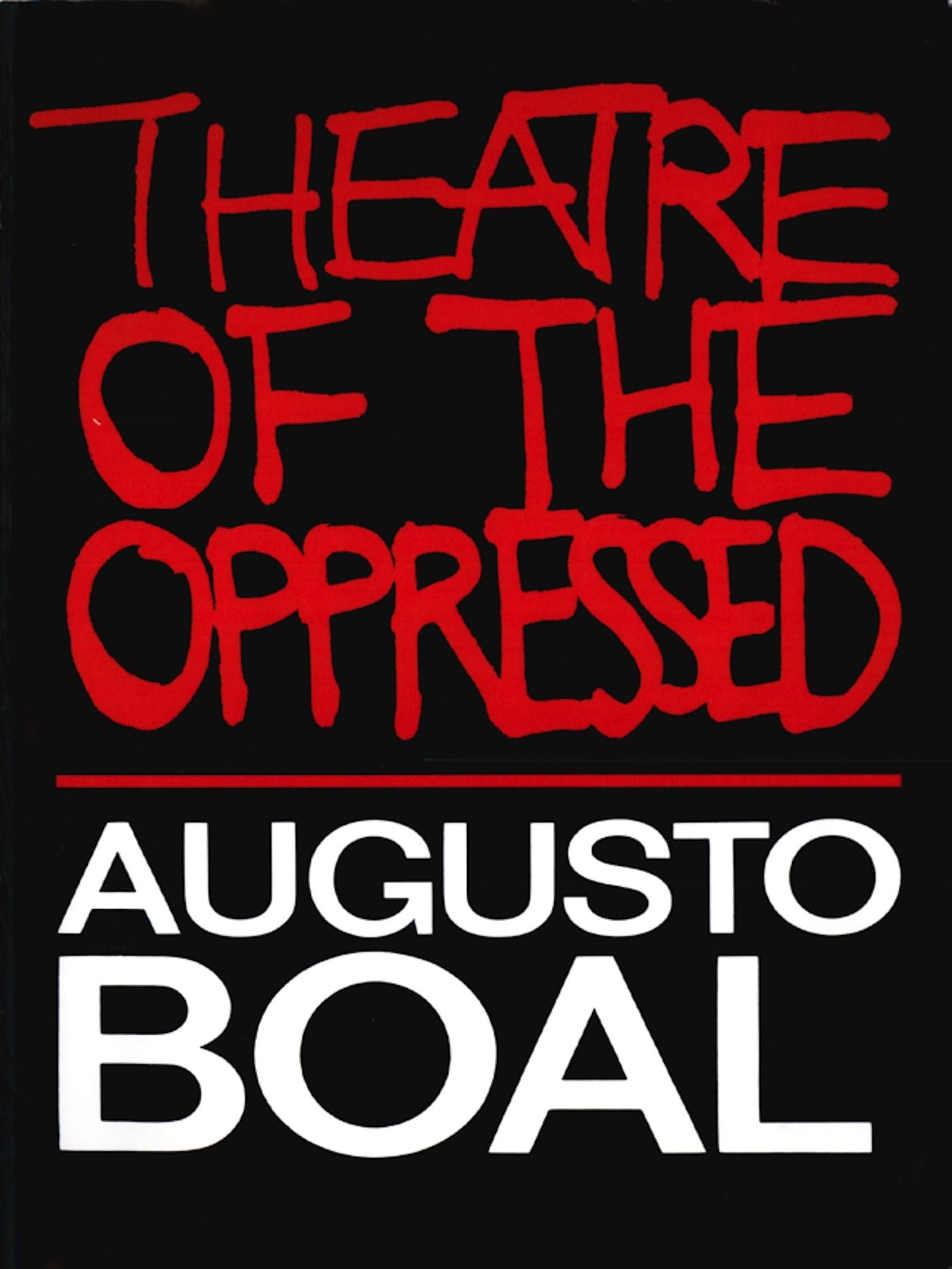
Title
Theatre Of The Oppressed,New
Sold by Ergodebooks, an authorized reseller.
Returns accepted within 30 days | support@ergodebooks.com
Shipping Information
- Free Standard Shipping — United States only
- Processing Time: 3–5 business days
- Estimated Delivery: 6–10 business days after dispatch
- Double-boxed, fully insured & discreetly packaged
- Tracking number sent via email once dispatched
Returns & Refund
Returns accepted within 30 days of delivery.
Damaged or Defective Item
Free return shipping + replacement or full refund
Wrong Item Received
Free return shipping + replacement or full refund
Change of Mind
Return shipping at customer's expense · 25% restocking fee applies
Payment Option

Boal And His Work Are Marvelous Examples Of The Postmodern Situationits Problems And Its Opportunities. Twice Exiled, Boal Is 'At Home' Now Wherever He Finds Himself To Be. He Makes A Skeptical, Comic, Inquisitive And Finally Optimistic Theatre Involving Spectators And Performers In The Search For Community And Integrity. This Is A Good Book To Be Used Even More Than To Be Read.' Richard Schechner'Augusto Boal'S Achievement Is So Remarkable, So Original And So Groundbreaking That I Have No Hesitation In Describing The Book As The Most Important Theoretical Work In The Theatre In Modern Times A Statement I Make With Having Suffered Any Memory Lapse With Respect To Stanislavsky, Artaud Or Grotowski.' Goerge E. Wellwarthoriginally Basing Himself At The Arena Stage In Sao Paolo, Brazil, Augusto Boal Developed A Series Of Imaginative Theatre Exercises Which Promote Awareness Of One'S Social Situation And Its Limitations, Individual Attitudes, And Even How Our Bodies Are Bound By Tradition. Boal Is Continued His Explorations In Paris, Where He Directed Le Ceditade (Centre D'Etude Et De Diffusion Des Techniques Actives D'Expression Methode Boal), In Addition To Traveling And Lecturing Extensively In Other Countries. On May 2, 2009, Boal Died At Age 78 In Rio De Janeiro.
⚠️ WARNING (California Proposition 65):
This product may contain chemicals known to the State of California to cause cancer, birth defects, or other reproductive harm.
For more information, please visit www.P65Warnings.ca.gov.
- Q: What is the page count of 'Theatre of the Oppressed'? A: This book has two hundred eight pages. It is a comprehensive exploration of Augusto Boal's theatrical techniques.
- Q: What is the binding type of 'Theatre of the Oppressed'? A: It is available in paperback binding. This makes it lightweight and easy to handle.
- Q: What are the dimensions of 'Theatre of the Oppressed'? A: The dimensions are five point five one inches in length, zero point six inches in width, and eight point five inches in height. This size makes it portable.
- Q: How do I read 'Theatre of the Oppressed'? A: You simply read it like any other book. It offers insights into theatre practices and social awareness.
- Q: Is 'Theatre of the Oppressed' suitable for all ages? A: Yes, it is suitable for a wide audience, particularly those interested in theatre and social issues. It can be a valuable resource for students and practitioners.
- Q: What is the main theme of 'Theatre of the Oppressed'? A: The main theme revolves around using theatre as a means of social change and community building. It emphasizes the role of spectators in the theatrical process.
- Q: How should I store 'Theatre of the Oppressed'? A: Store it in a cool, dry place away from direct sunlight. This will help preserve the book's condition over time.
- Q: Can 'Theatre of the Oppressed' be damaged easily? A: No, while it is a paperback, it is durable if handled with care. Avoid excessive bending or exposure to moisture.
- Q: How do I keep 'Theatre of the Oppressed' in good condition? A: Keep it on a bookshelf or in a protective cover. Regularly check for wear and avoid writing in it to maintain its integrity.
- Q: Is 'Theatre of the Oppressed' a good choice for beginners? A: Yes, it is ideal for beginners interested in theatre and social activism. The writing is accessible and engaging.
- Q: What makes 'Theatre of the Oppressed' unique compared to other theatre books? A: Its focus on participatory theatre and social awareness distinguishes it from other works. Augusto Boal's methods are innovative and thought-provoking.
- Q: What should I do if 'Theatre of the Oppressed' arrives damaged? A: Contact the seller immediately for a return or exchange. Most sellers offer policies for damaged items.
- Q: Is there a warranty for 'Theatre of the Oppressed'? A: Typically, there is no warranty for books. However, check with the retailer for their specific return policies.
- Q: What if I have questions while reading 'Theatre of the Oppressed'? A: You can look for online discussion groups or forums dedicated to Augusto Boal's work. Many resources are available for deeper understanding.
- Q: Can I use 'Theatre of the Oppressed' for academic purposes? A: Yes, it is a valuable resource for academic study, particularly in drama and social sciences. Many courses incorporate its teachings.
- Q: Are there other books similar to 'Theatre of the Oppressed'? A: Yes, books on participatory theatre and social activism, like those by Peter Brook or Victor Turner, are similar in nature.