If you have any questions, you are always welcome to contact us. We'll get back to you as soon as possible, withing 24 hours on weekdays.
Customer service
All questions about your order, return and delivery must be sent to our customer service team by e-mail at yourstore@yourdomain.com
Sale & Press
If you are interested in selling our products, need more information about our brand or wish to make a collaboration, please contact us at press@yourdomain.com
Help
If you have any questions, you are always welcome to contact us. We'll get back to you as soon as possible, withing 24 hours on weekdays.
Customer service
All questions about your order, return and delivery must be sent to our customer service team by e-mail at yourstore@yourdomain.com
Sale & Press
If you are interested in selling our products, need more information about our brand or wish to make a collaboration, please contact us at press@yourdomain.com
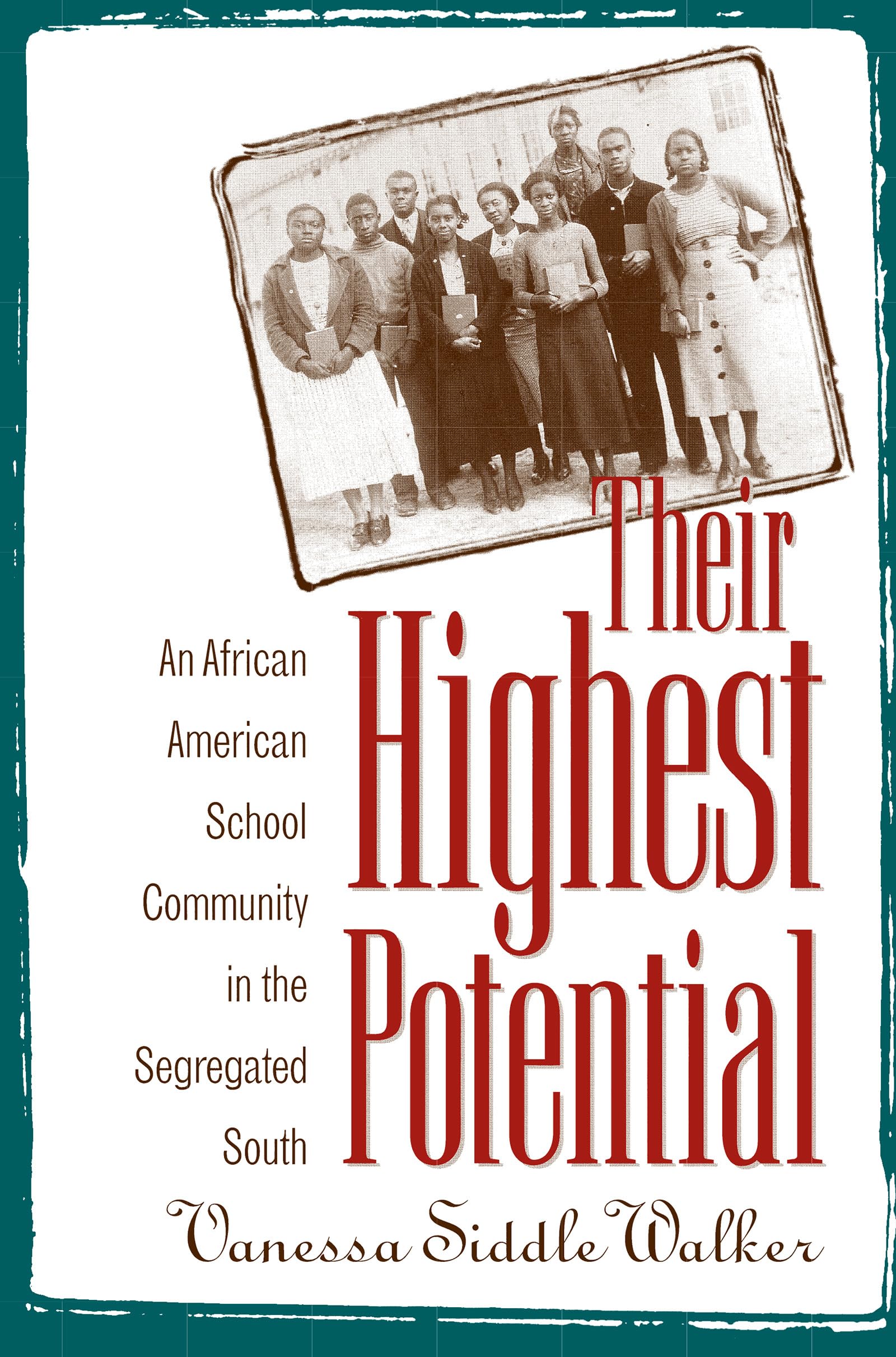
African American schools in the segregated South faced enormous obstacles in educating their students. But some of these schools succeeded in providing nurturing educational environments in spite of the injustices of segregation. Vanessa Siddle Walker tells the story of one such school in rural North Carolina, the Caswell County Training School, which operated from 1934 to 1969. She focuses especially on the importance of dedicated teachers and the principal, who believed their jobs extended well beyond the classroom, and on the community's parents, who worked hard to support the school. According to Walker, the relationship between school and community was mutually dependent. Parents sacrificed financially to meet the school's needs, and teachers and administrators put in extra time for professional development, specialized student assistance, and home visits. The result was a school that placed the needs of African American students at the center of its mission, which was in turn shared by the community. Walker concludes that the experience of CCTS captures a segment of the history of African Americans in segregated schools that has been overlooked and that provides important context for the ongoing debate about how best to educate African American children. African American History/Education/North Carolina
⚠️ WARNING (California Proposition 65):
This product may contain chemicals known to the State of California to cause cancer,
birth defects, or other reproductive harm.
For MAP (Minimum Advertised Price) violations and Intellectual Property (IP) or Trademark concerns, please contact:
support@ergodebooks.com
⚠️ California Proposition 65 Warning: Some products sold on this website may expose you to chemicals known to the State of California to cause cancer, birth defects, or other reproductive harm. For more information, visit www.P65Warnings.ca.gov.