If you have any questions, you are always welcome to contact us. We'll get back to you as soon as possible, withing 24 hours on weekdays.
Customer service
All questions about your order, return and delivery must be sent to our customer service team by e-mail at yourstore@yourdomain.com
Sale & Press
If you are interested in selling our products, need more information about our brand or wish to make a collaboration, please contact us at press@yourdomain.com
Help
If you have any questions, you are always welcome to contact us. We'll get back to you as soon as possible, withing 24 hours on weekdays.
Customer service
All questions about your order, return and delivery must be sent to our customer service team by e-mail at yourstore@yourdomain.com
Sale & Press
If you are interested in selling our products, need more information about our brand or wish to make a collaboration, please contact us at press@yourdomain.com
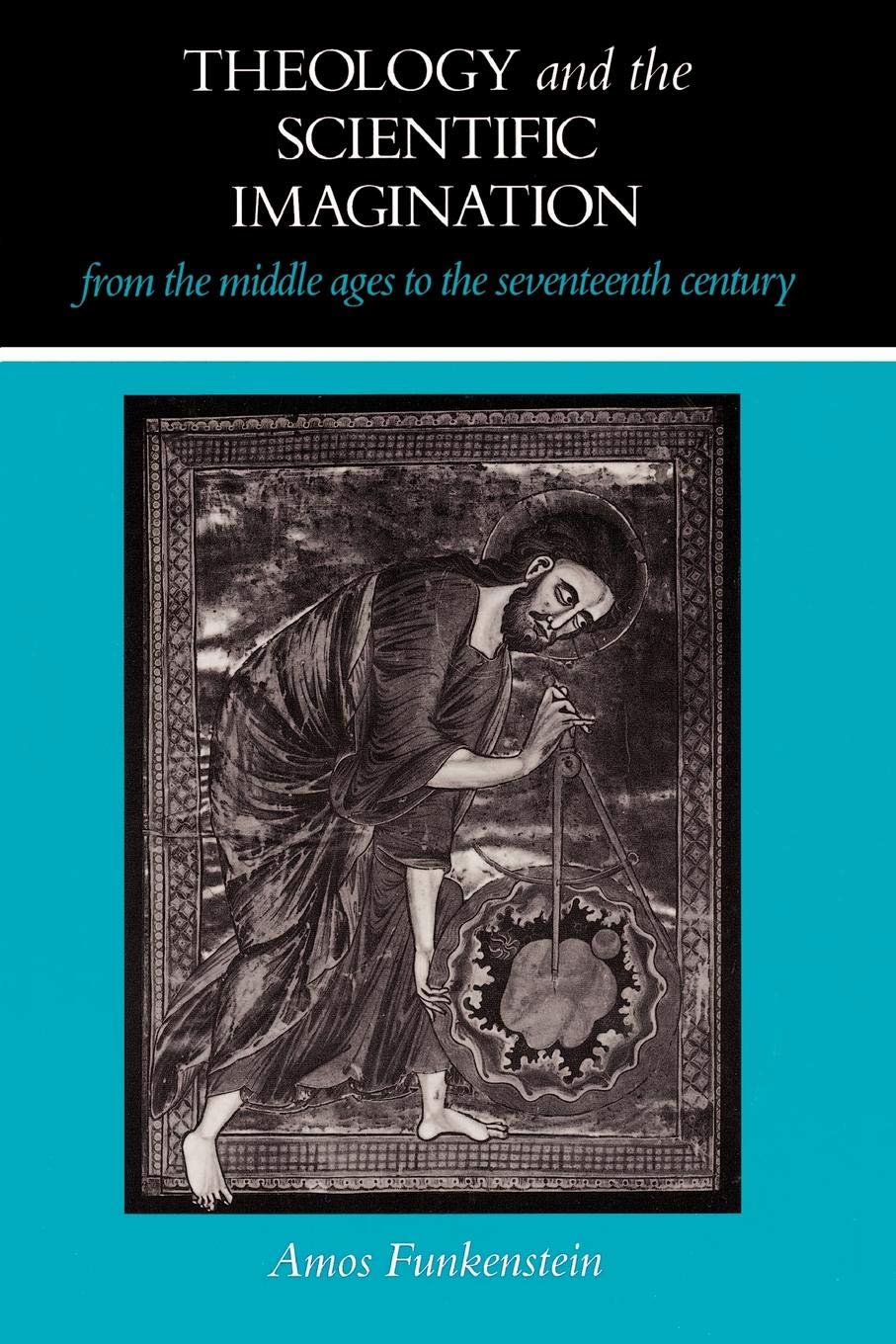
This pioneering work in the history of science, which originated in a series of three Gauss Seminars given at Princeton University in 1984, demonstrated how the roots of the scientific revolution lay in medieval scholasticism. A work of intellectual history addressing the metaphysical foundations of modern science, Theology and the Scientific Imagination raised and transformed the level of discourse on the relations of Christianity and science. Amos Funkenstein was one of the world's most distinguished scholars of Jewish history, medieval intellectual history, and the history of science. Called a genius and Renaissance man by his academic colleagues, Funkenstein was legendary for his ability to recite long literary passages verbatim and from memory in Latin, German, French, Hebrew, Yiddish, and Greek decades after he had last read them. A winner of the coveted Israel Prize for History, Funkenstein was born and raised in Palestine and received his Ph.D. in history and philosophy at the Free University of Berlin in 1965, as one of the first Jewish students to receive a doctorate in Germany after World War II.Author of seven books and more than fifty scholarly articles in four languages, Funkenstein was at the height of his powers in Theology and the Scientific Imagination, which ends with the author's influential discernment of the seventeenth century's 'unprecedented fusion' of scientific and religious language. It remains a fundamental text to historians and philosophers of science.
⚠️ WARNING (California Proposition 65):
This product may contain chemicals known to the State of California to cause cancer,
birth defects, or other reproductive harm.
For MAP (Minimum Advertised Price) violations and Intellectual Property (IP) or Trademark concerns, please contact:
support@ergodebooks.com
⚠️ California Proposition 65 Warning: Some products sold on this website may expose you to chemicals known to the State of California to cause cancer, birth defects, or other reproductive harm. For more information, visit www.P65Warnings.ca.gov.