
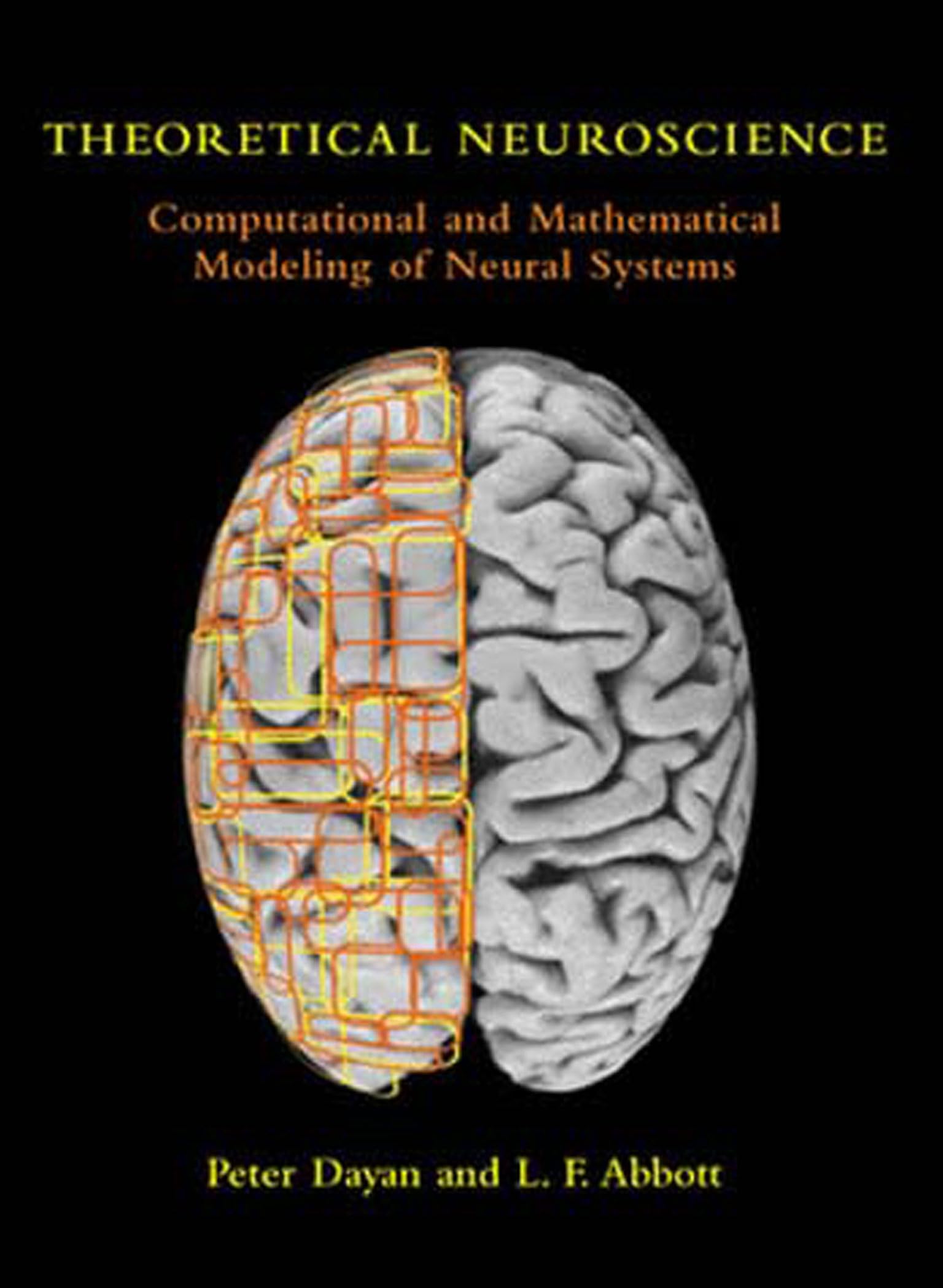
Title
Theoretical Neuroscience: Computational And Mathematical Modeling Of Neural Systems (Computational Neuroscience),Used
Sold by Ergodebooks, an authorized reseller.
Returns accepted within 30 days | support@ergodebooks.com
Shipping Information
- Free Standard Shipping — United States only
- Processing Time: 3–5 business days
- Estimated Delivery: 6–10 business days after dispatch
- Double-boxed, fully insured & discreetly packaged
- Tracking number sent via email once dispatched
Returns & Refund
Returns accepted within 30 days of delivery.
Damaged or Defective Item
Free return shipping + replacement or full refund
Wrong Item Received
Free return shipping + replacement or full refund
Change of Mind
Return shipping at customer's expense · 25% restocking fee applies
Payment Option

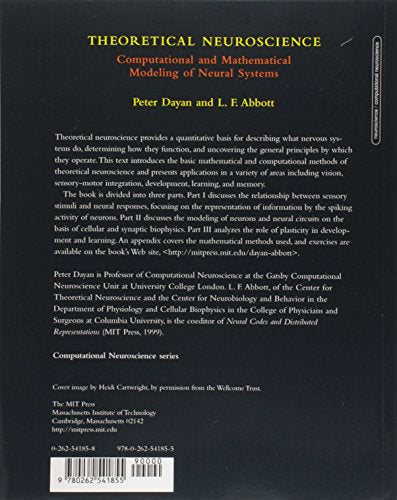
Theoretical Neuroscience Provides A Quantitative Basis For Describing What Nervous Systems Do, Determining How They Function, And Uncovering The General Principles By Which They Operate. This Text Introduces The Basic Mathematical And Computational Methods Of Theoretical Neuroscience And Presents Applications In A Variety Of Areas Including Vision, Sensorymotor Integration, Development, Learning, And Memory.The Book Is Divided Into Three Parts. Part I Discusses The Relationship Between Sensory Stimuli And Neural Responses, Focusing On The Representation Of Information By The Spiking Activity Of Neurons. Part Ii Discusses The Modeling Of Neurons And Neural Circuits On The Basis Of Cellular And Synaptic Biophysics. Part Iii Analyzes The Role Of Plasticity In Development And Learning. An Appendix Covers The Mathematical Methods Used, And Exercises Are Available On The Book'S Web Site.
⚠️ WARNING (California Proposition 65):
This product may contain chemicals known to the State of California to cause cancer, birth defects, or other reproductive harm.
For more information, please visit www.P65Warnings.ca.gov.
- Q: How many pages does this book have? A: This book has four hundred eighty pages. It provides an in-depth exploration of theoretical neuroscience.
- Q: What is the binding type of this book? A: The binding type is paperback. This makes it lightweight and easy to handle.
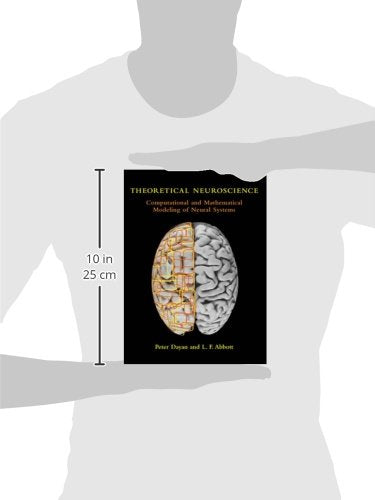
- Q: What are the dimensions of this book? A: The dimensions are seven point seven six inches in length, zero point eight seven inches in width, and ten inches in height. These measurements make it a standard size for academic texts.
- Q: Who is the author of this book? A: The author is Peter Dayan. He is known for his contributions to the field of computational neuroscience.
- Q: What is the main focus of this book? A: The main focus is on the computational and mathematical modeling of neural systems. It covers various applications in neuroscience.
- Q: Is this book suitable for beginners? A: Yes, this book is suitable for beginners. It introduces basic mathematical and computational methods in theoretical neuroscience.
- Q: What topics are covered in this book? A: Topics include sensory stimuli, neural responses, neural circuits, and plasticity in development and learning. It is comprehensive in its approach.
- Q: Does this book include exercises? A: Yes, exercises are available on the book's website. This adds an interactive element for readers.
- Q: Is there a specific audience for this book? A: This book is aimed at students and researchers in neuroscience and related fields. It provides foundational knowledge for further study.
- Q: Can I use this book for self-study? A: Yes, it is suitable for self-study. The structured content and exercises facilitate independent learning.
- Q: How should I store this book? A: Store this book in a cool, dry place away from direct sunlight. This will help preserve its condition.
- Q: Can I lend this book to someone? A: Yes, you can lend this book. However, ensure it is returned in good condition due to its academic value.
- Q: Is this book safe for all ages? A: Yes, this book is academically focused and suitable for older students and adults. It is not specifically designed for children.
- Q: What if the book arrives damaged? A: If the book arrives damaged, contact the seller immediately for a return or replacement. Most sellers have a return policy.
- Q: Are there any prerequisites to understanding this book? A: Some background in mathematics or neuroscience is helpful but not strictly necessary. The book is designed to guide readers.