
Title
Theories of Communication Networks,Used
Sold by Ergodebooks, an authorized reseller.
Returns accepted within 30 days | support@ergodebooks.com
Shipping Information
- Free Standard Shipping — United States only
- Processing Time: 3–5 business days
- Estimated Delivery: 6–10 business days after dispatch
- Double-boxed, fully insured & discreetly packaged
- Tracking number sent via email once dispatched
Returns & Refund
Returns accepted within 30 days of delivery.
Damaged or Defective Item
Free return shipping + replacement or full refund
Wrong Item Received
Free return shipping + replacement or full refund
Change of Mind
Return shipping at customer's expense · 25% restocking fee applies
Payment Option

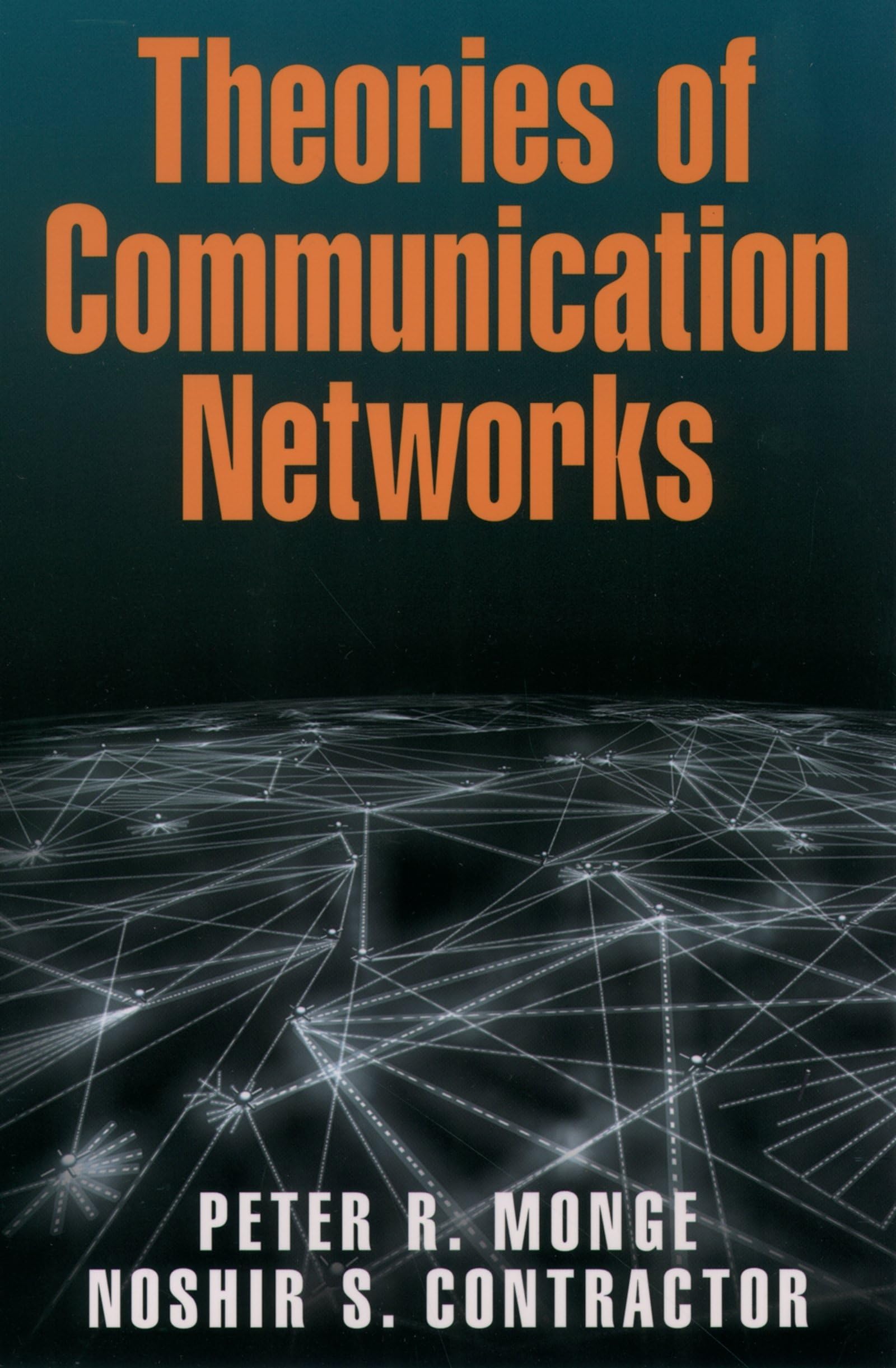
To date, most network research contains one or more of five major problems. First, it tends to be atheoretical, ignoring the various social theories that contain network implications. Second, it explores single levels of analysis rather than the multiple levels out of which most networks are comprised. Third, network analysis has employed very little the insights from contemporary complex systems analysis and computer simulations. Foruth, it typically uses descriptive rather than inferential statistics, thus robbing it of the ability to make claims about the larger universe of networks. Finally, almost all the research is static and crosssectional rather than dynamic.Theories of Communication Networks presents solutions to all five problems. The authors develop a multitheoretical model that relates different social science theories with different network properties. This model is multilevel, providing a network decomposition that applies the various social theories to all network levels: individuals, dyads, triples, groups, and the entire network. The book then establishes a model from the perspective of complex adaptive systems and demonstrates how to use Blanche, an agentbased network computer simulation environment, to generate and test network theories and hypotheses. It presents recent developments in network statistical analysis, the p* family, which provides a basis for valid multilevel statistical inferences regarding networks. Finally, it shows how to relate communication networks to other networks, thus providing the basis in conjunction with computer simulations to study the emergence of dynamic organizational networks.
⚠️ WARNING (California Proposition 65):
This product may contain chemicals known to the State of California to cause cancer, birth defects, or other reproductive harm.
For more information, please visit www.P65Warnings.ca.gov.