
Title
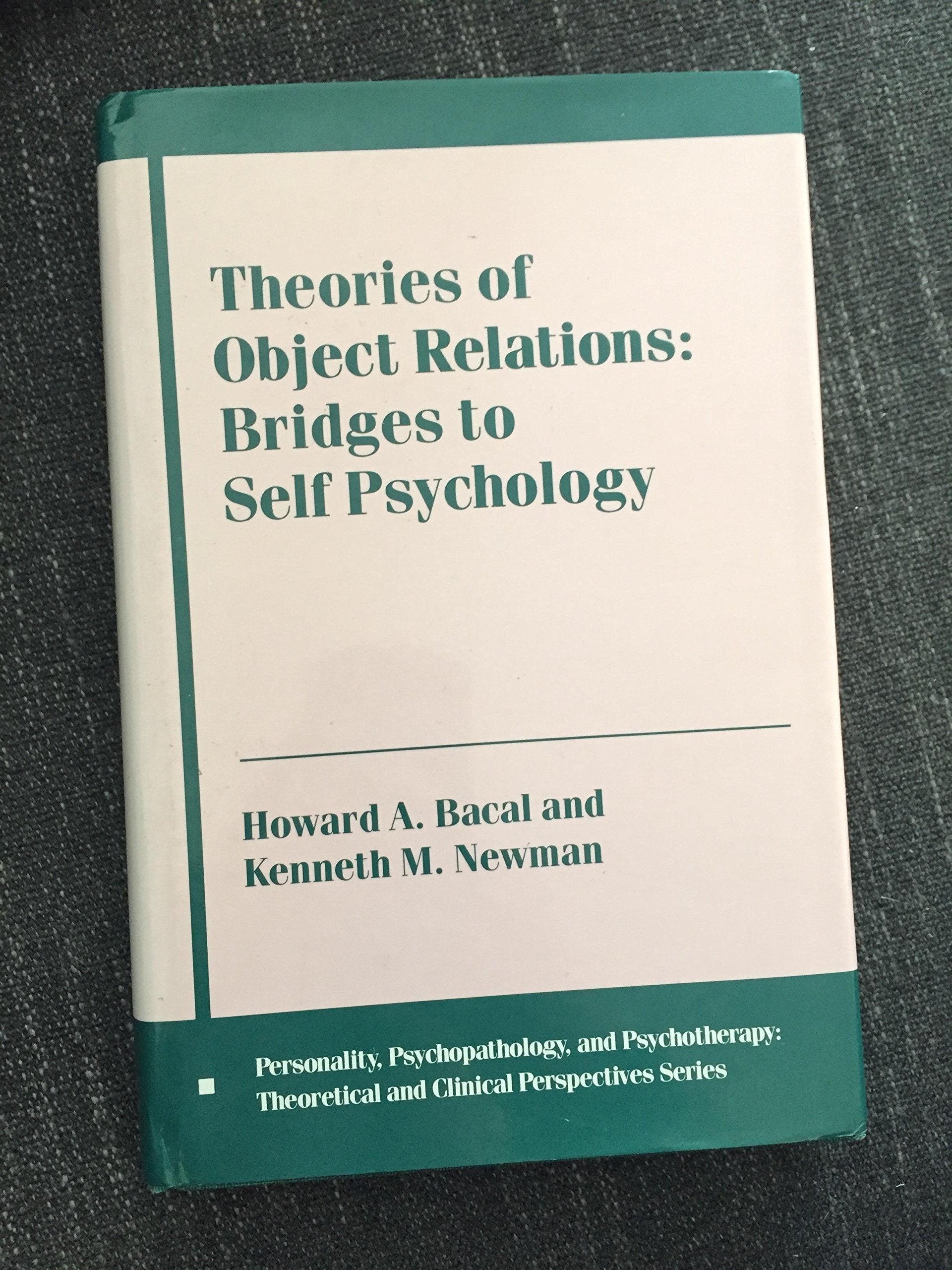
Theories of Object Relations: Bridges to Self Psychology,Used
Sold by Ergodebooks, an authorized reseller.
Returns accepted within 30 days | support@ergodebooks.com
Shipping Information
- Free Standard Shipping — United States only
- Processing Time: 3–5 business days
- Estimated Delivery: 6–10 business days after dispatch
- Double-boxed, fully insured & discreetly packaged
- Tracking number sent via email once dispatched
Returns & Refund
Returns accepted within 30 days of delivery.
Damaged or Defective Item
Free return shipping + replacement or full refund
Wrong Item Received
Free return shipping + replacement or full refund
Change of Mind
Return shipping at customer's expense · 25% restocking fee applies
Payment Option

Theories of Object Relations: Bridges to Self Psychology discusses the work of the major American and British contributors to object relations theory, focusing on the ways in which these theories anticipated and enriched the emerging field of self psychology. Howard Bacal and Kenneth Newman significantly advance the integration of major theoretical paradigms and introduce new concepts that provide fresh perspectives on the clinical situation. The authors provide systematic and scholarly synopses of the work of Harry Stack Sullivan, Otto Kernberg, Margaret Mahler, Heinz Kohut and his colleagues, Ian Suttie, Melanie Klein, Michael Balint, W.R.D. Fairbairn, Harry Guntrip, D.W. Winnicott, and John Bowlby. The authors' aim is to make a significant contribution to the integration of therapeutically useful ideas while at the same time pointing out the utility of the distinctive approaches.Bacal and Newman help practitioners to organize and clarify their understanding of patients as they apply object relations theory in a variety of settings to their clinical work.
⚠️ WARNING (California Proposition 65):
This product may contain chemicals known to the State of California to cause cancer, birth defects, or other reproductive harm.
For more information, please visit www.P65Warnings.ca.gov.
- Q: How many pages does this book have? A: This book has three hundred pages. It's a comprehensive exploration of object relations theory and self psychology.
- Q: What is the binding type of this book? A: The binding type is hardcover. This ensures durability and a professional appearance for your library.
- Q: What are the dimensions of the book? A: The book measures six point twenty-two inches in length, zero point ninety-one inches in width, and nine point twenty-nine inches in height.
- Q: Who are the authors of this book? A: The authors are Howard Bacal and Kenneth Newman. They are notable contributors to the field of object relations theory.
- Q: What category does this book fall under? A: This book falls under the category of Psychoanalysis. It delves into object relations and self psychology.
- Q: How do I apply the theories in this book to my practice? A: You can apply the theories by integrating the insights on object relations into your clinical work. This book provides practical examples and frameworks.
- Q: Is this book suitable for beginners in psychology? A: Yes, this book is suitable for beginners. It offers clear explanations of complex theories in object relations.
- Q: Can this book help me better understand my patients? A: Yes, it can help clarify your understanding of patients. The authors provide insights that enhance therapeutic practice.
- Q: What settings can I use the theories from this book? A: You can use the theories in various clinical settings. The book discusses practical applications across different therapeutic environments.
- Q: How should I take care of this hardcover book? A: To care for this hardcover book, keep it in a dry place and avoid direct sunlight. This will help preserve its condition.
- Q: Is there a warranty or return policy for this book? A: Typically, books like this do not come with a warranty. However, check with the retailer regarding their return policy.
- Q: What if the book arrives damaged? A: If the book arrives damaged, contact the retailer for a replacement or refund. Most retailers will have a process for such issues.
- Q: How do I store this book to keep it in good condition? A: Store the book upright on a shelf with similar-sized books to prevent bending. Avoid stacking heavy items on top.
- Q: What other books are similar to this one? A: Books by authors like Heinz Kohut and Melanie Klein cover similar themes. They provide additional perspectives on object relations.
- Q: Is this book recommended for advanced practitioners? A: Yes, advanced practitioners can benefit from this book. It offers in-depth analysis and integration of complex theories.