
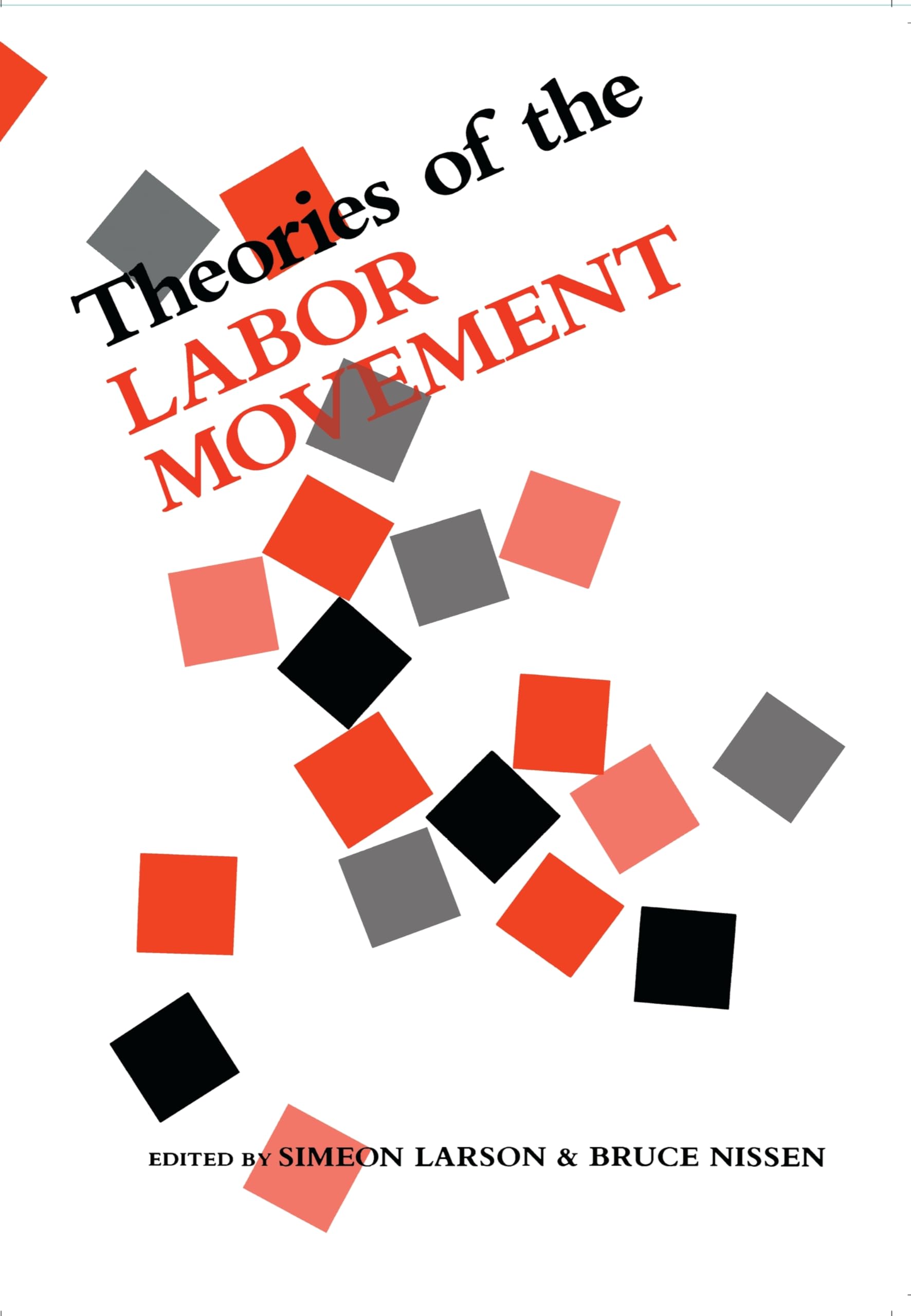
Title
Theories of the Labor Movement,Used
Sold by Ergodebooks, an authorized reseller.
Returns accepted within 30 days | support@ergodebooks.com
Shipping Information
- Free Standard Shipping — United States only
- Processing Time: 3–5 business days
- Estimated Delivery: 6–10 business days after dispatch
- Double-boxed, fully insured & discreetly packaged
- Tracking number sent via email once dispatched
Returns & Refund
Returns accepted within 30 days of delivery.
Damaged or Defective Item
Free return shipping + replacement or full refund
Wrong Item Received
Free return shipping + replacement or full refund
Change of Mind
Return shipping at customer's expense · 25% restocking fee applies
Payment Option

Respecting both the history a labor theories and the variety of theoretical points of view concerning the labor movement, this collection of readings includes selections by Karl Marx, V. I. Lenin, William Haywood, Georges Sorel, Stanley Aronowitz, John R. Commons, Sidney and Beatrice Webb, Thorstein Veblen, Henry Simons, and John Kenneth Galbraith, among others.Intending this as a text for classroom use, Larson and Nissen have arranged the readings according to the social role assigned to the labor movement by each theory. The text's major divisions consider the labor movement as an agent of revolution, as a business institution, as an agent of industrial reform, as a psychological reaction to industrialism, as a moral force, as a destructive monopoly, and as a subordinate mechanism in pluralist industrial society. Such groupings allow for ready comparison of divergent views of the origins, development, and future of the labor movement.
⚠️ WARNING (California Proposition 65):
This product may contain chemicals known to the State of California to cause cancer, birth defects, or other reproductive harm.
For more information, please visit www.P65Warnings.ca.gov.
- Q: How many pages are in 'Theories of the Labor Movement'? A: This book contains four hundred eight pages. It offers a comprehensive collection of readings regarding labor theories and historical perspectives.
- Q: What is the binding type of this book? A: The binding type is paperback. This makes it lightweight and flexible, ideal for both classroom and personal use.
- Q: What is the size of the book? A: The dimensions of the book are seven point zero one inches in length, zero point eight four inches in width, and ten inches in height. This makes it easy to handle and store.
- Q: Who is the author of 'Theories of the Labor Movement'? A: The author is Bruce Nissen. He has compiled significant readings on labor theories from various renowned scholars.
- Q: What category does this book fall under? A: This book is categorized under Labor & Industrial Relations. It explores multiple theoretical perspectives on labor movements.
- Q: How should I use this book in a classroom setting? A: You can use this book as a text for discussing labor theories. It is organized to facilitate comparisons of different perspectives on the labor movement.
- Q: Is this book suitable for beginners in labor studies? A: Yes, this book is suitable for beginners. Its structured arrangement of readings helps new learners grasp complex labor theories.
- Q: What themes are covered in this book? A: The book covers themes such as revolution, industrial reform, and the moral implications of labor movements. It provides a broad view of labor history.
- Q: How do I care for this paperback book? A: To care for this paperback book, keep it in a dry place and avoid exposure to direct sunlight. This will help preserve the pages and cover.
- Q: Is this book safe for young readers? A: Yes, the content is appropriate for young readers interested in labor studies. However, it is recommended for high school students and above.
- Q: What should I do if the book arrives damaged? A: If the book arrives damaged, contact the seller for a return or exchange. Ensure you have your order details ready for a smooth process.
- Q: Can I return this book if I'm not satisfied? A: Yes, you can return the book if you are not satisfied. Check the seller's return policy for specific conditions and timeframes.
- Q: What makes this book different from others on labor theory? A: This book stands out due to its diverse selection of readings from influential theorists like Marx and Veblen. It allows for a multifaceted understanding of labor issues.
- Q: Is there an index or glossary in the book? A: Yes, the book includes an index to help readers locate specific topics easily. This is beneficial for research and study purposes.
- Q: What type of audience is this book aimed at? A: The book is aimed at students, educators, and anyone interested in labor history and theory. It's suitable for both academic and casual readers.
- Q: Does this book include contemporary perspectives on labor? A: Yes, it includes contemporary perspectives alongside historical ones, providing a comprehensive view of the evolution of labor theories.