
Title

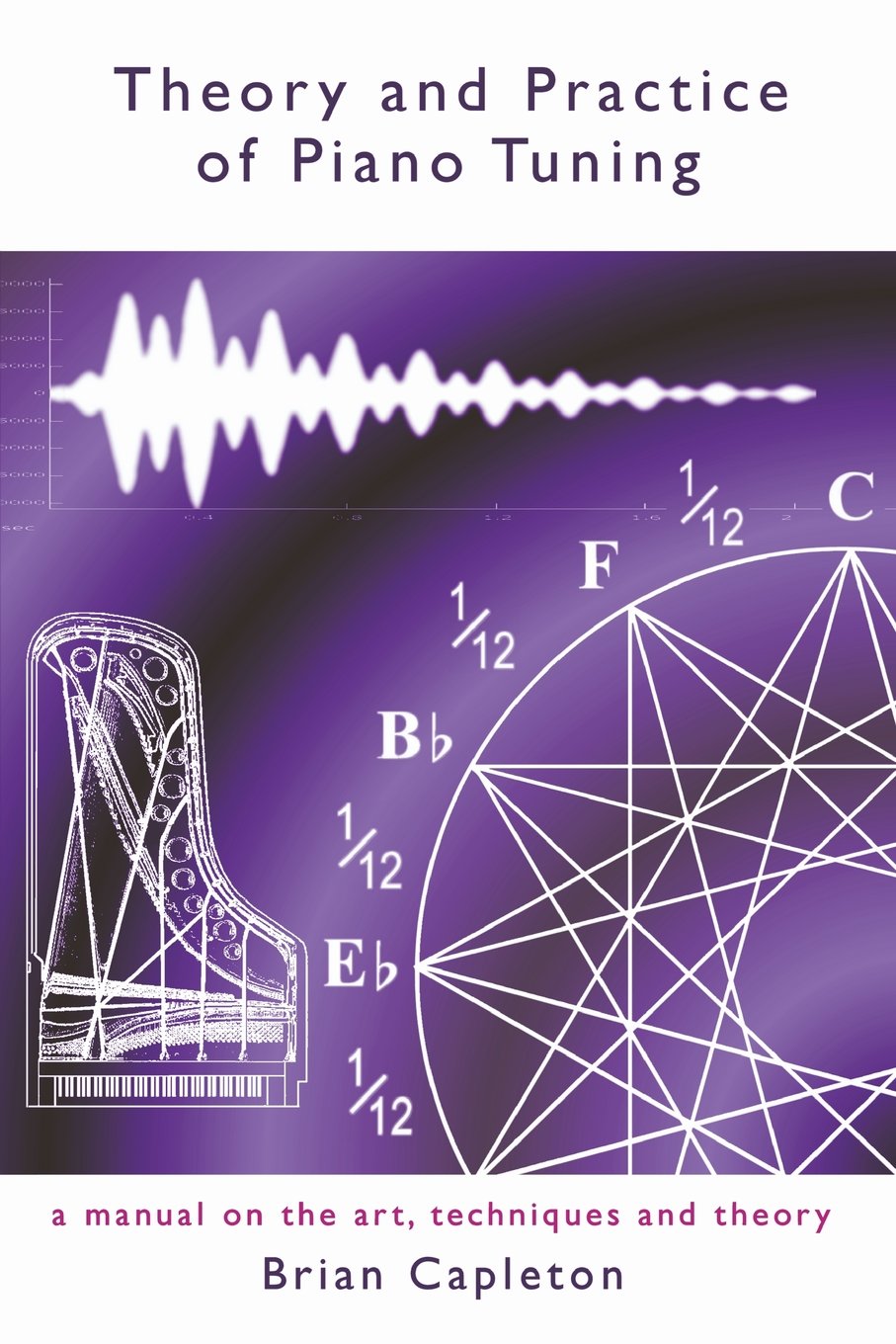
Theory and Practice of Piano Tuning: a manual on the art, techniques and theory,Used
Sold by Ergodebooks, an authorized reseller.
Returns accepted within 30 days | support@ergodebooks.com
Shipping Information
- Free Standard Shipping — United States only
- Processing Time: 3–5 business days
- Estimated Delivery: 6–10 business days after dispatch
- Double-boxed, fully insured & discreetly packaged
- Tracking number sent via email once dispatched
Returns & Refund
Returns accepted within 30 days of delivery.
Damaged or Defective Item
Free return shipping + replacement or full refund
Wrong Item Received
Free return shipping + replacement or full refund
Change of Mind
Return shipping at customer's expense · 25% restocking fee applies
Payment Option

The leading textbook and the most comprehensive source available, for both practicing piano tuners and academic researchers, on the theory and practice of piano tuning. By the former Royal National College lecturer in Piano Technology and Tuning Theory. 680 pages, with over 300 illustrations and tables.The book covers indepth theory and practice from elementary to advanced level. It answers common questions raised by students of piano tuning about the actual soundscapes and behaviour of piano tone that are encountered in tuning practice. It is suitable for both students and professionals of piano tuning, general readers, and academics with interdisciplinary interests in the subject.Includes: Why we need skilled piano tuners Intonation and tone The distance between theory and the art Theory of sound Temperament theory Elementary traditional tuning and beat rate theory What contemporary acoustics reveals What attenuation is, and why it is so important Beyond the 19th century model How beating and beat rates really work Beyond the 19th century model How tempered intervals really behave in fine tuning False beat phenomenon and its influence The effects of bridge coupling How real tone envelopes behave in fine tuning Inharmonicity and small piano syndrome What octave stretching is, why, and how it works Setting the pin the theory behind it and how to practice it Scale plasticity, logic, and tuning technique Psychoacoustics and how to listenContents:AcknowledgmentsPiano tuning and this bookPart 1 Background Theory The invisible art and science The essential ideas Sound Temperament Theory Traditional piano tuning theory and elementary practice The soundscape, spectrum and tone Partial decay patternsPart 2 Fine Tuning Practice Unison Tuning Tuning the Scale Octave tuning Setting the Pin Setting the pitch Small piano syndrome Hearing The Kirk ExperimentPart 3 Advanced Theory The single piano string in one plane The Weinreich Model Two strings, two planes The Trichord Further comments on false partials InharmonicityGlossary of key conceptsSelect bibliography
⚠️ WARNING (California Proposition 65):
This product may contain chemicals known to the State of California to cause cancer, birth defects, or other reproductive harm.
For more information, please visit www.P65Warnings.ca.gov.