
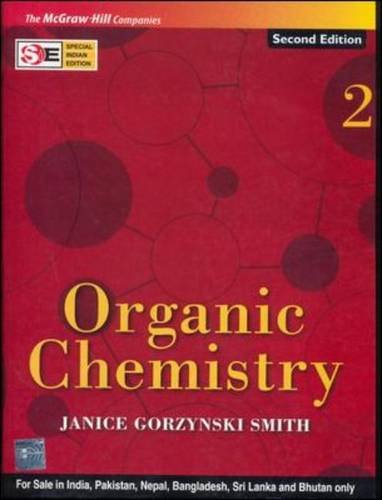
Theory of Equations,Used
$35.17
Title
Theory of Equations,Used
Free Standard Shipping Across USA
Quantity
Sold by Ergodebooks, an authorized reseller.
Returns accepted within 30 days | support@ergodebooks.com
Shipping Information
- Free Standard Shipping — United States only
- Processing Time: 3–5 business days
- Estimated Delivery: 6–10 business days after dispatch
- Double-boxed, fully insured & discreetly packaged
- Tracking number sent via email once dispatched
Returns & Refund
Returns accepted within 30 days of delivery.
Damaged or Defective Item
Free return shipping + replacement or full refund
Wrong Item Received
Free return shipping + replacement or full refund
Change of Mind
Return shipping at customer's expense · 25% restocking fee applies
All returns require a Return Authorization (RA) number before sending.
View Full Return & Refund Policy
Payment Option

The text is designed for Organic chemistry course of UG students of Chemistry. The text takes functional group approach emphasizing reactions that the different functional groups undergo. Explanations are apt for introductory level. Presentation of concepts is coherent, relevant and interesting with a clear and succinct writing style. Language is easy, nondescriptive and hence avoiding complex and unwanted detailing, illustrative & interesting as applied on chemical phenomena. Relevant materials from everyday life are used to illustrate concepts throughout the text. Key Features: Organization: Content is organized according to functional groups. Chemical reactions have been discussed within this framework, thereby emphasizing reactions that different functional groups undergo, and not the reactions that prepare them. Presentation: The overall order of topics is consistent with the way most instructors teach organic chemistry. However, some important and logical differences include: Review material in introductory chapter to give students a firm grip of fundamental concepts. Stereochemistry is introduced early and reinforced often. Spectroscopy has been discussed elaborately over two chapters. Pedagogy: Chapter outline: list the sections covered in the chapter. How To's Boxes: provide detailed information for key procedures that students need to master. Reaction Mechanisms: presented in a detailed stepbystep fashion. Selected applications: to biology, medicine & environment have been integrated throughout. Prologue: to organic chemistry is a casting feature for beginners in the stre
⚠️ WARNING (California Proposition 65):
This product may contain chemicals known to the State of California to cause cancer, birth defects, or other reproductive harm.
For more information, please visit www.P65Warnings.ca.gov.
- Q: How many pages does 'Theory of Equations' have? A: This book has one thousand one hundred seventy-five pages. It provides a comprehensive resource for students in organic chemistry.
- Q: What is the binding type of 'Theory of Equations'? A: The book is available in paperback binding. This makes it lightweight and easy to handle for students.
- Q: What are the dimensions of 'Theory of Equations'? A: The dimensions of this book are eighteen point forty-six centimeters in length, four point twenty-nine centimeters in width, and twenty-four point twenty-nine centimeters in height. These measurements make it a standard-sized educational textbook.
- Q: Who is the author of 'Theory of Equations'? A: The author of this book is Janice Gorzynski Smith. Her expertise contributes to the clarity and coherence of the content.
- Q: What is the target audience for 'Theory of Equations'? A: This book is designed for undergraduate students studying organic chemistry. It is suitable for beginners who need foundational knowledge.
- Q: How is the content organized in 'Theory of Equations'? A: The content is organized according to functional groups. This structure emphasizes the reactions these groups undergo, aiding comprehension.
- Q: How do I use 'Theory of Equations' effectively? A: You can use this book as a primary textbook for your organic chemistry course. Review the chapter outlines and 'How To's Boxes' for mastery of key procedures.
- Q: Is 'Theory of Equations' suitable for beginners? A: Yes, this book is suitable for beginners. It presents concepts in an easy-to-understand manner, avoiding complex details.
- Q: Does 'Theory of Equations' include illustrations? A: Yes, the book includes illustrations to clarify chemical phenomena. These visuals support the understanding of organic chemistry concepts.
- Q: What safety precautions should I take with this book? A: Keep 'Theory of Equations' in a dry and clean environment to prevent damage. Avoid exposing it to moisture or extreme temperatures.
- Q: How should I store 'Theory of Equations' when not in use? A: Store the book upright on a shelf to prevent bending or damage. Ensure it is kept away from direct sunlight to maintain its condition.
- Q: Can I return 'Theory of Equations' if I have issues? A: Yes, you can return the book if it arrives damaged or if you're unsatisfied with it. Check the specific return policy of the retailer for details.
- Q: What if I have trouble understanding a concept in 'Theory of Equations'? A: If you struggle with a concept, refer to the detailed explanations and step-by-step reaction mechanisms in the book. They are designed to reinforce understanding.
- Q: Is 'Theory of Equations' suitable for advanced students? A: While primarily aimed at beginners, advanced students may also find value in its structured approach to fundamental concepts.
- Q: Does 'Theory of Equations' cover spectroscopy? A: Yes, the book discusses spectroscopy in detail over two chapters. This coverage aids in understanding analytical techniques used in organic chemistry.