
Title
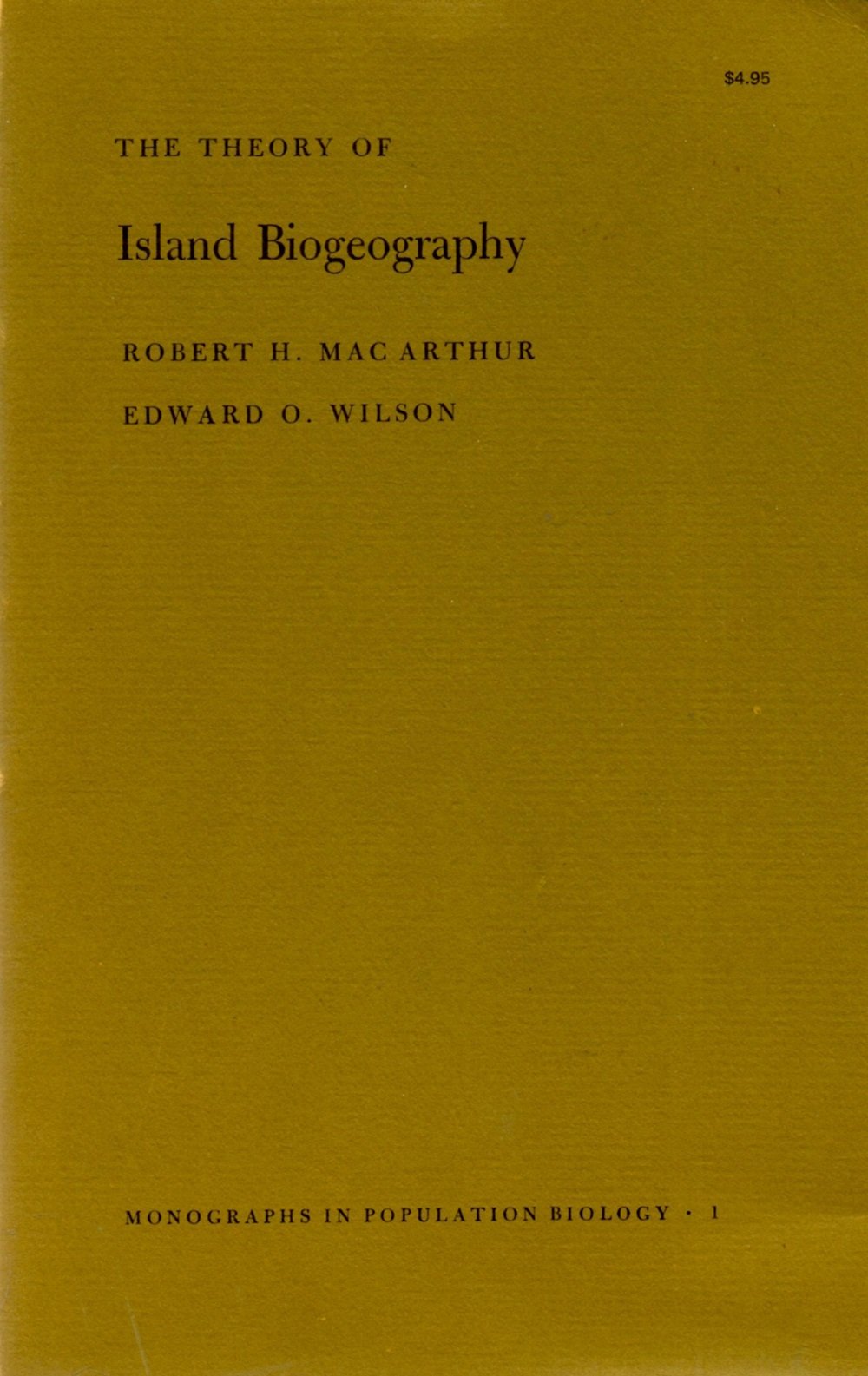
Theory Of Island Biogeography. (Mpb1),Used
Sold by Ergodebooks, an authorized reseller.
Returns accepted within 30 days | support@ergodebooks.com
Shipping Information
- Free Standard Shipping — United States only
- Processing Time: 3–5 business days
- Estimated Delivery: 6–10 business days after dispatch
- Double-boxed, fully insured & discreetly packaged
- Tracking number sent via email once dispatched
Returns & Refund
Returns accepted within 30 days of delivery.
Damaged or Defective Item
Free return shipping + replacement or full refund
Wrong Item Received
Free return shipping + replacement or full refund
Change of Mind
Return shipping at customer's expense · 25% restocking fee applies
Payment Option

Biogeography Has Long Remained In A Natural History Phase, But The Authors Of This Book Believe It Is In A Position To Enter An Experimental And Theoretical Phasethat It Can Now Be Discussed In Terms Of The First Principles Of Population Ecology And Genetics. Using Mathematical And Graphical Models, They Provide A First Theoretical Framework For Faunal Patterns On Islands. Particular Attention Is Paid To Problems Of Island Colonization, To The Balance Between Immigration And Extinction, And To The Evolution Of Colonists Following Successful Establishment. Wherever Possible Empirical Evidence Is Assembled And Compared With The Theoretical Predictions.Originally Published In 1967.The Princeton Legacy Library Uses The Latest Printondemand Technology To Again Make Available Previously Outofprint Books From The Distinguished Backlist Of Princeton University Press. These Editions Preserve The Original Texts Of These Important Books While Presenting Them In Durable Paperback And Hardcover Editions. The Goal Of The Princeton Legacy Library Is To Vastly Increase Access To The Rich Scholarly Heritage Found In The Thousands Of Books Published By Princeton University Press Since Its Founding In 1905.Originally Published In 1967.The Princeton Legacy Library Uses The Latest Printondemand Technology To Again Make Available Previously Outofprint Books From The Distinguished Backlist Of Princeton University Press. These Editions Preserve The Original Texts Of These Important Books While Presenting Them In Durable Paperback And Hardcover Editions. The Goal Of The Princeton Legacy Library Is To Vastly Increase Access To The Rich Scholarly Heritage Found In The Thousands Of Books Published By Princeton University Press Since Its Founding In 1905.
⚠️ WARNING (California Proposition 65):
This product may contain chemicals known to the State of California to cause cancer, birth defects, or other reproductive harm.
For more information, please visit www.P65Warnings.ca.gov.
- Q: How many pages does this book have? A: This book has two hundred eighteen pages. It's a detailed exploration of island biogeography and its theoretical frameworks.
- Q: What binding type is used for this book? A: This book is published in a paperback binding. This makes it lightweight and easy to handle for readers.
- Q: What are the dimensions of this book? A: The dimensions of this book are five point twenty-eight inches in length, zero point fifty-five inches in width, and eight point forty-six inches in height. These dimensions make it portable and convenient for reading.
- Q: Who is the author of this book? A: The author of this book is Robert H. MacArthur. He is known for his significant contributions to the field of ecology.
- Q: What is the main subject of this book? A: This book focuses on biogeography, specifically the patterns and processes of species distribution on islands. It integrates concepts from ecology and genetics.
- Q: Is this book suitable for beginners in ecology? A: Yes, this book is suitable for beginners interested in ecology. It provides foundational theories and models that can help lay a solid understanding of biogeography.
- Q: How can I apply the concepts from this book? A: You can apply the concepts from this book by studying island ecosystems and observing patterns of species colonization and extinction. The theoretical frameworks can enhance your understanding of ecological dynamics.
- Q: Is there a specific reading level for this book? A: This book is generally suitable for high school students and above. It includes complex ecological theories that may require a basic understanding of biology.
- Q: How do I store this book properly? A: To store this book properly, keep it in a dry place away from direct sunlight. This helps preserve the binding and prevent fading of the cover.
- Q: Can I clean the book cover if it gets dirty? A: Yes, you can gently wipe the book cover with a soft cloth to clean it. Avoid using water or cleaning solutions directly on the book.
- Q: How should I handle this book to avoid damage? A: To avoid damage, handle this book with clean hands and avoid bending the cover or pages. Store it upright on a shelf to prevent warping.
- Q: What if the book arrives damaged? A: If the book arrives damaged, you should contact the seller for a return or exchange. Most sellers have policies in place for handling damaged items.
- Q: Is this book a good reference for advanced ecological studies? A: Yes, this book serves as a good reference for advanced ecological studies. It presents both theoretical frameworks and empirical evidence.
- Q: Does this book include any illustrations or graphs? A: Yes, the book includes mathematical and graphical models to illustrate the concepts discussed. These visuals aid in understanding the theoretical frameworks.
- Q: Is there a digital version available for this book? A: Yes, a digital version may be available through various online platforms. Check with your preferred e-book retailer for availability.
- Q: What is the publication history of this book? A: This book was originally published in nineteen sixty-seven. It has since been reissued by the Princeton Legacy Library using print-on-demand technology.