If you have any questions, you are always welcome to contact us. We'll get back to you as soon as possible, withing 24 hours on weekdays.
Customer service
All questions about your order, return and delivery must be sent to our customer service team by e-mail at yourstore@yourdomain.com
Sale & Press
If you are interested in selling our products, need more information about our brand or wish to make a collaboration, please contact us at press@yourdomain.com
Help
If you have any questions, you are always welcome to contact us. We'll get back to you as soon as possible, withing 24 hours on weekdays.
Customer service
All questions about your order, return and delivery must be sent to our customer service team by e-mail at yourstore@yourdomain.com
Sale & Press
If you are interested in selling our products, need more information about our brand or wish to make a collaboration, please contact us at press@yourdomain.com
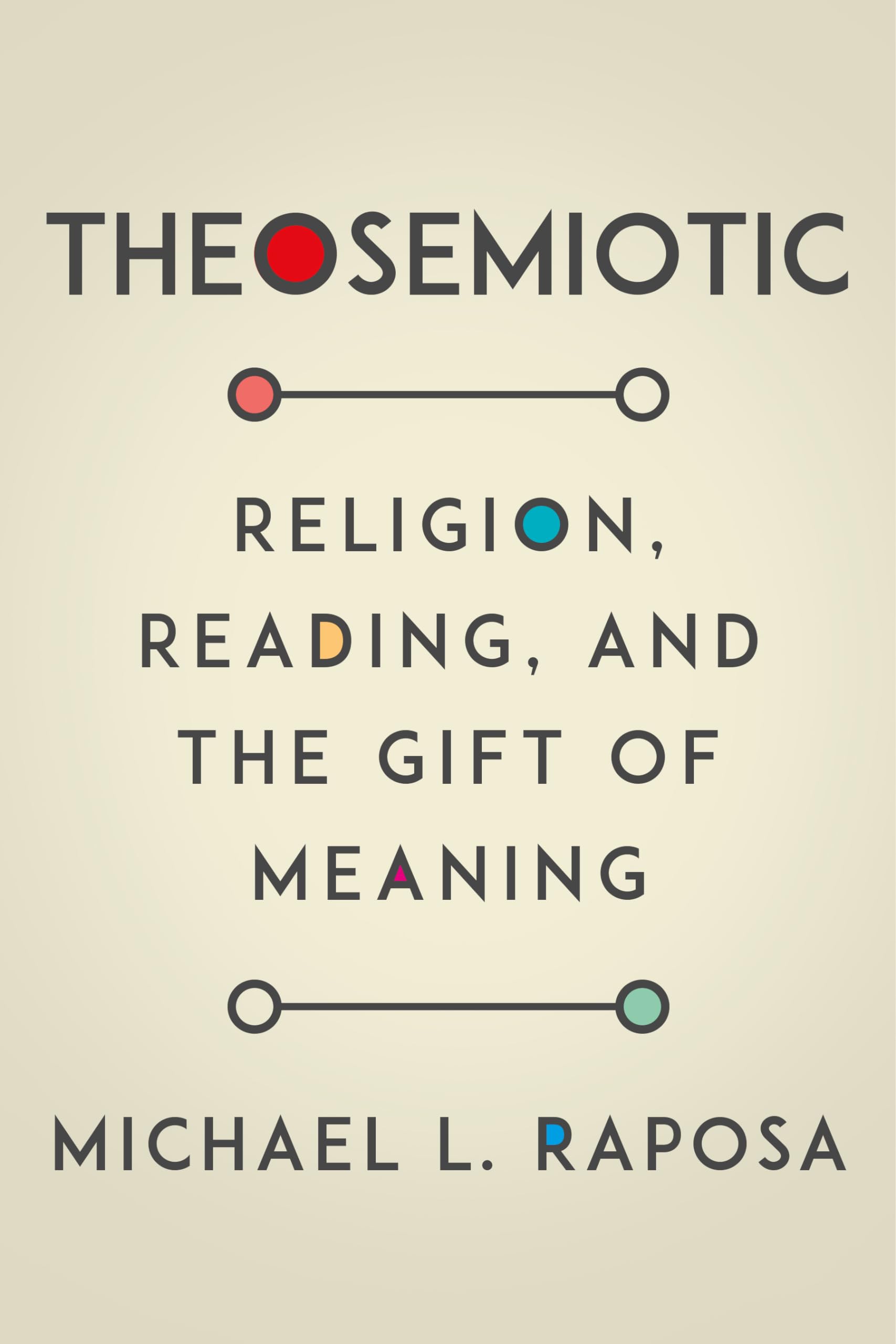
In Theosemiotic, Michael Raposa uses Charles Peirces semiotic theory to rethink certain issues in contemporary philosophical theology and the philosophy of religion. He first sketches a history that links Peirces thought to that of earlier figures (both within the tradition of American religious thought and beyond), as well as to other classical pragmatists and to later thinkers and developments. Drawing on Peirces ideas, Raposa develops a semiotic conception of persons/selves emphasizing the role that acts of attention play in shaping human inferences and perception. His central Peircean presuppositions are that all human experience takes the form of semiosis and that the universe is perfused with signs. Religious meaning emerges out of a process of continually reading and rereading certain signs.Theology is explored here in its manifestations as inquiry, therapy, and praxis. By drawing on both Peirces logic of vagueness and his logic of relations, Raposa makes sense out of how we talk about God as personal, and also how we understand the character of genuine communities. An investigation of what Peirce meant by musement illuminates the nature and purpose of prayer. Theosemiotic is portrayed as a form of religious naturalism, broadly conceived. At the same time, the potential links between any philosophical theology conceived as theosemiotic and liberation theology are exposed.
⚠️ WARNING (California Proposition 65):
This product may contain chemicals known to the State of California to cause cancer,
birth defects, or other reproductive harm.
For MAP (Minimum Advertised Price) violations and Intellectual Property (IP) or Trademark concerns, please contact:
support@ergodebooks.com
⚠️ California Proposition 65 Warning: Some products sold on this website may expose you to chemicals known to the State of California to cause cancer, birth defects, or other reproductive harm. For more information, visit www.P65Warnings.ca.gov.