
Title
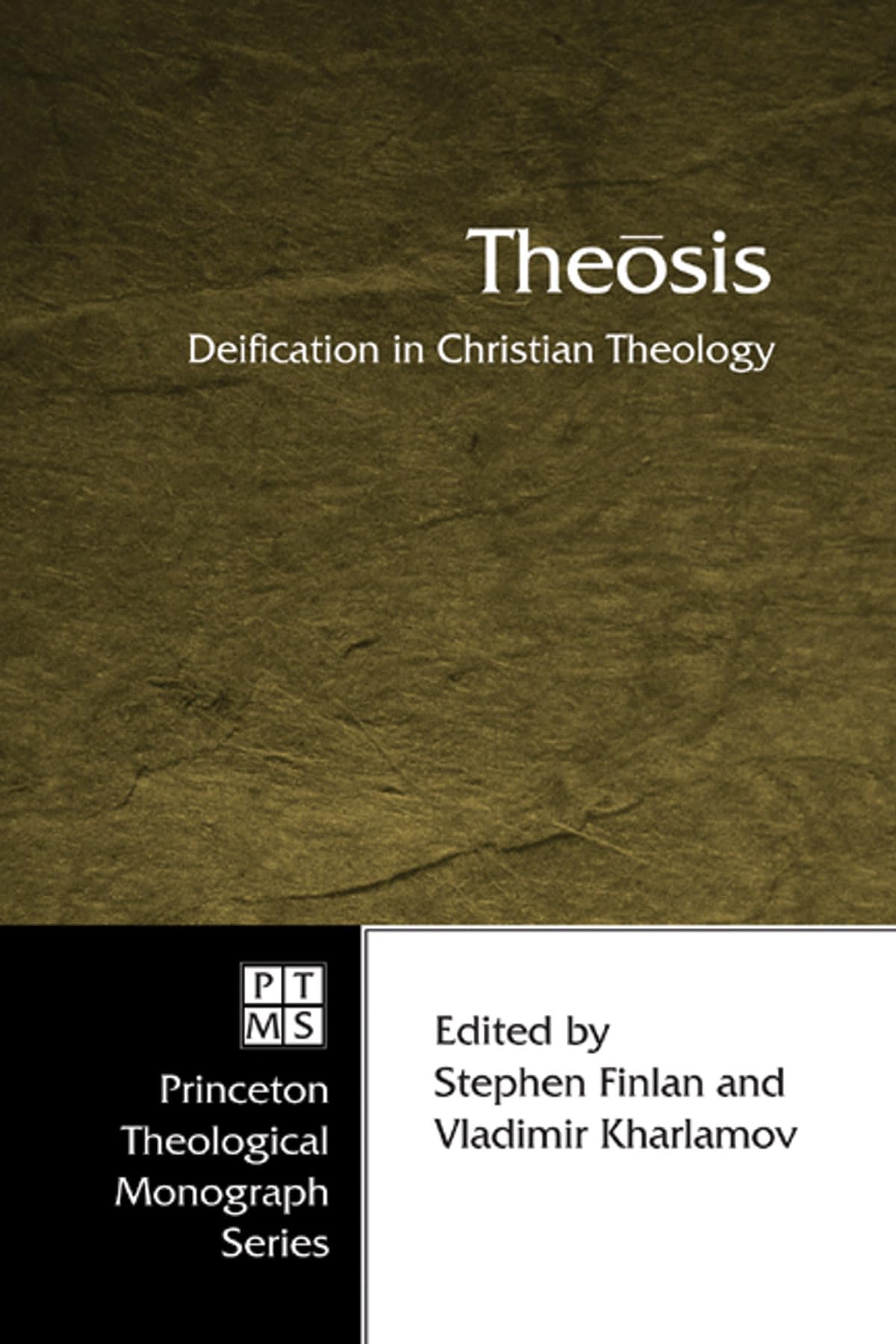
Theosis: Deification In Christian Theology (Princeton Theological Monograph),New
Sold by Ergodebooks, an authorized reseller.
Returns accepted within 30 days | support@ergodebooks.com
Shipping Information
- Free Standard Shipping — United States only
- Processing Time: 3–5 business days
- Estimated Delivery: 6–10 business days after dispatch
- Double-boxed, fully insured & discreetly packaged
- Tracking number sent via email once dispatched
Returns & Refund
Returns accepted within 30 days of delivery.
Damaged or Defective Item
Free return shipping + replacement or full refund
Wrong Item Received
Free return shipping + replacement or full refund
Change of Mind
Return shipping at customer's expense · 25% restocking fee applies
Payment Option

'Deification' refers to the transformation of believers into the likeness of God. Of course, Christian monotheism goes against any literal 'god making' of believers. Rather, the NT speaks of a transformation of mind, a metamorphosis of character, a redefinition of selfhood, and an imitation of God. Most of these passages are tantalizingly brief, and none spells out the concept in detail. 'Deification was an important idea in the early church, though it took a long time for one term to emerge as the standard label for the process. That term was qe/wsij, theosis, coined by the great fourthcentury theologian, Gregory of Nazianzus. Theologians now use theosis to designate all instances where any idea of taking on God's character or being 'divinized' (made divine) occurs, even when the term qe/wsij is not used. And of course, different Christian authors understood deification differently.' 'While some articles in this collection discuss preChristian antecedents of theosis, Greek and Jewish, most focus on particular Christian understandings. The article by Gregory Glazov examines OT covenant theology, with an emphasis on divine adoption, and on bearing the fruit of knowledge or attaining the stature of a tree of righteousness in Proverbs, Isaiah, and Sirach. The article by Stephen Finlan on 2 Pet 1:4 ('You may become participants of the divine nature') examines the epistle's apparent borrowings from Middle Platonic spirituality, Stoic ethics, and Jewish apocalyptic expectation. The epistle stresses 'knowledge of Christ,' which means cultivation of godly character and growing up into Christ.' from the Introduction
⚠️ WARNING (California Proposition 65):
This product may contain chemicals known to the State of California to cause cancer, birth defects, or other reproductive harm.
For more information, please visit www.P65Warnings.ca.gov.