
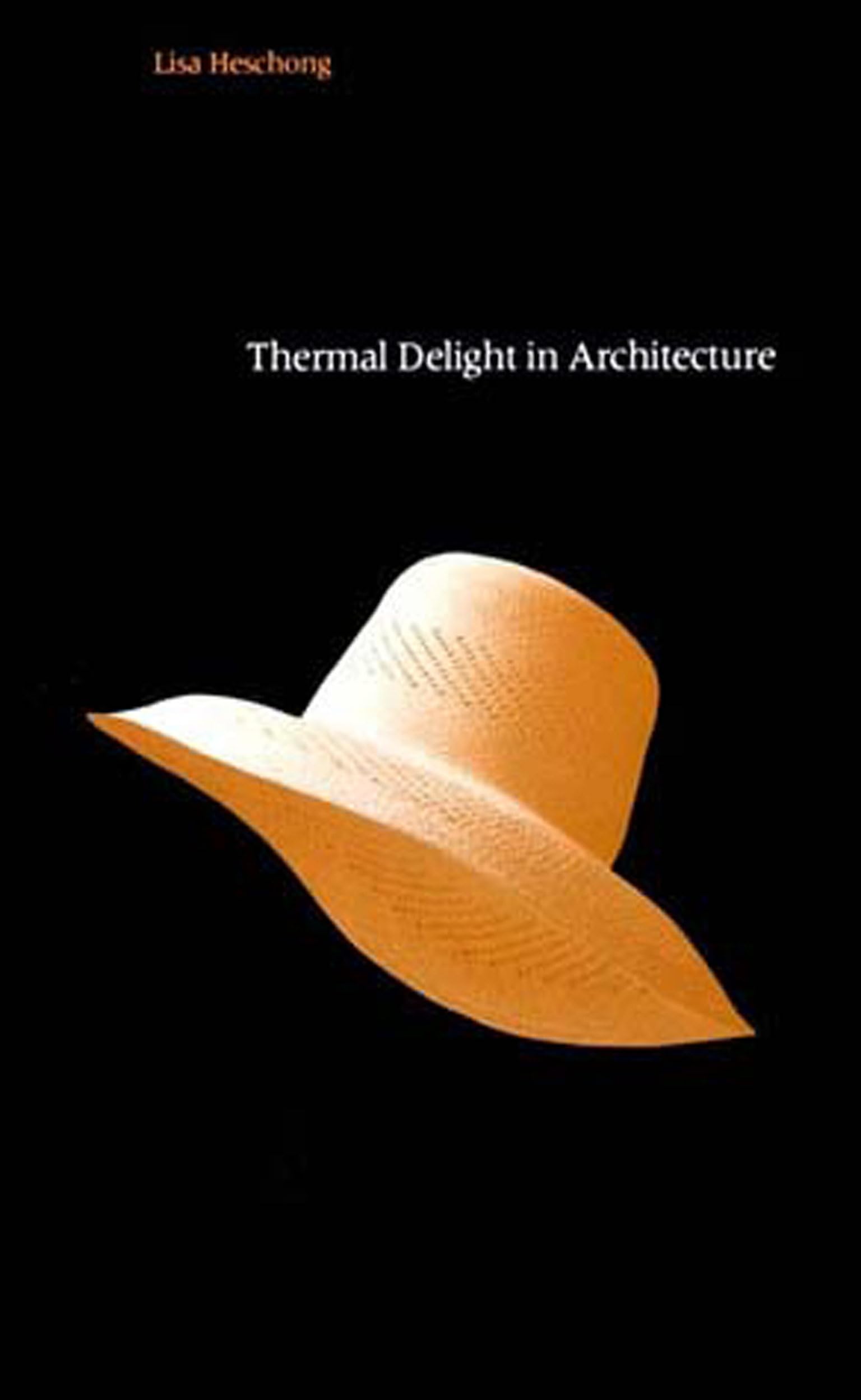
Title
Thermal Delight in Architecture (Mit Press),New
Sold by Ergodebooks, an authorized reseller.
Returns accepted within 30 days | support@ergodebooks.com
Shipping Information
- Free Standard Shipping — United States only
- Processing Time: 3–5 business days
- Estimated Delivery: 6–10 business days after dispatch
- Double-boxed, fully insured & discreetly packaged
- Tracking number sent via email once dispatched
Returns & Refund
Returns accepted within 30 days of delivery.
Damaged or Defective Item
Free return shipping + replacement or full refund
Wrong Item Received
Free return shipping + replacement or full refund
Change of Mind
Return shipping at customer's expense · 25% restocking fee applies
Payment Option

Our thermal environment is as rich in cultural associations as our visual, acoustic, olfactory, and tactile environments. This book explores the potential for using thermal qualities as an expressive element in building design.Until quite recently, building technology and design has favored highenergyconsuming mechanical methods of neutralizing the thermal environment. It has not responded to the various ways that people use, remember, and care about the thermal environment and how they associate their thermal sense with their other senses. The hearth fire, the sauna, the Roman and Japanese baths, and the Islamic garden are discussed as archetypes of thermal delight about which rituals have developedreinforcing bonds of affection and ceremony forged in the thermal experience. Not only is thermal symbolism now obsolete but the modern emphasis on central heating systems and air conditioning and hermetically sealed buildings has actually damaged our thermal coping and sensing mechanisms. This book for the solar age could help change all that and open up for us a new dimension of architectural experience.As the cost of energy continues to skyrocket, alternatives to the use of mechanical force must be developed to meet our thermal needs. A major alternative is the use of passive solar energy, and the book will provide those interested in solar design with a reservoir of ideas.
⚠️ WARNING (California Proposition 65):
This product may contain chemicals known to the State of California to cause cancer, birth defects, or other reproductive harm.
For more information, please visit www.P65Warnings.ca.gov.
- Q: What is the main focus of 'Thermal Delight in Architecture'? A: The book explores the cultural significance of thermal environments in architecture, emphasizing how thermal qualities can be used expressively in building design.
- Q: Who is the author of this book? A: The author of 'Thermal Delight in Architecture' is Lisa Heschong.
- Q: When was 'Thermal Delight in Architecture' published? A: The book was published on December 5, 1979.
- Q: What is the binding type of this book? A: The book is available in paperback binding.
- Q: How many pages does 'Thermal Delight in Architecture' have? A: The book contains 96 pages.
- Q: Is 'Thermal Delight in Architecture' suitable for solar design enthusiasts? A: Yes, the book provides valuable ideas and insights for those interested in passive solar energy and solar design.
- Q: What are some archetypes discussed in the book regarding thermal environments? A: The book discusses archetypes such as the hearth fire, sauna, Roman and Japanese baths, and Islamic gardens, which highlight the importance of thermal experiences.
- Q: Does the book address modern heating systems? A: Yes, it critiques modern reliance on high-energy-consuming mechanical systems and advocates for alternatives that enhance thermal coping.
- Q: What category does this book fall under? A: The book is categorized under Vernacular architecture.
- Q: What insights can readers gain regarding thermal environments from this book? A: Readers can learn how to incorporate thermal qualities into architectural design, enhancing sensory experiences and cultural connections.