
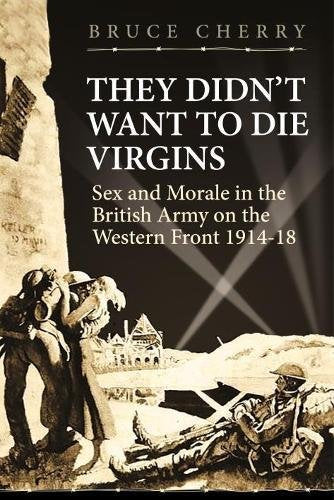
Title
They Didnt Want to Die Virgins: Sex and Morale in the British Army on the Western Front 19141918 (Wolverhampton Military Studie,Used
Sold by Ergodebooks, an authorized reseller.
Returns accepted within 30 days | support@ergodebooks.com
Shipping Information
- Free Standard Shipping — United States only
- Processing Time: 3–5 business days
- Estimated Delivery: 6–10 business days after dispatch
- Double-boxed, fully insured & discreetly packaged
- Tracking number sent via email once dispatched
Returns & Refund
Returns accepted within 30 days of delivery.
Damaged or Defective Item
Free return shipping + replacement or full refund
Wrong Item Received
Free return shipping + replacement or full refund
Change of Mind
Return shipping at customer's expense · 25% restocking fee applies
Payment Option

There has been a collective amnesia when it comes to recalling the sexual activities of the British soldier on the Western Front between 1914 and 1918. Perhaps there has even been a conspiracy of silence with some inclined to let sleeping dogs lie. That the soldier could find the time, inclination, and indeed partners to enjoy a sex life amidst the mud and carnage is often a revelation even to those who are Western Front experts. Yet, as official venereal disease treatment figures attest, many a man or boy even those with wife or sweetheart at home took every opportunity offered to satisfy their lust, or assuage their natural youthful curiosity. Sexual adventures took place in regulated brothels, with wayside prostitutes, and with compliant local women, themselves seeking the excitement of wild love. And the army not only turned a blind eye but effectively became a procurer as Edwardian morals were sacrificed for morale and the need to keep men healthy enough to die in the line.This meticulously researched study examines the soldiers sex life in detail, exploring its impact on morale and placing it the context of both prewar civilian morality and the armys historic policy on sex. The author has read between the lines of published and unpublished memoirs and letters; listened carefully to hundreds of memories stored at Londons Imperial War Museum; analyzed soldiers songs and jokes; and reinterpreted contemporary paintings, magazine illustrations, postcards and cartoons, that unconsciously left visual evidence of the importance of sex. Recently discovered unique photographs are included to give weight to his argument. The mens attitudes as well as actions are examined, as is their ownership and use of pornography. Noting that it takes two tango, the book looks at the sociodemographics and motives of the women involved and the workings and economics of the Red Lamp armyregulated brothels. Careful not to denigrate the memory of the men who served and died, and avoiding sensationalism, hyperbole, or tabloidstyle copy, the author paints a vivid picture of the seedier aspects of line behind the front while arguing its positive impact on morale.
⚠️ WARNING (California Proposition 65):
This product may contain chemicals known to the State of California to cause cancer, birth defects, or other reproductive harm.
For more information, please visit www.P65Warnings.ca.gov.
- Q: What is the main focus of the book 'They Didn’t Want to Die Virgins'? A: The book examines the sexual activities and experiences of British soldiers on the Western Front during World War I, exploring how these experiences impacted their morale amidst the war's challenges.
- Q: Who is the author of this book? A: The author of 'They Didn’t Want to Die Virgins' is Bruce Cherry.
- Q: What insights does the book provide about soldiers' sexual lives? A: The book provides a detailed analysis of soldiers' sexual lives, including their interactions with regulated brothels, local women, and the social dynamics of their experiences, supported by historical documents and photographs.
- Q: When was 'They Didn’t Want to Die Virgins' published? A: The book was published on March 1, 2016.
- Q: What type of binding does the book have? A: The book is available in hardcover binding.
- Q: How many pages does the book contain? A: The book contains 256 pages.
- Q: What genre does this book belong to? A: This book falls under the category of World War I studies.
- Q: Is this book suitable for academic research? A: Yes, the book is meticulously researched and provides valuable insights that can be used for academic purposes related to military history and social studies.
- Q: What themes are explored in the book? A: Themes explored in the book include military morale, sexual relationships during wartime, and the socio-demographic factors influencing soldiers' experiences.
- Q: Are there any unique features in the book? A: Yes, the book includes recently discovered photographs, memoirs, letters, and analyses of songs and art that illustrate the importance of sexual experiences for soldiers.