
Title
Thin Film Morphology Control by Electronic and Chemical Interactions: A Scanning Tunneling Microscopy and Photoelectron Spectros,Used
Sold by Ergodebooks, an authorized reseller.
Returns accepted within 30 days | support@ergodebooks.com
Shipping Information
- Free Standard Shipping — United States only
- Processing Time: 3–5 business days
- Estimated Delivery: 6–10 business days after dispatch
- Double-boxed, fully insured & discreetly packaged
- Tracking number sent via email once dispatched
Returns & Refund
Returns accepted within 30 days of delivery.
Damaged or Defective Item
Free return shipping + replacement or full refund
Wrong Item Received
Free return shipping + replacement or full refund
Change of Mind
Return shipping at customer's expense · 25% restocking fee applies
Payment Option

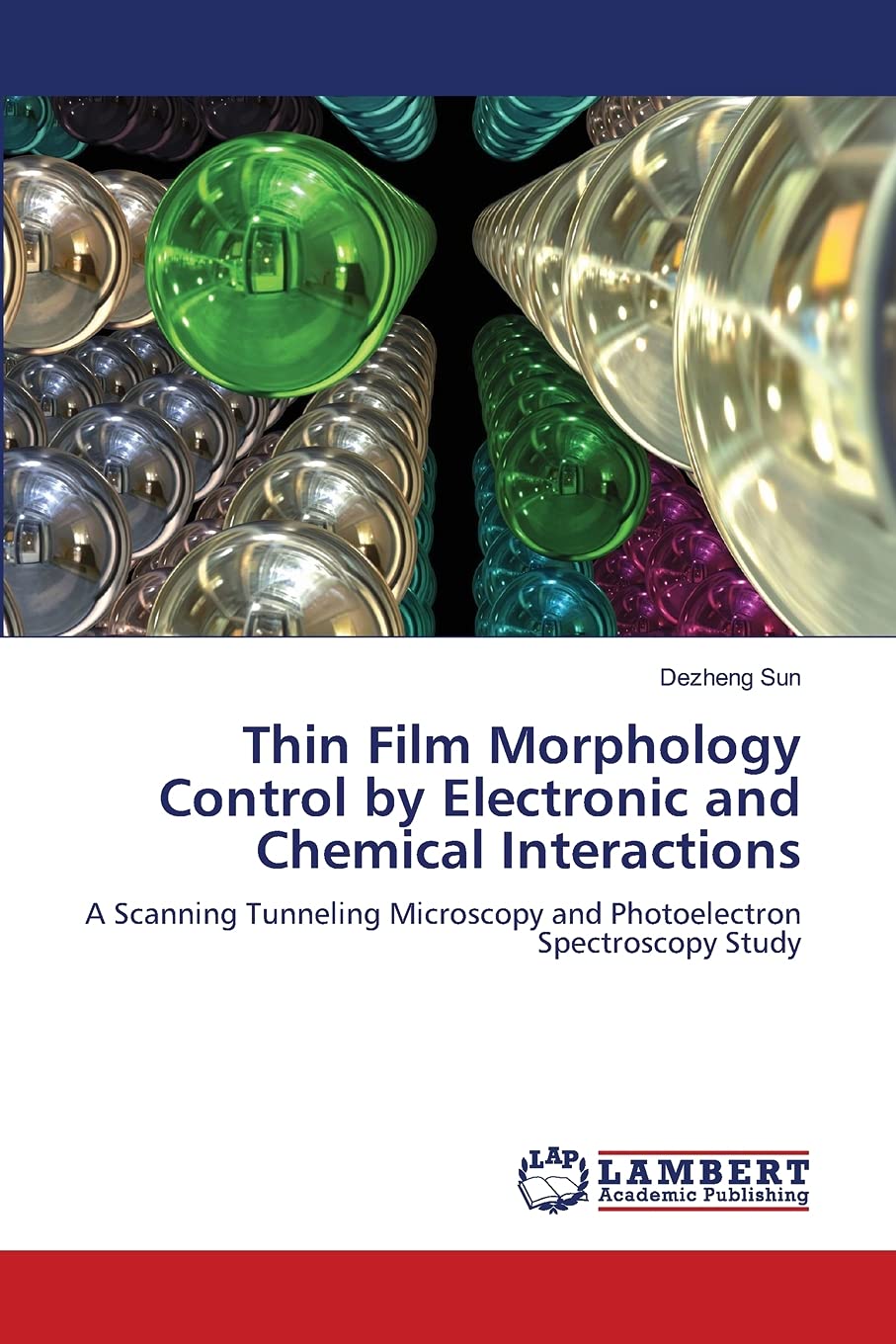
Studies of thin film growth involve interdependent chemical, electronic and mechanical properties whose comprehensive understanding is critical for predicting thin film morphology and properties. Self assembly of organic molecules on a metal substrate lays the groundwork for structures desired in nanotechnology applications. The three classes of films which I investigate are: monolayer MoS2 with strong MoS bonding, anthracene films formed by weak van der Waals interactions, and anthraquinine (AQ) honeycomb networks assembled by the interplay of local hydrogen bonding and substratemediated long range interactions. In this book, scanning tunneling microscopy (STM), Xray photoelectron spectroscopy (XPS) and angular resolved ultraviolet photoelectron spectroscopy (ARUPS) have been used to investigate monolayer and submonolayer thin films grown on a Cu(111) substrate. My research focuses on the use of STM, XPS and ARUPS to investigate the role of ionic bonding, van der Waals interaction, hydrogen bonding and surface mediated interactions during growth of thin films and how to tailor the film morphology by controlling these interactions.
⚠️ WARNING (California Proposition 65):
This product may contain chemicals known to the State of California to cause cancer, birth defects, or other reproductive harm.
For more information, please visit www.P65Warnings.ca.gov.