
Title
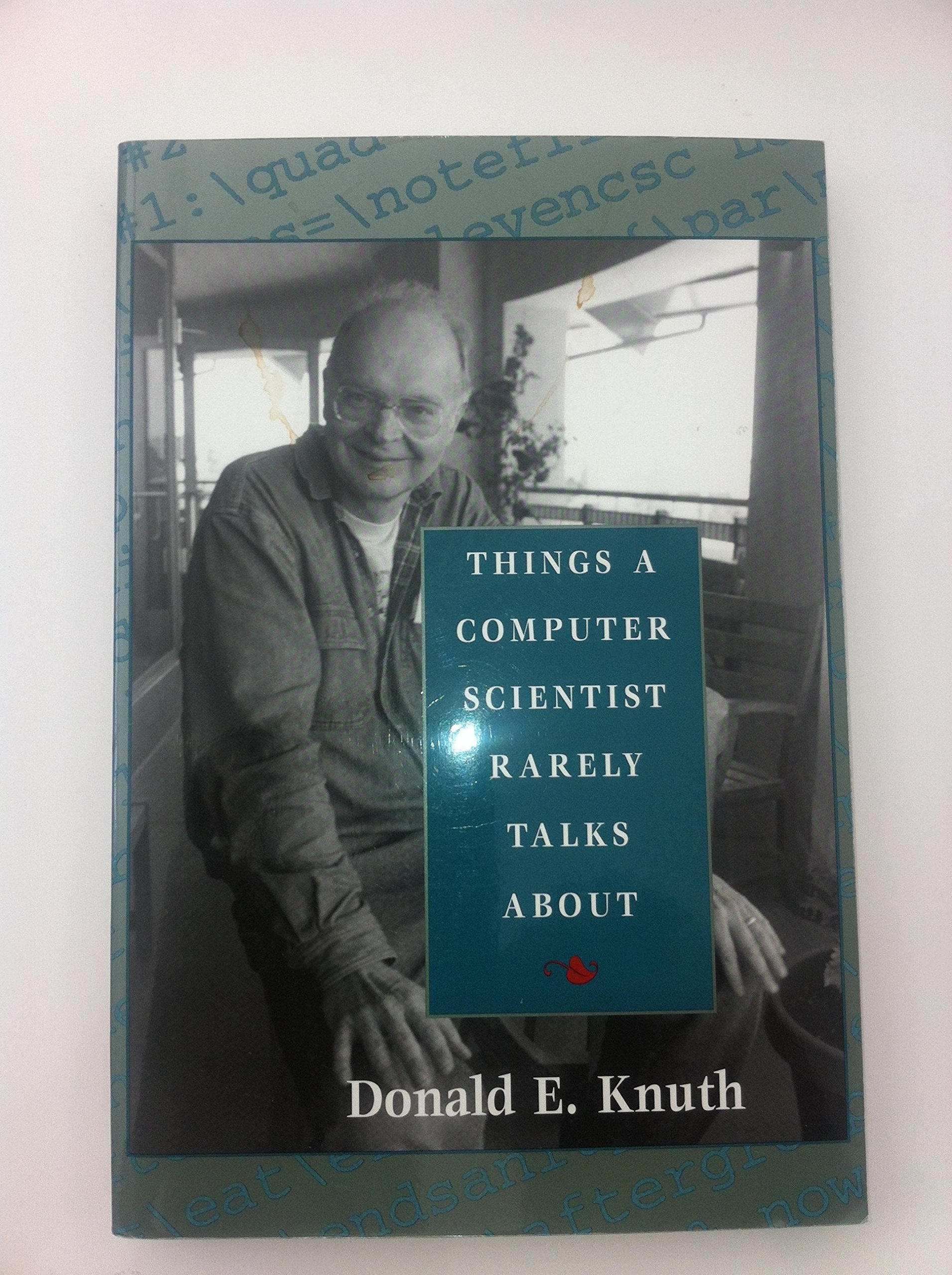
Things A Computer Scientist Rarely Talks About (Volume 136) (Lecture Notes)
Sold by Ergodebooks, an authorized reseller.
Returns accepted within 30 days | support@ergodebooks.com
Shipping Information
- Free Standard Shipping — United States only
- Processing Time: 3–5 business days
- Estimated Delivery: 6–10 business days after dispatch
- Double-boxed, fully insured & discreetly packaged
- Tracking number sent via email once dispatched
Returns & Refund
Returns accepted within 30 days of delivery.
Damaged or Defective Item
Free return shipping + replacement or full refund
Wrong Item Received
Free return shipping + replacement or full refund
Change of Mind
Return shipping at customer's expense · 25% restocking fee applies
Payment Option

How Does A Computer Scientist Understand Infinity? What Can Probability Theory Teach Us About Free Will? Can Mathematical Notions Be Used To Enhance One'S Personal Understanding Of The Bible?Perhaps No One Is More Qualified To Address These Questions Than Donald E. Knuth, Whose Massive Contributions To Computing Have Led Others To Nickname Him The Father Of Computer ScienceAnd Whose Religious Faith Led Him To Understand A Fascinating Analysis Of The Bible Called The 3:16 Project. In This Series Of Six Spirited, Informal Lectures, Knuth Explores The Relationships Between His Vocation And His Faith, Revealing The Unique Perspective That His Work With Computing Has Lent To His Understanding Of God.His Starting Point Is The 3:16 Project, An Application Of Mathematical Random Sampling To The Books Of The Bible. The First Lectures Tell The Story Of The Project'S Conception And Execution, Exploring Its Many Dimensions Of Language Translation, Aesthetics, And Theological History. Along The Way, Knuth Explains The Many Insights He Gained From Such Interdisciplinary Work. These Theological Musings Culminate In A Surprising Final Lecture Tackling The Ideas Of Infinity, Free Will, And Some Of The Other Big Questions That Lie At The Juncture Of Theology And Computation.Things A Computer Scientist Rarely Talks About, With Its Charming And Userfriendly Formateach Lecture Ends With A Question And Answer Exchange, And The Book Itself Contains More Than 100 Illustrationsis A Readable And Intriguing Approach To A Crucial Topic, Certain To Edify Both Those Who Are Serious And Curious About Their Faiths And Those Who Look At The Science Of Computation And Wonder What It Might Teach Them About Their Spiritual World.Includes Creativity, Spirituality, And Computer Science, A Panel Discussion Featuring Harry Lewis, Guy L. Steele, Jr., Manuela Veloso, Donald E. Knuth, And Mitch Kapor.
⚠️ WARNING (California Proposition 65):
This product may contain chemicals known to the State of California to cause cancer, birth defects, or other reproductive harm.
For more information, please visit www.P65Warnings.ca.gov.
- Q: How many pages does the book have? A: The book has two hundred fifty-seven pages. This provides a comprehensive exploration of its themes and insights.
- Q: What is the binding type of this book? A: The book is available in paperback binding. This makes it lightweight and easy to handle.
- Q: What are the dimensions of the book? A: The book measures six inches in length, zero point eight inches in width, and nine point zero two inches in height. These dimensions make it compact for easy reading.
- Q: What topics are covered in the book? A: The book discusses topics such as infinity, probability theory, free will, and the intersection of faith and computer science. It offers a unique perspective on these complex themes.
- Q: Who is the author of this book? A: The author of the book is Donald E. Knuth. He is recognized as a leading figure in computer science.
- Q: What can I learn from this book? A: You can learn about the relationship between computing and theology. The book explores how mathematical concepts can inform spiritual understanding.
- Q: Is this book suitable for beginners? A: Yes, this book is suitable for readers at all levels. Its user-friendly format and engaging style make it accessible to a wide audience.
- Q: How is the book structured? A: The book is structured as a series of six lectures, each ending with a question and answer exchange. This format encourages interaction and deeper understanding.
- Q: What is the tone of the book? A: The tone of the book is informal and spirited. It blends technical insights with personal reflections, making it both informative and engaging.
- Q: Can this book be used in academic settings? A: Yes, the book can be used in academic settings. Its exploration of complex themes makes it suitable for discussions in computer science and theology courses.
- Q: How should I store this book? A: Store the book in a cool, dry place to maintain its condition. Avoid exposure to direct sunlight to prevent fading of the cover.
- Q: Is this book available in digital format? A: No, this listing is for the paperback version only. Check with retailers for any digital formats that may be available.
- Q: What if the book arrives damaged? A: If the book arrives damaged, you should contact the seller for a return or exchange. Most sellers have policies in place to handle such situations.
- Q: Does the book include illustrations? A: Yes, the book contains more than one hundred illustrations. These visuals enhance the understanding of the concepts discussed.
- Q: Is there a discussion panel included? A: Yes, the book includes a panel discussion featuring notable figures in computer science. This adds depth to the themes explored in the lectures.
- Q: What audience is this book aimed at? A: The book is aimed at an audience interested in computer science, mathematics, and theology. It appeals to both serious scholars and curious readers.