
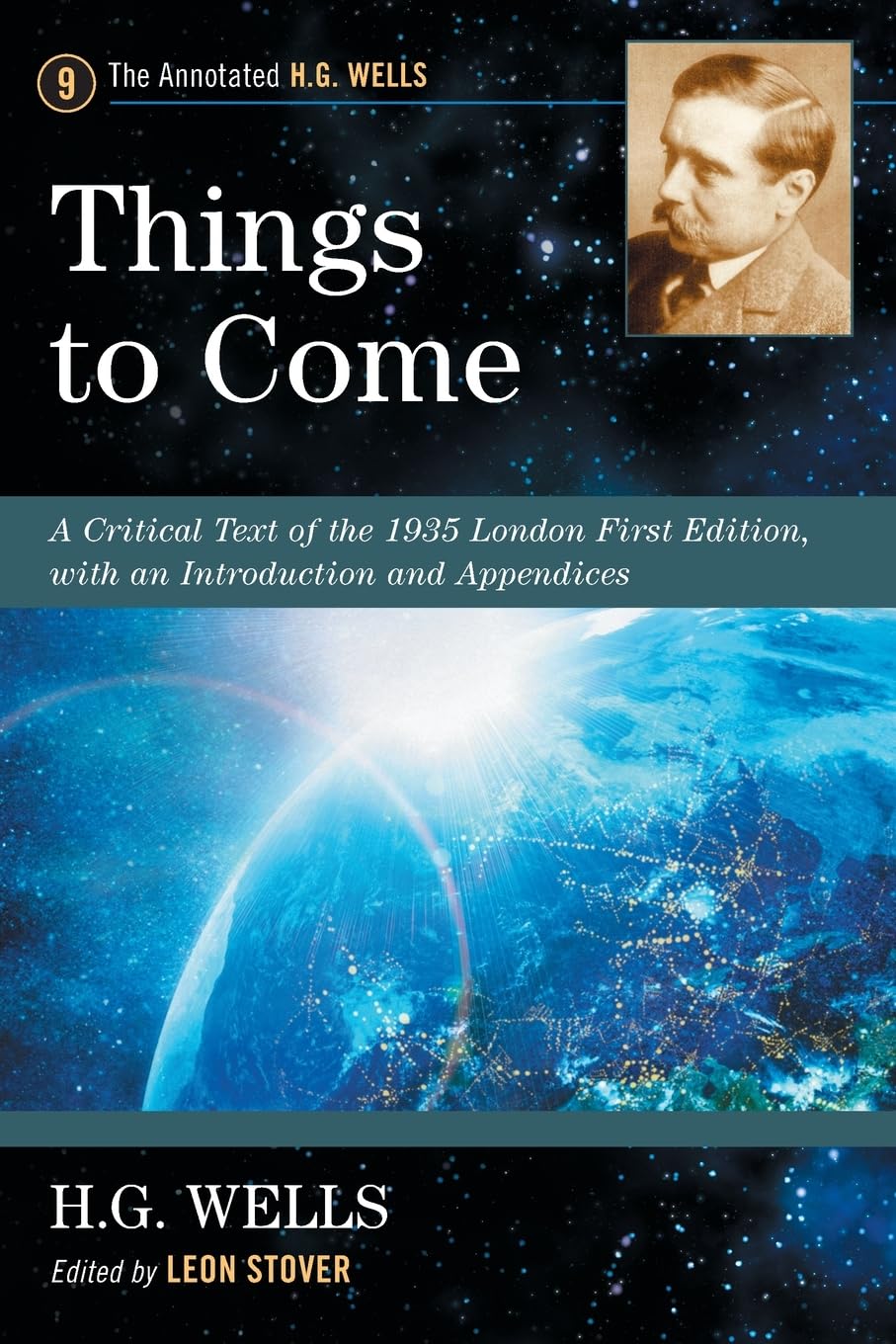
Title
Things To Come: A Critical Text Of The 1935 London First Edition, With An Introduction And Appendices (The Annotated H.G. Wells,,Used
Sold by Ergodebooks, an authorized reseller.
Returns accepted within 30 days | support@ergodebooks.com
Shipping Information
- Free Standard Shipping — United States only
- Processing Time: 3–5 business days
- Estimated Delivery: 6–10 business days after dispatch
- Double-boxed, fully insured & discreetly packaged
- Tracking number sent via email once dispatched
Returns & Refund
Returns accepted within 30 days of delivery.
Damaged or Defective Item
Free return shipping + replacement or full refund
Wrong Item Received
Free return shipping + replacement or full refund
Change of Mind
Return shipping at customer's expense · 25% restocking fee applies
Payment Option

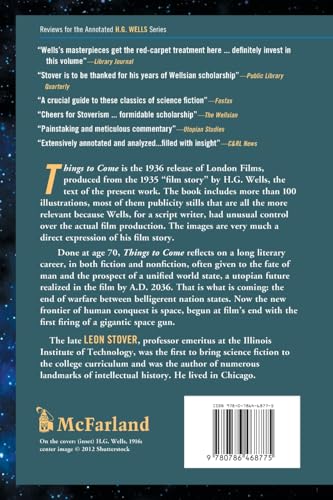
Things To Come Is The 1936 Release Of London Films, Produced From The 1935 'Film Story' By H.G. Wells, The Text Of The Present Work. The Book Includes More Than 100 Illustrations, Most Of Them Publicity Stills That Are All The More Relevant Because Wells, For A Script Writer, Had Unusual Control Over The Actual Film Production. The Images Are Very Much A Direct Expression Of His Film Story.Done At Age 70, Things To Come Reflects On A Long Literary Career, In Both Fiction And Nonfiction, Often Given To The Fate Of Man And The Prospect Of A Unified World State, A Utopian Future Realized In The Film By A.D. 2036. That Is What Is Coming: The End Of Warfare Between Belligerent Nation States. Now The New Frontier Of Human Conquest Is Space, Begun At Film'S End With The First Firing Of A Gigantic Space Gun.
⚠️ WARNING (California Proposition 65):
This product may contain chemicals known to the State of California to cause cancer, birth defects, or other reproductive harm.
For more information, please visit www.P65Warnings.ca.gov.
- Q: What is the page count of 'Things to Come'? A: This book has two hundred seventy-one pages. It features illustrations that enhance the understanding of H.G. Wells' film story.
- Q: What are the dimensions of 'Things to Come'? A: The dimensions are five point ninety-eight inches in length, zero point fifty-five inches in width, and nine point zero two inches in height. This makes it easy to handle and store.
- Q: What type of binding does this book have? A: The book is paperback bound. This binding type is lightweight and flexible, making it suitable for casual reading.
- Q: Who is the author of 'Things to Come'? A: The author is H.G. Wells. He was a renowned writer known for his contributions to science fiction.
- Q: What is the genre of 'Things to Come'? A: The genre is science fiction with themes of utopian futures and societal evolution. It reflects Wells' vision of a unified world state.
- Q: How do I read 'Things to Come'? A: You can read it as a traditional book. It is intended for anyone interested in science fiction and film history.
- Q: Is 'Things to Come' suitable for children? A: Yes, it is generally suitable for older children and teens. However, parental guidance is recommended due to thematic complexity.
- Q: What themes are explored in 'Things to Come'? A: The book explores themes of war, peace, and the future of humanity. It presents a vision of a world without warfare.
- Q: How does 'Things to Come' relate to the film? A: The book contains the film story that served as the basis for the 1936 movie. It features images and illustrations relevant to the film's narrative.
- Q: How should I store 'Things to Come'? A: Store it in a cool, dry place away from direct sunlight. This will help preserve the binding and illustrations over time.
- Q: Can I clean 'Things to Come'? A: Yes, lightly dust the cover with a soft cloth. Avoid using liquids to prevent damage to the pages.
- Q: What if 'Things to Come' arrives damaged? A: If it arrives damaged, you can initiate a return or exchange process. Check the retailer's return policy for specific instructions.
- Q: Is there a warranty for 'Things to Come'? A: No, this book does not come with a warranty. However, most retailers offer a satisfaction guarantee.
- Q: How does 'Things to Come' compare to other H.G. Wells novels? A: It shares similar themes with other Wells works, focusing on societal evolution and futuristic concepts. However, it is unique due to its film connection.
- Q: What age group is 'Things to Come' intended for? A: It is primarily aimed at young adults and older readers. The complex themes may be challenging for younger children.
- Q: Are the illustrations in 'Things to Come' significant? A: Yes, the illustrations are significant as they reflect Wells' vision for the film. They enhance the reader's understanding of the narrative.