
Title
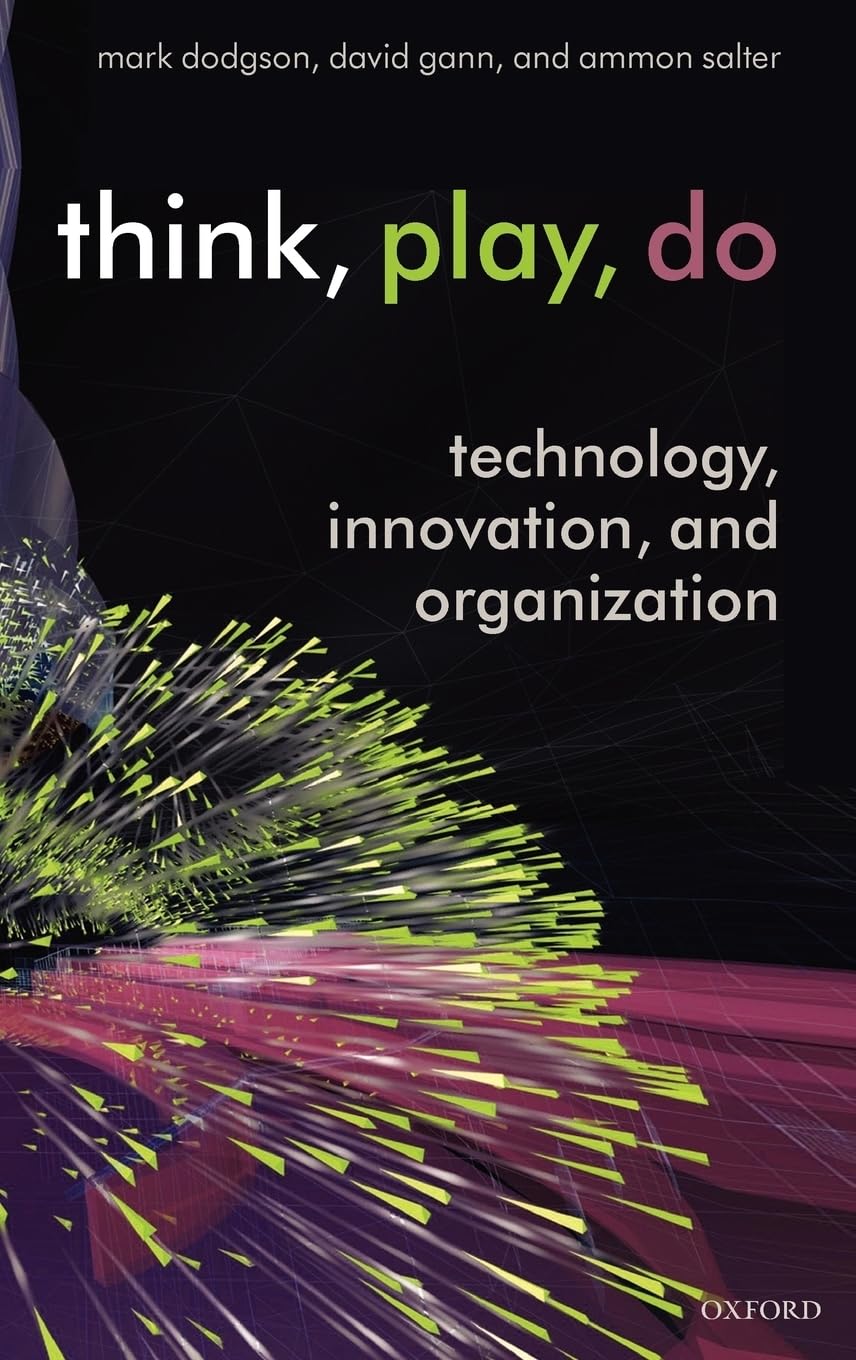
Think, Play, Do: Technology, Innovation, And Organization
Sold by Ergodebooks, an authorized reseller.
Returns accepted within 30 days | support@ergodebooks.com
Shipping Information
- Free Standard Shipping — United States only
- Processing Time: 3–5 business days
- Estimated Delivery: 6–10 business days after dispatch
- Double-boxed, fully insured & discreetly packaged
- Tracking number sent via email once dispatched
Returns & Refund
Returns accepted within 30 days of delivery.
Damaged or Defective Item
Free return shipping + replacement or full refund
Wrong Item Received
Free return shipping + replacement or full refund
Change of Mind
Return shipping at customer's expense · 25% restocking fee applies
Payment Option

The innovation process is the most important of all business processes. Innovation is the means by which value is constructed and efficiencies are created. It is the source of sustainable competitive advantage. This book shows how the innovation process is changing profoundly. Part of the change results from the application of new technologies to the innovation process itself. A new category of technology has emerged which we call 'innovation technology'. This includes simulation and modeling, visualization and economical and ameliorates some of its uncertainties. These technological changes are accompanied by changing organization structures and skills requirements. The technologies are used in fast moving, creative environments and are suite to projectbased organization. They also require the development of new 'craft' skills to realize the possibilities created by the new 'code'. The book outlines a new way of thinking about innovation. Traditional definitions of 'research', 'development' and 'engineering', imply a progressive linearity which doesn't exist in reality. They are also associated with organizational departments, which are breaking down where once they existed, and are in any case nonexistent in the vast majority of firms. They also fail to capture the central importance of design in innovation. We propose a new schema for the innovation process: Think, Play, Do. Innovation requires creating new ideas and thinking about new options, playing with them to see if they are practical, economical and marketable, and then doing: making the innovation real. This new schema captures the emerging innovation process using a more contemporary idiom. The book reports indepth studies from a number of companies and sectors. Major case studies of Proctor and Gamble and Arup Partners are presented. It reports on the use of innovation technology in a range of other companies and organizations, from pharmaceuticals in GSK, to engineering design in Ricardo engineering, and welding in TWI. We describe how innovation technology is used in traditional industries, such as in mining, and in public projects, such as the development of London's traffic congestion charge and the stabilization of the leaning tower of Pisa.
⚠️ WARNING (California Proposition 65):
This product may contain chemicals known to the State of California to cause cancer, birth defects, or other reproductive harm.
For more information, please visit www.P65Warnings.ca.gov.