
Title
Thinking About Android Epistemology,Used
Sold by Ergodebooks, an authorized reseller.
Returns accepted within 30 days | support@ergodebooks.com
Shipping Information
- Free Standard Shipping — United States only
- Processing Time: 3–5 business days
- Estimated Delivery: 6–10 business days after dispatch
- Double-boxed, fully insured & discreetly packaged
- Tracking number sent via email once dispatched
Returns & Refund
Returns accepted within 30 days of delivery.
Damaged or Defective Item
Free return shipping + replacement or full refund
Wrong Item Received
Free return shipping + replacement or full refund
Change of Mind
Return shipping at customer's expense · 25% restocking fee applies
Payment Option

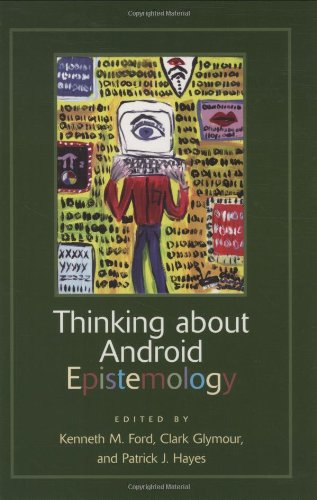
How to think about minds that aren't like ours: using artificial intelligence and computation theory to study the powers and limits of systems that learn.For millennia, 'from Aristotle to almost yesterday,' the great problems of philosophy have all been about people: questions of epistemology and philosophy of mind have concerned human capacities and limitations. Still, say the editors of Thinking about Android Epistemology, there should be theories about other sorts of minds, other ways that physical systems can be organized to produce knowledge and competence. The emergence of artificial intelligence in midtwentieth century provided a way to study the powers and limits of systems that learn, to theorize and to make theories sufficiently concrete so that their properties and consequences can be demonstrated. In this updated version of the 1995 MIT Press book Android Epistemology, computer scientists and philosophersamong them Herbert Simon, Daniel Dennett, and Paul Churchlandoffer a gentle, unsystematic introduction to alternative systems of cognition. They look at android epistemology from both theoretical and practical points of view, offering not only speculative proposals but applicationsideas for using computational systems to expand human capacities. The accessible and entertaining essays include a comparison of 2001's HAL and today's computers, a conversation among aliens who have a low opinion of human cognition, an argument for the creativity of robots, and a short story illustrating the power of algorithms for learning causal relations.ContributorsNeil Agnew, Margaret Boden, Paul Churchland, Daniel Dennett, Ken M. Ford, Clark Glymour, Pat Hayes, Henry Kyburg, Doug Lenat, Marvin Minsky, Joseph Nadeau, Anatol Rappoport, Herbert Simon, Lynn Andrea Stein, Susan Sterrett
⚠️ WARNING (California Proposition 65):
This product may contain chemicals known to the State of California to cause cancer, birth defects, or other reproductive harm.
For more information, please visit www.P65Warnings.ca.gov.