If you have any questions, you are always welcome to contact us. We'll get back to you as soon as possible, withing 24 hours on weekdays.
Customer service
All questions about your order, return and delivery must be sent to our customer service team by e-mail at yourstore@yourdomain.com
Sale & Press
If you are interested in selling our products, need more information about our brand or wish to make a collaboration, please contact us at press@yourdomain.com
Help
If you have any questions, you are always welcome to contact us. We'll get back to you as soon as possible, withing 24 hours on weekdays.
Customer service
All questions about your order, return and delivery must be sent to our customer service team by e-mail at yourstore@yourdomain.com
Sale & Press
If you are interested in selling our products, need more information about our brand or wish to make a collaboration, please contact us at press@yourdomain.com
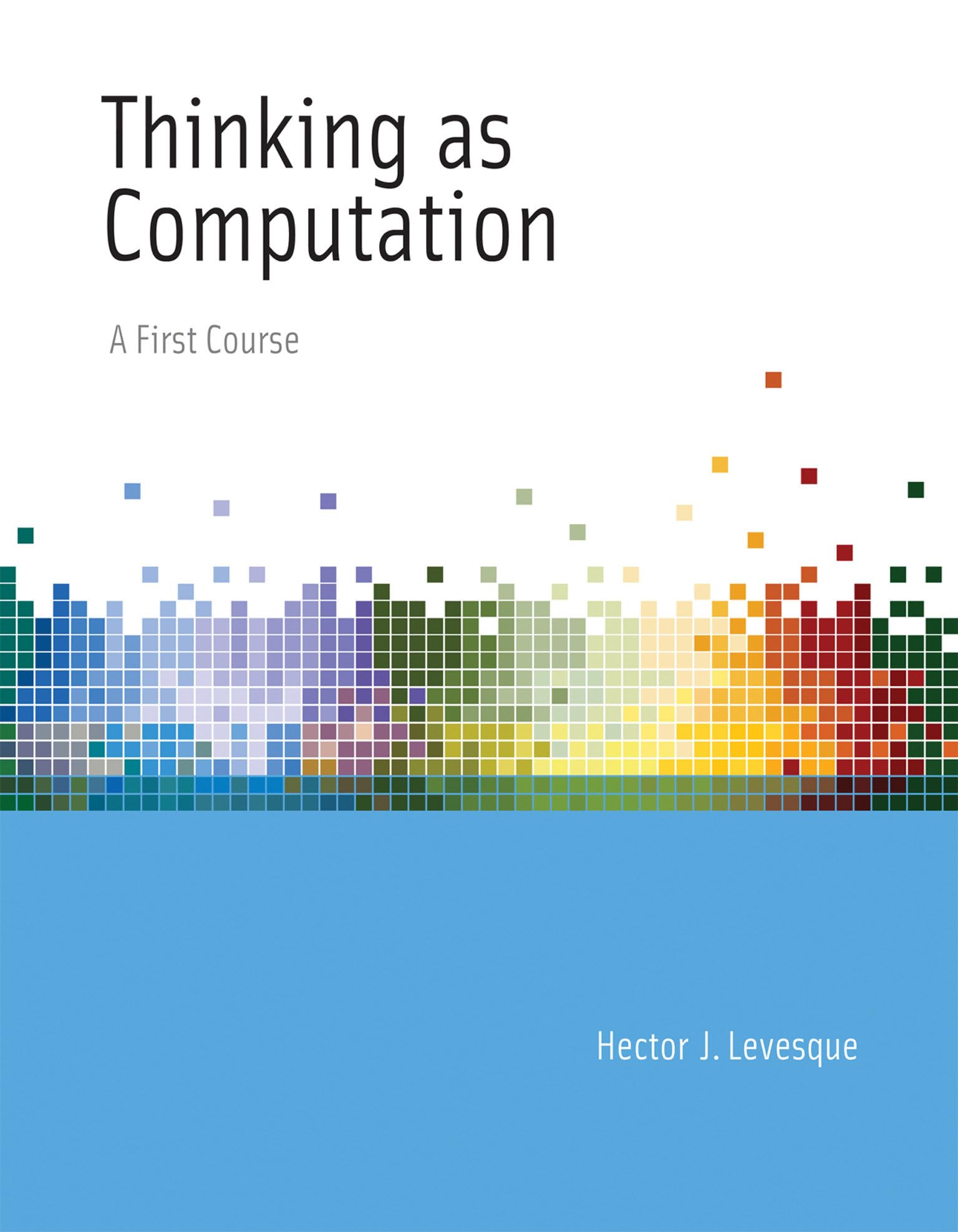
Students explore the idea that thinking is a form of computation by learning to write simple computer programs for tasks that require thought.This book guides students through an exploration of the idea that thinking might be understood as a form of computation. Students make the connection between thinking and computing by learning to write computer programs for a variety of tasks that require thought, including solving puzzles, understanding natural language, recognizing objects in visual scenes, planning courses of action, and playing strategic games. The material is presented with minimal technicalities and is accessible to undergraduate students with no specialized knowledge or technical background beyond high school mathematics. Students use Prolog (without having to learn algorithms: Prolog without tears!), learning to express what they need as a Prolog program and letting Prolog search for answers.After an introduction to the basic concepts, Thinking as Computation offers three chapters on Prolog, covering backchaining, programs and queries, and how to write the sorts of Prolog programs used in the book. The book follows this with case studies of tasks that appear to require thought, then looks beyond Prolog to consider learning, explaining, and propositional reasoning. Most of the chapters conclude with short bibliographic notes and exercises. The book is based on a popular course at the University of Toronto and can be used in a variety of classroom contexts, by students ranging from firstyear liberal arts undergraduates to more technically advanced computer science students.
⚠️ WARNING (California Proposition 65):
This product may contain chemicals known to the State of California to cause cancer,
birth defects, or other reproductive harm.
For MAP (Minimum Advertised Price) violations and Intellectual Property (IP) or Trademark concerns, please contact:
support@ergodebooks.com
⚠️ California Proposition 65 Warning: Some products sold on this website may expose you to chemicals known to the State of California to cause cancer, birth defects, or other reproductive harm. For more information, visit www.P65Warnings.ca.gov.