
Title
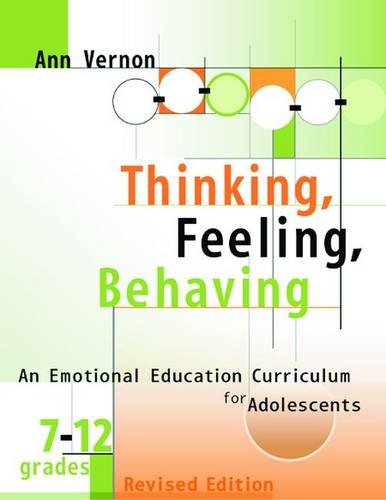
Thinking, Feeling, Behaving, Grades 712: An Emotional Education Curriculum for Adolescents,Used
Sold by Ergodebooks, an authorized reseller.
Returns accepted within 30 days | support@ergodebooks.com
Shipping Information
- Free Standard Shipping — United States only
- Processing Time: 3–5 business days
- Estimated Delivery: 6–10 business days after dispatch
- Double-boxed, fully insured & discreetly packaged
- Tracking number sent via email once dispatched
Returns & Refund
Returns accepted within 30 days of delivery.
Damaged or Defective Item
Free return shipping + replacement or full refund
Wrong Item Received
Free return shipping + replacement or full refund
Change of Mind
Return shipping at customer's expense · 25% restocking fee applies
Payment Option

For grades 712. An essential resource for helping students learn to overcome irrational beliefs, negative feelings, and the negative consequences that may result. This 2006 revision is packed with 105 creative and easytodo activities 15 are new to this edition. The activities include games, stories, role plays, writing, drawing, and brainstorming. Each activity is identified by grade level and categorized into one of five important topic areas: SelfAcceptance; Feelings; Beliefs and Behavior; Problem Solving and Decision Making; and Interpersonal Relationships. Thinking, Feeling, Behaving is an emotional education curriculum based on the principles of Rational Emotive Behavior Therapy. It can be used in classroom or small group settings.
⚠️ WARNING (California Proposition 65):
This product may contain chemicals known to the State of California to cause cancer, birth defects, or other reproductive harm.
For more information, please visit www.P65Warnings.ca.gov.
- Q: What is the page count of the book? A: The book contains two hundred eighty-one pages. This length provides a comprehensive exploration of emotional education for adolescents.
- Q: What type of binding does the book have? A: The book is available in paperback binding. This makes it lightweight and easy to handle for classroom use.
- Q: What grade levels is this curriculum designed for? A: This curriculum is designed for grades seven through twelve. It is tailored to meet the developmental needs of adolescents.
- Q: How do I use this emotional education curriculum? A: You can use this curriculum in classroom or small group settings. It includes a variety of activities that facilitate emotional learning.
- Q: Are the activities suitable for all students in grades seven to twelve? A: Yes, the activities are suitable for all students in grades seven to twelve. They are categorized by grade level and topic area.
- Q: What types of activities are included in the curriculum? A: The curriculum includes games, stories, role plays, writing, drawing, and brainstorming activities. These foster engagement and learning.
- Q: How should I store this book to keep it in good condition? A: Store the book in a cool, dry place away from direct sunlight. This helps maintain its condition over time.
- Q: Is this book safe for adolescents? A: Yes, the book is designed specifically for adolescents. It addresses emotional and behavioral challenges in a supportive manner.
- Q: Can I return the book if it arrives damaged? A: Yes, you can return the book if it arrives damaged. Check the retailer's return policy for specific instructions.
- Q: What if I have questions about the curriculum activities? A: If you have questions about the activities, consult the included guide or reach out to educators familiar with the curriculum.
- Q: Is this curriculum based on any psychological principles? A: Yes, it is based on the principles of Rational Emotive Behavior Therapy. This foundation enhances its educational effectiveness.
- Q: Are there any new activities in this edition of the book? A: Yes, this edition includes fifteen new activities. These updates provide fresh content for educators and students.
- Q: Who is the author of the curriculum? A: The curriculum is authored by Ann Vernon. She has expertise in emotional education and adolescent development.
- Q: What are the main topics covered in the curriculum? A: The main topics include Self-Acceptance, Feelings, Beliefs and Behavior, Problem Solving and Decision Making, and Interpersonal Relationships.
- Q: What condition is the used book in if purchased secondhand? A: The used book is listed in good condition. This indicates it should be functional and presentable for educational use.
- Q: Is this book suitable for group activities? A: Yes, the book is suitable for group activities. It is designed to facilitate discussions and collaborative learning experiences.