
Title
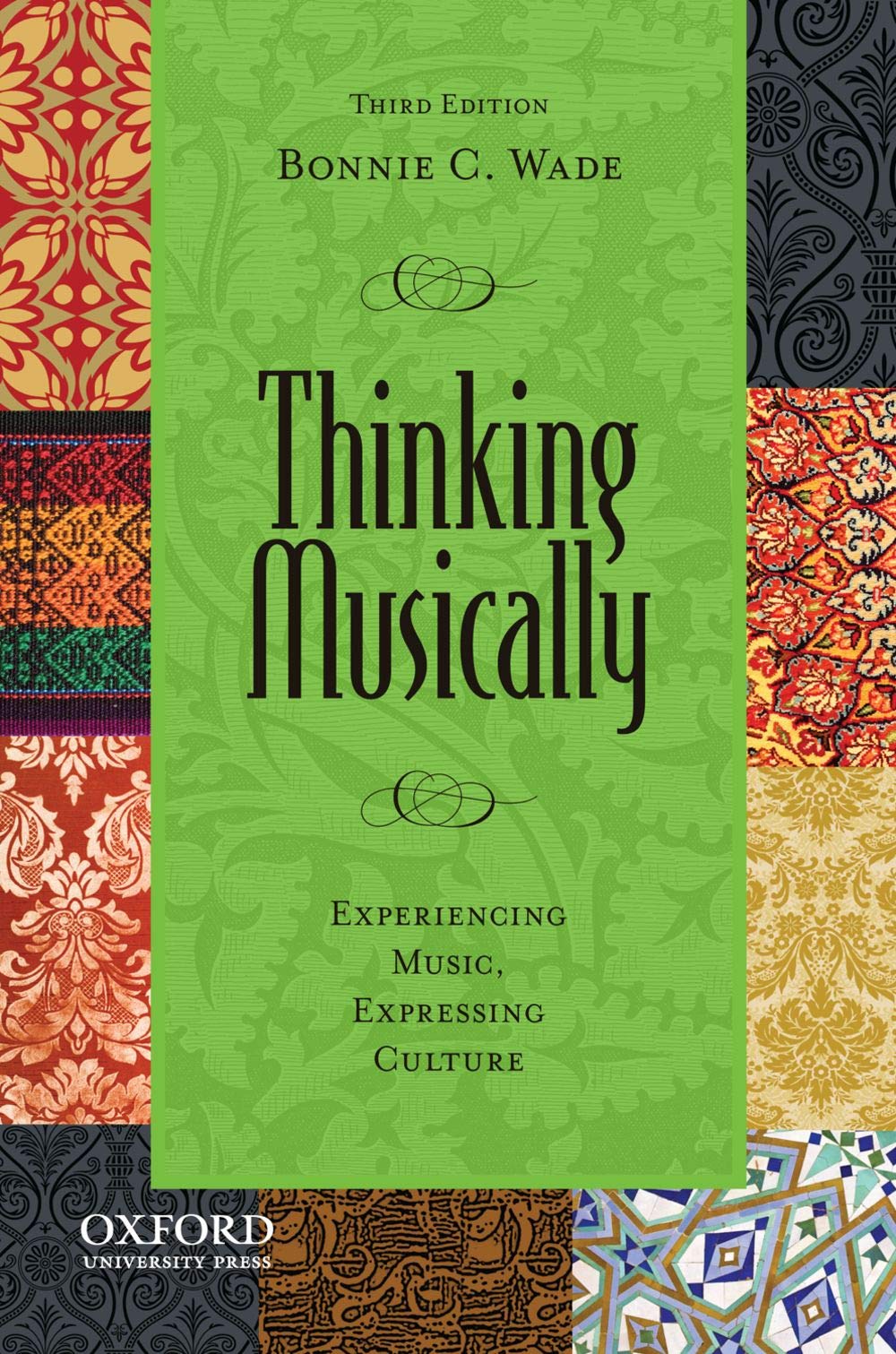
Thinking Musically: Experiencing Music, Expressing Culture (Global Music Series)
Sold by Ergodebooks, an authorized reseller.
Returns accepted within 30 days | support@ergodebooks.com
Shipping Information
- Free Standard Shipping — United States only
- Processing Time: 3–5 business days
- Estimated Delivery: 6–10 business days after dispatch
- Double-boxed, fully insured & discreetly packaged
- Tracking number sent via email once dispatched
Returns & Refund
Returns accepted within 30 days of delivery.
Damaged or Defective Item
Free return shipping + replacement or full refund
Wrong Item Received
Free return shipping + replacement or full refund
Change of Mind
Return shipping at customer's expense · 25% restocking fee applies
Payment Option

As The Cornerstone Of The Global Music Series, Thinking Musically, Third Edition, Explores Musical Diversity By Integrating The Sounds And Traditions Of World Cultures. Bonnie C. Wade Discusses How Various Cultural Influencesgender, Ethnicity, Mass Media, Westernization, Nationalism, And Acculturationare Shaping Music And The Ways That We Experience It.What'S New To The Third Edition?* Simplified And Incorporates Recent Additions To The Global Music Series* New Charts And Diagrams Delve Into Important Musical Concepts* Updated Companion Website Includes A New Guide To Online And Print Resources, A Sample Syllabi, And Teaching Tipsvisit Www.Oup.Com/Us/Globalmusic For A List Of Case Studies In The Global Music Series. The Website Also Includes Instructional Material To Accompany Each Study.
⚠️ WARNING (California Proposition 65):
This product may contain chemicals known to the State of California to cause cancer, birth defects, or other reproductive harm.
For more information, please visit www.P65Warnings.ca.gov.
- Q: How many pages does this book have? A: This book has two hundred fifty-six pages. It offers a comprehensive exploration of musical diversity and cultural influences.
- Q: What are the dimensions of Thinking Musically? A: The book measures eight point one inches in length, zero point seven one inches in width, and eight point eleven inches in height.
- Q: What type of binding does this book have? A: This book is published in paperback binding. This makes it lightweight and easy to handle for readers.
- Q: Who is the author of Thinking Musically? A: The author of this book is Bonnie C. Wade. She is known for her work in ethnomusicology and cultural studies.
- Q: What is the main topic of Thinking Musically? A: The main topic is the exploration of musical diversity and cultural expressions. It integrates various cultural influences on music.
- Q: Is this book suitable for beginners in ethnomusicology? A: Yes, this book is suitable for beginners. It simplifies complex concepts and provides accessible charts and diagrams.
- Q: Can I find teaching resources related to this book? A: Yes, there are teaching resources available online. The companion website includes instructional materials and sample syllabi.
- Q: What cultural influences are discussed in this book? A: The book discusses influences like gender, ethnicity, and nationalism. These factors shape music experiences across cultures.
- Q: Does this book include case studies? A: Yes, it includes case studies from the Global Music Series. These studies provide real-world applications of the concepts discussed.
- Q: Is there a website for additional resources? A: Yes, you can visit www.oup.com/us/globalmusic for additional resources and case studies related to the book.
- Q: What makes the third edition different? A: The third edition simplifies content and includes recent additions to the series. New charts and a companion website enhance the learning experience.
- Q: Is this book appropriate for academic use? A: Yes, this book is appropriate for academic use. It provides an in-depth analysis suitable for courses in ethnomusicology.
- Q: What genre does this book belong to? A: This book belongs to the genre of ethnomusicology. It explores the intersection of music and culture.
- Q: What age group is this book intended for? A: This book is intended for readers of all ages interested in music and culture. It is especially useful for students and educators.
- Q: Are there visuals included in the book? A: Yes, the book includes new charts and diagrams. These visuals help clarify important musical concepts discussed in the text.