
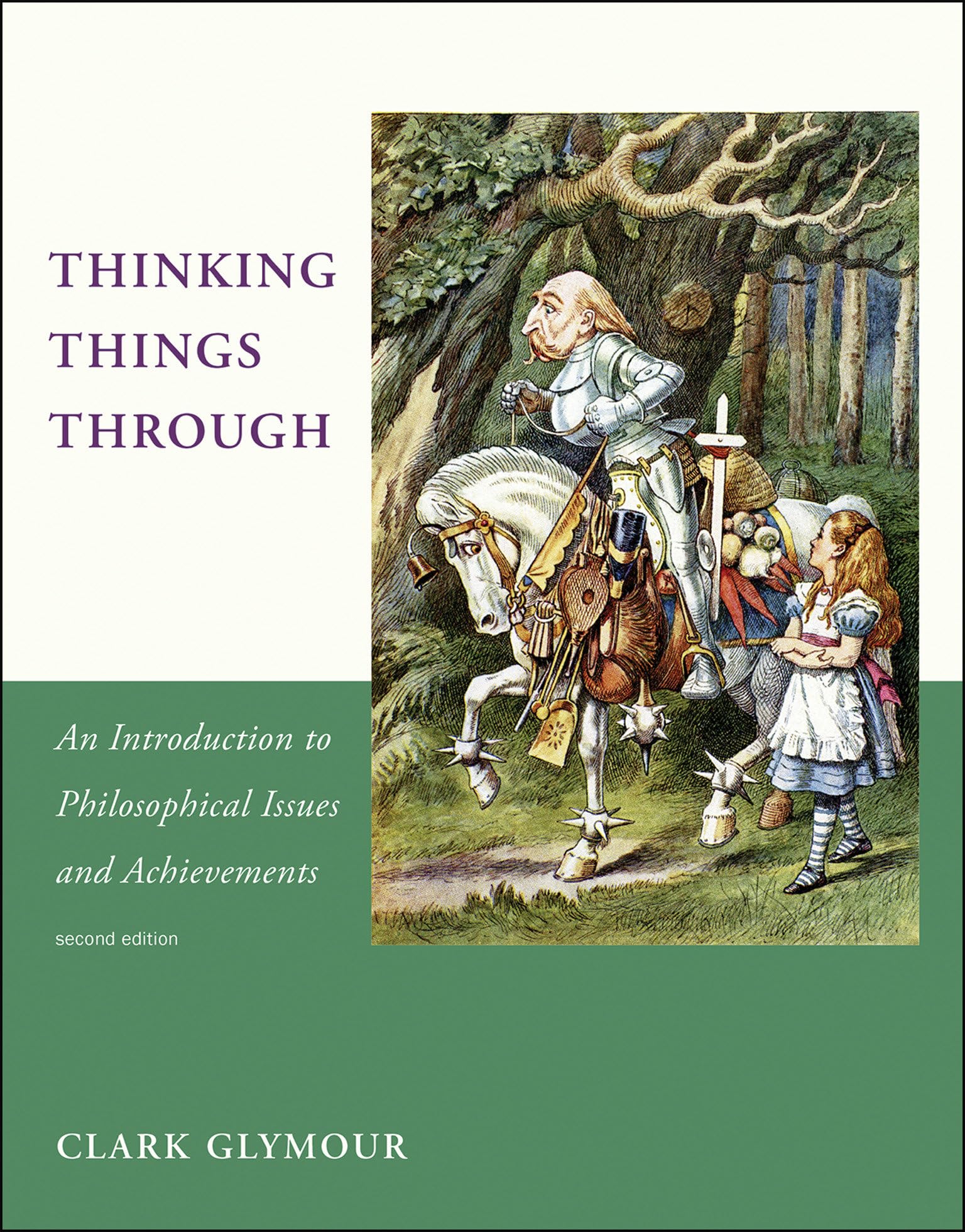
Title
Thinking Things Through, Second Edition: An Introduction To Philosophical Issues And Achievements (Bradford Book)
Sold by Ergodebooks, an authorized reseller.
Returns accepted within 30 days | support@ergodebooks.com
Shipping Information
- Free Standard Shipping — United States only
- Processing Time: 3–5 business days
- Estimated Delivery: 6–10 business days after dispatch
- Double-boxed, fully insured & discreetly packaged
- Tracking number sent via email once dispatched
Returns & Refund
Returns accepted within 30 days of delivery.
Damaged or Defective Item
Free return shipping + replacement or full refund
Wrong Item Received
Free return shipping + replacement or full refund
Change of Mind
Return shipping at customer's expense · 25% restocking fee applies
Payment Option

The Second Edition Of A Unique Introductory Text, Offering An Account Of The Logical Tradition In Philosophy And Its Influence On Contemporary Scientific Disciplines.Thinking Things Through Offers A Broad, Historical, And Rigorous Introduction To The Logical Tradition In Philosophy And Its Contemporary Significance. It Is Unique Among Introductory Philosophy Texts In That It Considers Both The Historical Development And Modern Fruition Of A Few Central Questions. It Traces The Influence Of Philosophical Ideas And Arguments On Modern Logic, Statistics, Decision Theory, Computer Science, Cognitive Science, And Public Policy. The Text Offers An Account Of The History Of Speculation And Argument, And The Development Of Theories Of Deductive And Probabilistic Reasoning. It Considers Whether And How New Knowledge Of The World Is Possible At All, Investigates Rational Decision Making And Causality, Explores The Nature Of Mind, And Considers Ethical Theories. Suggestions For Reading, Both Historical And Contemporary, Accompany Most Chapters.This Second Edition Includes Four New Chapters, On Decision Theory And Causal Relations, Moral And Political Theories, Moral Tools Such As Game Theory And Voting Theory, And Ethical Theories And Their Relation To Realworld Issues. Examples Have Been Updated Throughout, And Some New Material Has Been Added. It Is Suitable For Use In Advanced Undergraduate And Beginning Graduate Classes In Philosophy, And As An Ancillary Text For Students In Computer Science And The Natural Sciences.
⚠️ WARNING (California Proposition 65):
This product may contain chemicals known to the State of California to cause cancer, birth defects, or other reproductive harm.
For more information, please visit www.P65Warnings.ca.gov.
- Q: What is the page count of this book? A: This book has four hundred seventy-two pages. It provides a comprehensive exploration of philosophical issues and logical traditions.
- Q: What are the dimensions of this book? A: This book measures eight point nine inches in length, six point nine inches in width, and zero point ninety-one inches in height.
- Q: What type of binding does this book have? A: This book is available in paperback binding. This makes it lightweight and easy to handle for reading.
- Q: Who is the author of this book? A: The author of this book is Clark Glymour. He is known for his work in philosophy and cognitive science.
- Q: What is the main subject of this book? A: The main subject of this book is cognitive psychology. It offers insights into philosophical issues and their relevance to contemporary science.
- Q: Is this book suitable for beginners? A: Yes, this book is suitable for both advanced undergraduate and beginning graduate students. It serves as an excellent introduction to philosophical topics.
- Q: How do I approach reading this book? A: You can read this book sequentially or focus on specific chapters that interest you. It includes suggestions for further reading to enhance understanding.
- Q: Are there any new chapters in this edition? A: Yes, this second edition includes four new chapters. These chapters cover topics such as decision theory, moral tools, and ethical theories.
- Q: Is this book appropriate for computer science students? A: Yes, this book is appropriate for students in computer science. It connects philosophical ideas to modern logic and decision-making.
- Q: What kind of issues does this book address? A: This book addresses various philosophical issues, including rational decision-making, causality, and the nature of mind. It provides a robust discussion of ethical theories.
- Q: Does this book contain historical context? A: Yes, the book includes historical context. It traces the development of philosophical ideas and their influence on contemporary disciplines.
- Q: How should I store this book to keep it in good condition? A: Store this book in a cool, dry place away from direct sunlight. This will help preserve the condition of the paperback binding.
- Q: Can this book be used as a textbook? A: Yes, this book can be used as a textbook. It is suitable for advanced undergraduate and beginning graduate classes in philosophy.
- Q: What if I receive a damaged copy of this book? A: If you receive a damaged copy, you should contact the seller for a return or exchange. Be sure to provide details and photographs of the damage.
- Q: What topics are covered in the new chapters? A: The new chapters cover decision theory, causal relations, moral and political theories, and ethical theories related to real-world issues.
- Q: Is this book relevant to public policy discussions? A: Yes, this book is relevant to public policy discussions. It explores the implications of philosophical ideas on decision-making processes in policy.