
Title
Thinking Through Poetry: Field Reports On Romantic Lyric,Used
Sold by Ergodebooks, an authorized reseller.
Returns accepted within 30 days | support@ergodebooks.com
Shipping Information
- Free Standard Shipping — United States only
- Processing Time: 3–5 business days
- Estimated Delivery: 6–10 business days after dispatch
- Double-boxed, fully insured & discreetly packaged
- Tracking number sent via email once dispatched
Returns & Refund
Returns accepted within 30 days of delivery.
Damaged or Defective Item
Free return shipping + replacement or full refund
Wrong Item Received
Free return shipping + replacement or full refund
Change of Mind
Return shipping at customer's expense · 25% restocking fee applies
Payment Option

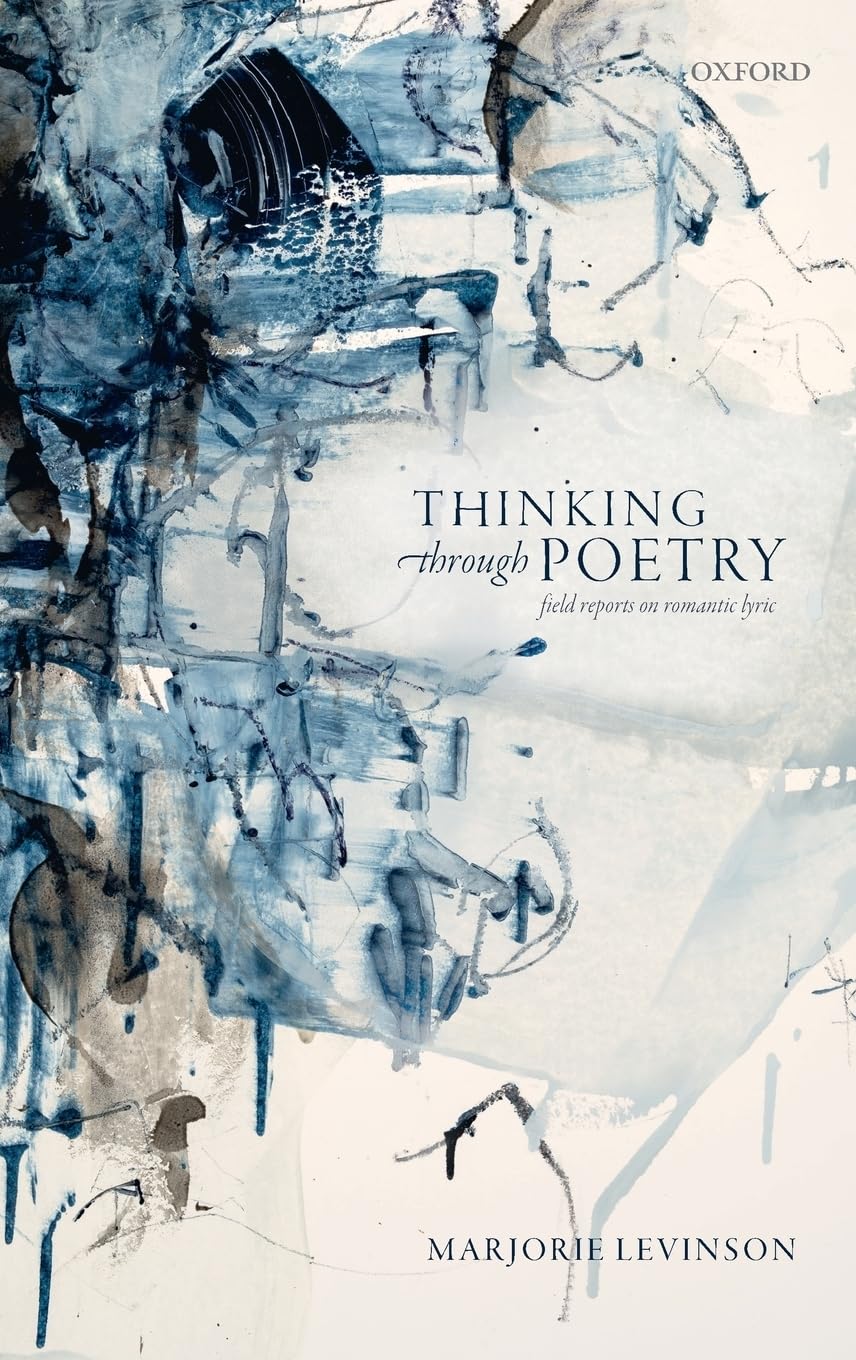
Thinking through Poetry: Field Reports on Romantic Lyric pursues two goals. The title signals the contribution to debates about reading. Do we think 'through' 'by means of', 'with' poems, sympathetically elaborating their surfaces? Is this compatible with a second meaning: 'thinking through' poems to their endsolving a problem, getting to its root, its deep truth? Third, can we square these surface and depth readings with a speculative, philosophical criticism to which the poem carries us, where 'through' denotes a 'going beyond?' All three meanings of 'through' are in play throughout.The subtitle applies 'field' first to Romantic studies since the 1980s, a field that this project reflects upon from beginning to end. Examples are drawn especially from Wordsworth, but also from Coleridge and, in assessing Romanticism's afterlife, from Stevens. 'Field' also characterizes the shift from a unitary to a fieldconcept of form during that timespan, a shift pursued through prolonged engagement with Spinoza. 'Field' thus underscores the synthesis of form and history, the importance of analytic scale to that synthesis, and the displacement of entity (text) by 'relation' as the object of investigation.While the book historically connects early nineteenthcentury intellectual trends to twentieth and twentyfirstcentury scientific revolutions, its focuses on introducing new models to literary criticism. Unlike accounts of the influence of science on literature, or various 'literature + X' approaches (literature and ecology, literature and cognitive science), it constructs its object of inquiry in a way cognate with work in nonhumanities disciplines, thus highlighting a certain unity to human knowledge. The claim is that specialists in literature should think the way distinguished scientists think, and vice versa.
⚠️ WARNING (California Proposition 65):
This product may contain chemicals known to the State of California to cause cancer, birth defects, or other reproductive harm.
For more information, please visit www.P65Warnings.ca.gov.