
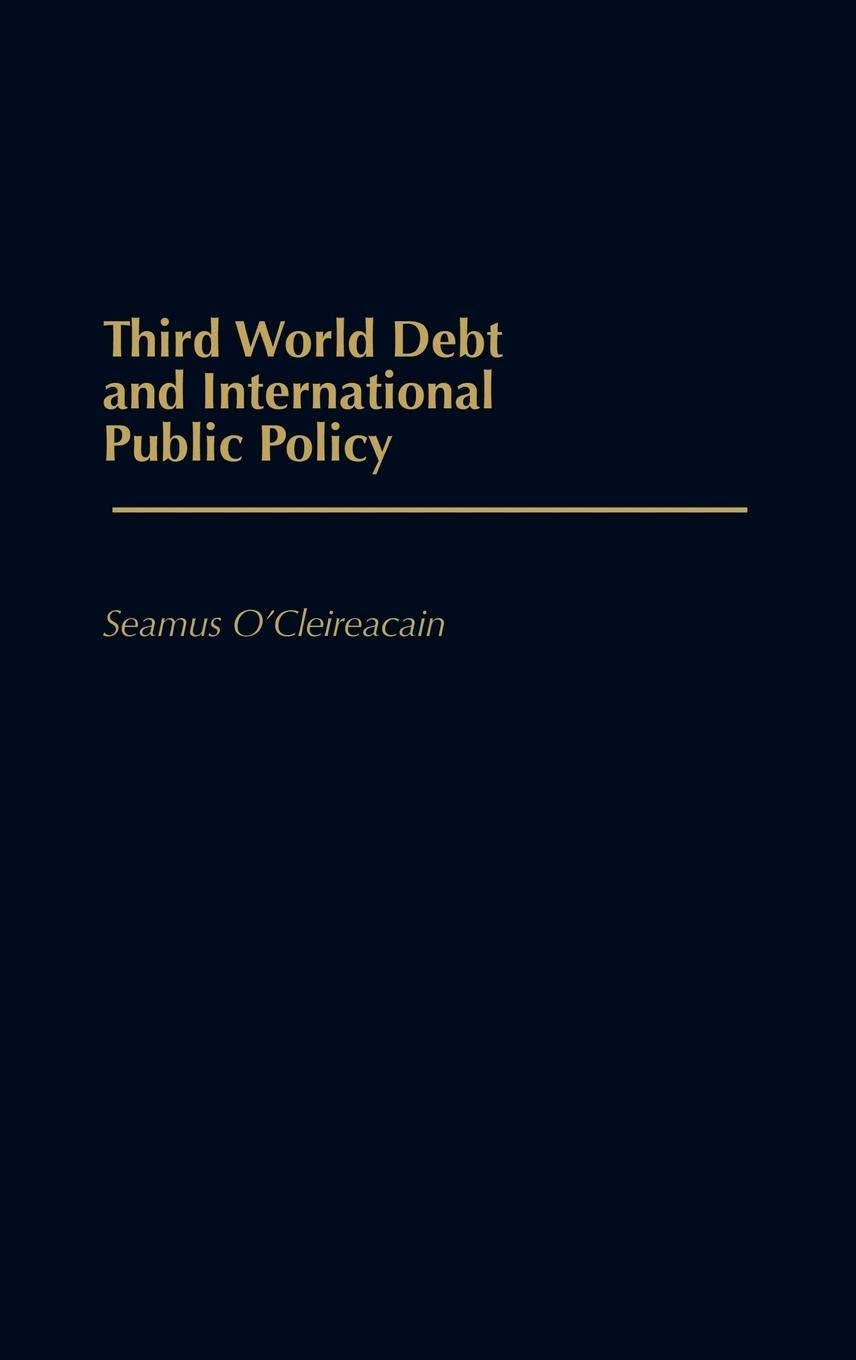
Title
Third World Debt And International Public Policy
Sold by Ergodebooks, an authorized reseller.
Returns accepted within 30 days | support@ergodebooks.com
Shipping Information
- Free Standard Shipping — United States only
- Processing Time: 3–5 business days
- Estimated Delivery: 6–10 business days after dispatch
- Double-boxed, fully insured & discreetly packaged
- Tracking number sent via email once dispatched
Returns & Refund
Returns accepted within 30 days of delivery.
Damaged or Defective Item
Free return shipping + replacement or full refund
Wrong Item Received
Free return shipping + replacement or full refund
Change of Mind
Return shipping at customer's expense · 25% restocking fee applies
Payment Option

This comprehensive study traces the evolution of the international debt crisis from its beginnings in the early 1970s to the present. The author uses a sample of 24 major borrower and heavily indebted countries to explore the economic forces within developing countries and the external conditions which led to the buildup of serious debt and their subsequent inability to carry it. He focuses attention on the changing roles of multilateral lending agencies such as the IMF and the World Bank and examines the role played by U.S., European, and Japanese commercial banks in creating conditions which led to unsustainable levels of debt among Third World borrowers. Finally, O'Cleireacain details the changing attitude of the U.S., from the early approaches of the Reagan administration through Brady Plan initiatives of the Bush administration. Scholars in development economics and international finance will find O'Cleireacain's work an important contribution to current debates over the causes of and policy responses to the mounting Third World debt crisis.In his discussion on the role of multilateral lending agencies, O'Cleireacain analyzes the lending policies of the IMF, the changing nature of IMF conditionality, and the relations between debtor countries and the IMF. By examining the appropriate role of private sector capital flowswhich to some extent compete with lending flows available from the IMF and the World Bankthe author places the debt crisis in a wider international public policy context. He concludes that private lending by commercial banks is one of the fundamental causes of the crisis as borrowers have turned to them to avoid the watchdog role of the established multilateral lending agencies. Based on his extensive study of the sample countries, O'Cleireacain calls for the use of IMF and World Bankendorsed development strategies which require external financing but use exports to generate the foreign exchange to service foreign debt. An appendix listing U.S. Treasury and Federal Reserve support operations for debtor nations, a bibliography, and an index complete the volume.
⚠️ WARNING (California Proposition 65):
This product may contain chemicals known to the State of California to cause cancer, birth defects, or other reproductive harm.
For more information, please visit www.P65Warnings.ca.gov.