

Title
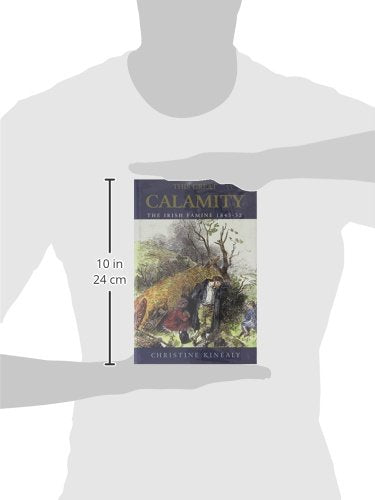
This Great Calamity: The Irish Famine 184552,Used
Sold by Ergodebooks, an authorized reseller.
Returns accepted within 30 days | support@ergodebooks.com
Shipping Information
- Free Standard Shipping — United States only
- Processing Time: 3–5 business days
- Estimated Delivery: 6–10 business days after dispatch
- Double-boxed, fully insured & discreetly packaged
- Tracking number sent via email once dispatched
Returns & Refund
Returns accepted within 30 days of delivery.
Damaged or Defective Item
Free return shipping + replacement or full refund
Wrong Item Received
Free return shipping + replacement or full refund
Change of Mind
Return shipping at customer's expense · 25% restocking fee applies
Payment Option

A new assessment of the Great Famine of 18451852the most significant event in modern Irish historythoroughly explores the complex economic, social, political, and cultural factors involved, and looks at the Famine's legacy in the modern world. IP.
⚠️ WARNING (California Proposition 65):
This product may contain chemicals known to the State of California to cause cancer, birth defects, or other reproductive harm.
For more information, please visit www.P65Warnings.ca.gov.
- Q: What is the page count of 'This Great Calamity'? A: This book has four hundred fifty pages. It provides a thorough exploration of the Irish Famine, making it a substantial read.
- Q: What are the dimensions of this book? A: The dimensions are six and a half inches in length, one and a half inches in width, and nine and a half inches in height. This size is typical for hardcover books.
- Q: What type of binding does this book have? A: This book features a hardcover binding. Hardcover books are known for their durability and are often preferred for collections.
- Q: Who is the author of 'This Great Calamity'? A: The author is Christine Kinealy. She is recognized for her expertise in Irish history and the Famine's impact.
- Q: What genre does this book belong to? A: This book falls under the historical nonfiction genre. It focuses on real events and their implications in history.
- Q: How do I read or use this book? A: You can read this book just like any other. It is suitable for anyone interested in history and the effects of major events.
- Q: Is this book suitable for children? A: No, this book is not specifically designed for children. Its content deals with complex historical themes that may be better understood by adults.
- Q: What age group is this book intended for? A: This book is intended for adults and older teens. It discusses mature themes related to the Irish Famine.
- Q: How should I store this book? A: Store this book in a cool, dry place, away from direct sunlight. This will help preserve its condition over time.
- Q: Can I clean the book if it gets dirty? A: Yes, gently wipe the cover with a dry cloth. Avoid using water or cleaning solutions, as they may damage the book.
- Q: What if the book arrives damaged? A: If the book arrives damaged, you can return it for a replacement or refund. Make sure to keep the original packaging for the return process.
- Q: Does this book have any warranty? A: No, this book does not come with a warranty. However, check the seller's return policy for any guarantees.
- Q: How does this book compare to other books on the Irish Famine? A: This book provides a comprehensive assessment, making it a strong choice for readers interested in detailed historical analysis. It stands out due to its thorough approach.
- Q: Is this book a good choice for history beginners? A: Yes, this book is a good choice for history beginners. It presents information in an accessible manner while covering important historical events.
- Q: What themes does 'This Great Calamity' explore? A: This book explores themes of economic hardship, social change, and cultural impact during the Irish Famine. These themes are relevant to understanding modern Ireland.
- Q: Are there any illustrations or maps in the book? A: No, this book does not contain illustrations or maps. It focuses on textual analysis and historical data.