
Title
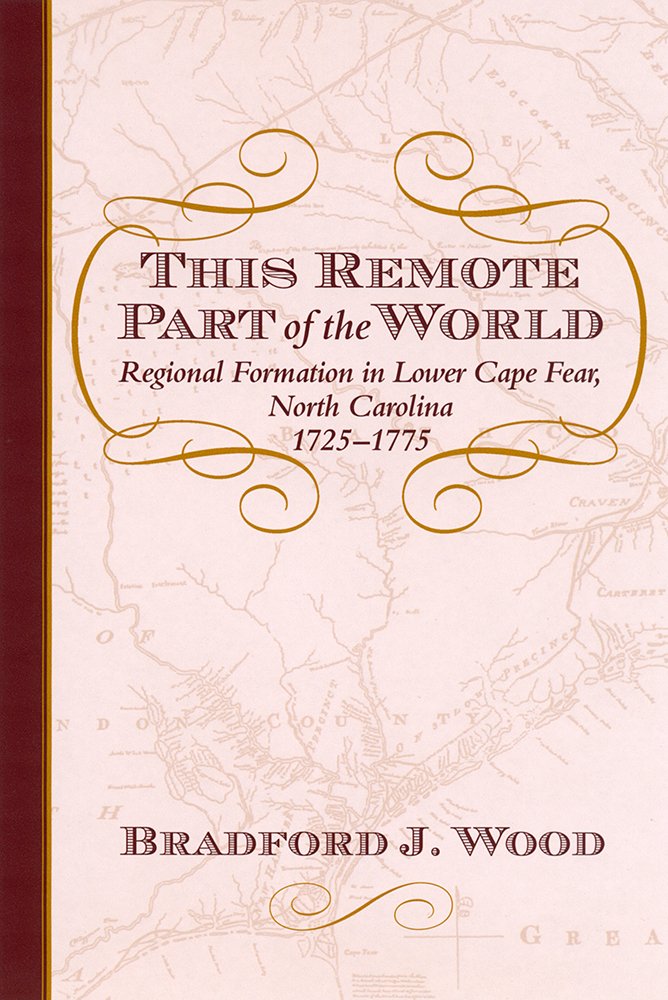
This Remote Part of the World: Regional Formation in Lower Cape Fear, North Carolina, 17251775 (The Carolina Lowcountry and the,Used
Sold by Ergodebooks, an authorized reseller.
Returns accepted within 30 days | support@ergodebooks.com
Shipping Information
- Free Standard Shipping — United States only
- Processing Time: 3–5 business days
- Estimated Delivery: 6–10 business days after dispatch
- Double-boxed, fully insured & discreetly packaged
- Tracking number sent via email once dispatched
Returns & Refund
Returns accepted within 30 days of delivery.
Damaged or Defective Item
Free return shipping + replacement or full refund
Wrong Item Received
Free return shipping + replacement or full refund
Change of Mind
Return shipping at customer's expense · 25% restocking fee applies
Payment Option

A reassessment of the significance of Colonial North Carolina's southern coastBetween 1700 and 1775 no colony in British America experienced more impressive growth than North Carolina, and no region within the colony developed as rapidly as the Lower Cape Fear. Totally uninhabited by Europeans in 1700, this isolated corner of North Carolina's southern coast is particularly noteworthy for its relatively late colonization and its rapid rise to economic prominence. First settled in 1725, the region grew to be the most prosperous in North Carolina by 1775. In his study of this eighteenthcentury settlement, Bradford J. Wood explores frontier development in a region surrounded by moreestablished communities. Challenging many commonly held beliefs, he presents the Lower Cape Fear as a prime example for understanding North Carolinaand the entirety of colonial Americaas a patchwork of regional cultures.Employing social history tools used in studies of New England and Chesapeake but seldom applied to colonies further south, Wood examines probate, legal, real estate, and tax records to recreate the lives of 5,000 Cape Fear residents during the era 1725 to 1775. Rarely have such methods of intensive archival research, collective biography, and computerdriven sampling been applied to the writing of Carolina history, and Wood's approach makes for a pathbreaking application in a markedly understudied region.Wood diverges from previous historiography by arguing that the Lower Cape Fear should be considered an entity separate and distinct from the rest of the Carolina coastal plain. While he links North and South Carolinians by family ties, economic enterprise, and cultural aspirations, he underscores the differences between the regions, including the Lower Cape Fear's commercial dependence on forest industries rather than rice culture. Wood ties these findings to broader processes of regional development and to the forces that shaped life for settlers in eighteenthcentury America.
⚠️ WARNING (California Proposition 65):
This product may contain chemicals known to the State of California to cause cancer, birth defects, or other reproductive harm.
For more information, please visit www.P65Warnings.ca.gov.