
Title
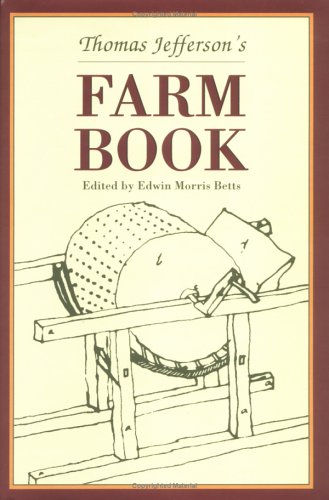
Thomas Jefferson's Farm Book,Used
Sold by Ergodebooks, an authorized reseller.
Returns accepted within 30 days | support@ergodebooks.com
Shipping Information
- Free Standard Shipping — United States only
- Processing Time: 1–3 business days
- Estimated Delivery: 3–5 business days after dispatch
- Double-boxed, fully insured & discreetly packaged
- Tracking number sent via email once dispatched
- Orders over $250 require signature upon delivery. Taxes calculated at checkout.
Returns & Refund
Returns accepted within 30 days of delivery.
Damaged or Defective Item
Free return shipping + replacement or full refund
Wrong Item Received
Free return shipping + replacement or full refund
Change of Mind
Return shipping at customer's expense · 25% restocking fee applies
Payment Option

"I am going to Virginia," Jefferson wrote late in 1793. "I am then to be liberated from the hated occupations of politics, and to remain in the bosom of my family, my farm, and my books." Although Jefferson's liberation from public life was to prove temporary, in 1794 he did enjoy and extended interlude from political service. He set himself to applying the results of a lifetime of studying and experimenting with agricultural theories on his own farms. The letters, notes, and drawings that Jefferson left to posterity record his contributions to scientific agriculture.The heart of these records is the Farm Book, a journal of plantation management that Jefferson maintained from 1774 until just before his death in 1826. The Farm Book, reproduced here in facsimile, is a wideranging depiction of the agricultural and industrial activities on Jefferson's plantations, primarily Monticello and Poplar Forest. In Thomas Jefferson's Farm Book, the late Edwin Morris Betts, professor of biology at the University of Virginia, embellishes this agricultural journal with illuminating commentary and relevant extracts selected from Jefferson's correspondence and other memorandum books. Organized topically, the annotations and extracts paint a uniquely complete portrait of plantation life and activity.Jefferson's records reveal an experimental farm, implementing such innovations as horizontal plowing, a croprotation plan, and Jefferson's own revolutionary moldboard plow. In addition, the Farm Book is a window to slave life, containing Jefferson's notes regarding the rations his overseer distributed, the daily tasks required by particular slaves, and the number of yards he purchased for slaves' clothing. The book also portrays the industries pursued by enslaved and free workmen, including the Mulberry Row nailery, joinery, blacksmith's shop, and spinning and weaving house.Wideranging and minutely detailed, Thomas Jefferson's Farm Book provides the most complete record of plantation activity in early America, casting light on the life of the Monticello plantation, its owner, and its inhabitants, both free and enslaved.
⚠️ WARNING (California Proposition 65):
This product may contain chemicals known to the State of California to cause cancer, birth defects, or other reproductive harm.
For more information, please visit www.P65Warnings.ca.gov.