If you have any questions, you are always welcome to contact us. We'll get back to you as soon as possible, withing 24 hours on weekdays.
Customer service
All questions about your order, return and delivery must be sent to our customer service team by e-mail at yourstore@yourdomain.com
Sale & Press
If you are interested in selling our products, need more information about our brand or wish to make a collaboration, please contact us at press@yourdomain.com
Help
If you have any questions, you are always welcome to contact us. We'll get back to you as soon as possible, withing 24 hours on weekdays.
Customer service
All questions about your order, return and delivery must be sent to our customer service team by e-mail at yourstore@yourdomain.com
Sale & Press
If you are interested in selling our products, need more information about our brand or wish to make a collaboration, please contact us at press@yourdomain.com
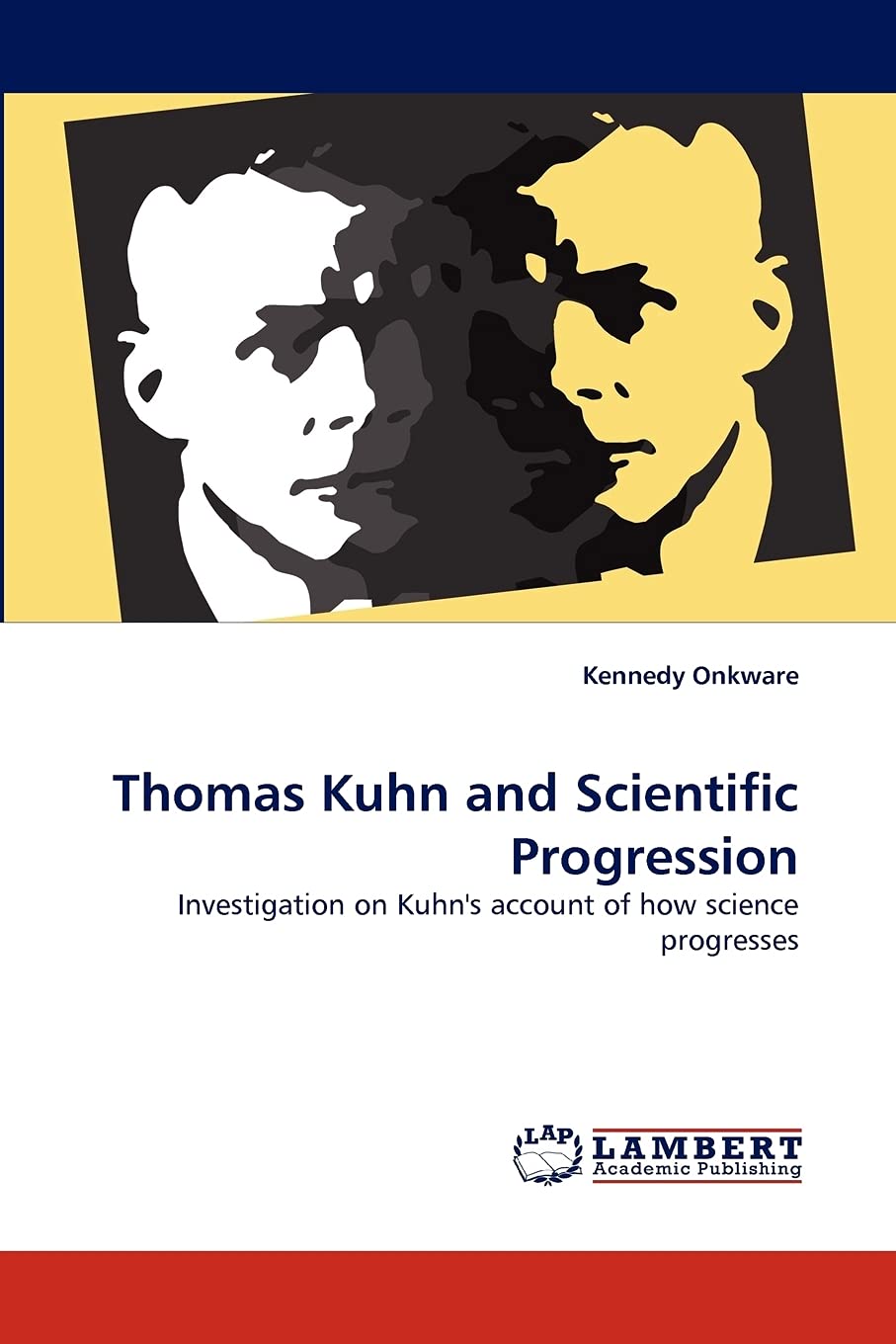
In his work, The Structure of Scientific Revolutions (1962), Kuhn attempts at a correct empirical description of science as it is practiced. In the said work, Kuhn argues that science does not progress cumulatively but by what he calls "Scientific revolutions." Many critics and commentators have found Kuhn?s account of science implausible. Amongst his critics, we can mention Karl Popper, Allan Musgrave, Larry Laudan and Imre Lakatos. All these critics are in agreement that Kuhn?s account of science may not only be relativistic but it may also lead to scientific irrationalism. Kuhn defends his position in his later work, The Essential Tension (1977). This work is aimed at showing that Kuhn defends what cannot be found in his work, The Structure of Scientific Revolutions (1962). In this respect, we show that Kuhn?s account of science is scientifically irrational and that, contrary to Kuhn?s claim that science progresses by revolutions, science progresses cumulatively. This work targets scholars of philosophy and the social sciences at large.
⚠️ WARNING (California Proposition 65):
This product may contain chemicals known to the State of California to cause cancer,
birth defects, or other reproductive harm.
For MAP (Minimum Advertised Price) violations and Intellectual Property (IP) or Trademark concerns, please contact:
support@ergodebooks.com
⚠️ California Proposition 65 Warning: Some products sold on this website may expose you to chemicals known to the State of California to cause cancer, birth defects, or other reproductive harm. For more information, visit www.P65Warnings.ca.gov.