
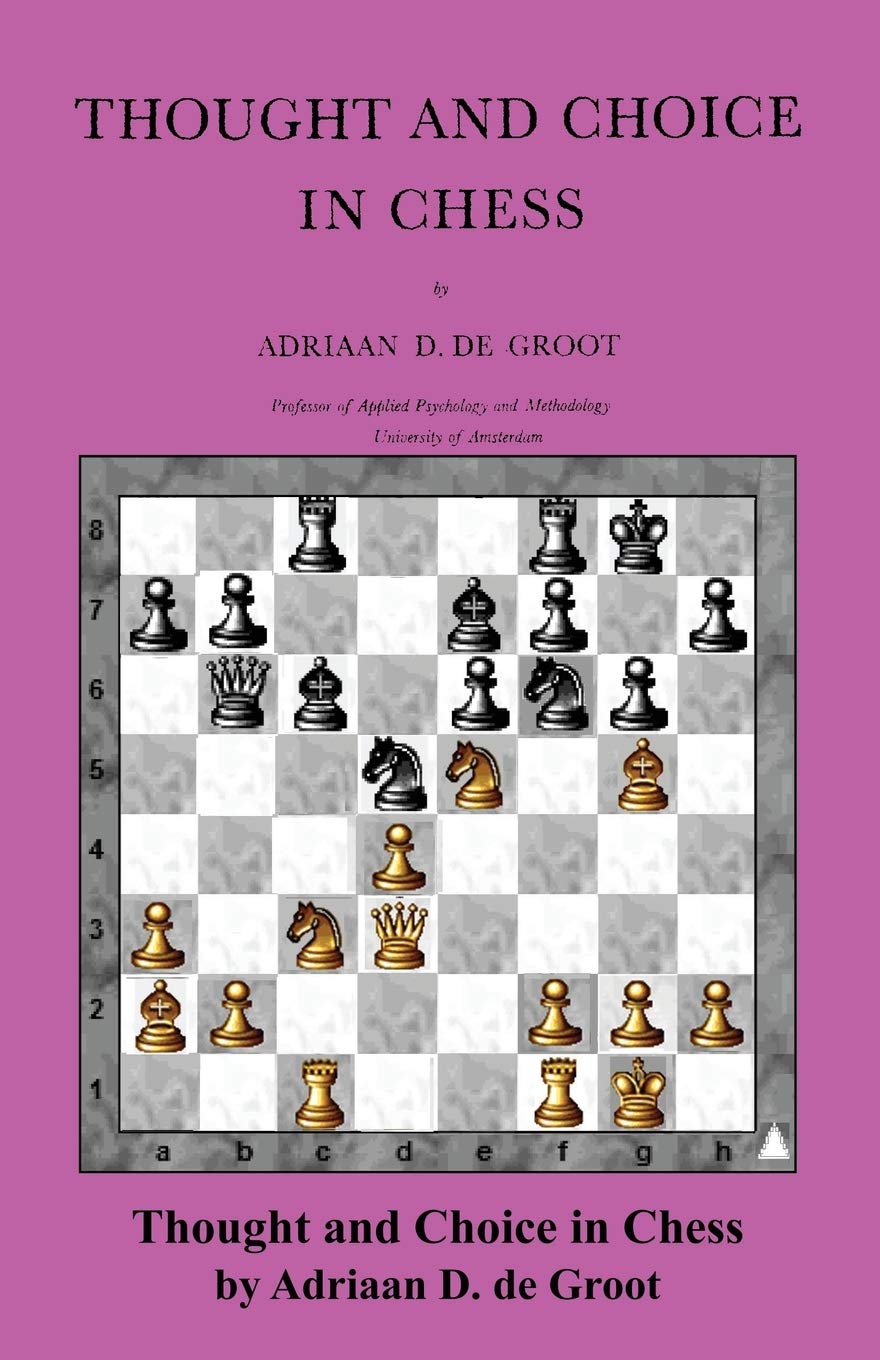
Title
Thought And Choice In Chess
Sold by Ergodebooks, an authorized reseller.
Returns accepted within 30 days | support@ergodebooks.com
Shipping Information
- Free Standard Shipping — United States only
- Processing Time: 3–5 business days
- Estimated Delivery: 6–10 business days after dispatch
- Double-boxed, fully insured & discreetly packaged
- Tracking number sent via email once dispatched
Returns & Refund
Returns accepted within 30 days of delivery.
Damaged or Defective Item
Free return shipping + replacement or full refund
Wrong Item Received
Free return shipping + replacement or full refund
Change of Mind
Return shipping at customer's expense · 25% restocking fee applies
Payment Option

What Does A Chess Master Think When He Prepares His Next Move? How Are His Thoughts Organized? Which Methods And Strategies Does He Use By Solving His Problem Of Choice? To Answer These Questions, The Author Did A Study, To Which Famous Chess Masters Participated (Alekhine, Max Euwe, Reuben Fine, Tartakower And Flohr). This Book Is Still Useful For Everybody Who Studies Cognition And Artificial Intelligence. The Studies Involve Participants Of All Chess Backgrounds, From Amateurs To Masters. They Investigate The Cognitive Requirements And The Thought Processes Involved In Moving A Chess Piece. The Participants Were Usually Required To Solve A Given Chess Problem Correctly Under The Supervision Of An Experimenter And Represent Their Thoughtprocesses Vocally So That They Could Be Recorded. De Groot Found That Much Of What Is Important In Choosing A Move Occurs During The First Few Seconds Of Exposure To A New Position. Four Stages In The Task Of Choosing The Next Move Were Noted. The First Stage Was The 'Orientation Phase', In Which The Subject Assessed The Situation And Determined A General Idea Of What To Do Next. The Second Stage, The 'Exploration Phase' Was Manifested By Looking At Some Branches Of The Game Tree. The Third Stage, Or 'Investigation Phase' Resulted In The Subject Choosing A Probable Best Move. Finally, In The Fourth Stage, The 'Proof Phase', Saw The Subject Confirming With Him/Herself That The Results Of The Investigation Were Valid. De Groot Concurred With Alfred Binet That Visual Memory And Visual Perception Are Important And That Problemsolving Ability Is Of Paramount Importance. Memory Is Particularly Important, According To De Groot (1965), In That There Are No 'New' Moves In Chess And So Those From Personal Experience Or From The Experience Of Others Can Be Committed To Memory.
⚠️ WARNING (California Proposition 65):
This product may contain chemicals known to the State of California to cause cancer, birth defects, or other reproductive harm.
For more information, please visit www.P65Warnings.ca.gov.
- Q: What is the page count of 'Thought and Choice in Chess'? A: This book contains four hundred eighty-six pages. It offers an in-depth look at chess cognition and strategies.
- Q: What are the dimensions of this book? A: The book measures five point five one inches in length, one point one inches in width, and eight point five inches in height.
- Q: What type of binding does this book have? A: It is a paperback binding. This makes it lightweight and easy to handle for casual reading.
- Q: How can I apply the strategies discussed in the book? A: You can apply these strategies by practicing chess regularly. The book explains thought processes used by chess masters to enhance your decision-making.
- Q: Is this book suitable for beginners? A: Yes, the book is suitable for beginners. It covers fundamental cognitive strategies that can benefit players of all levels.
- Q: How should I read and study this book effectively? A: You should take notes while reading and practice the chess strategies discussed. Engaging with the material will enhance your understanding.
- Q: What is the best way to keep this book in good condition? A: Store the book in a dry place away from direct sunlight. This will help preserve the pages and cover.
- Q: Can I clean the book if it gets dirty? A: Yes, you can gently wipe the cover with a soft, dry cloth. Avoid using water or cleaning solutions on the pages.
- Q: How should I store this book to prevent damage? A: Store the book upright on a shelf or in a bookcase. This will prevent bending and ensure it remains in good condition.
- Q: Is 'Thought and Choice in Chess' appropriate for children? A: Yes, it is appropriate for children interested in chess. The cognitive insights can help young players develop their skills.
- Q: How does this book compare to other chess strategy books? A: Unlike many strategy books, this one focuses on cognitive processes behind decision-making, making it unique in the chess literature.
- Q: What audience is this book best suited for? A: This book is best suited for chess enthusiasts and players ranging from amateurs to advanced masters seeking to enhance their cognitive skills.
- Q: What if I receive a damaged book? A: If you receive a damaged book, contact the seller immediately for a return or exchange. It is important to address such issues promptly.
- Q: What is the return policy for this book? A: The return policy varies by seller, but generally, you can return the book within a specified period if it is in original condition.
- Q: How can I reach customer support if I have questions? A: You can contact customer support through the seller's website or platform where you purchased the book for assistance.
- Q: Is there a warranty for this book? A: Typically, books do not come with a warranty. However, check the seller's terms for any specific guarantees or policies.