
Title
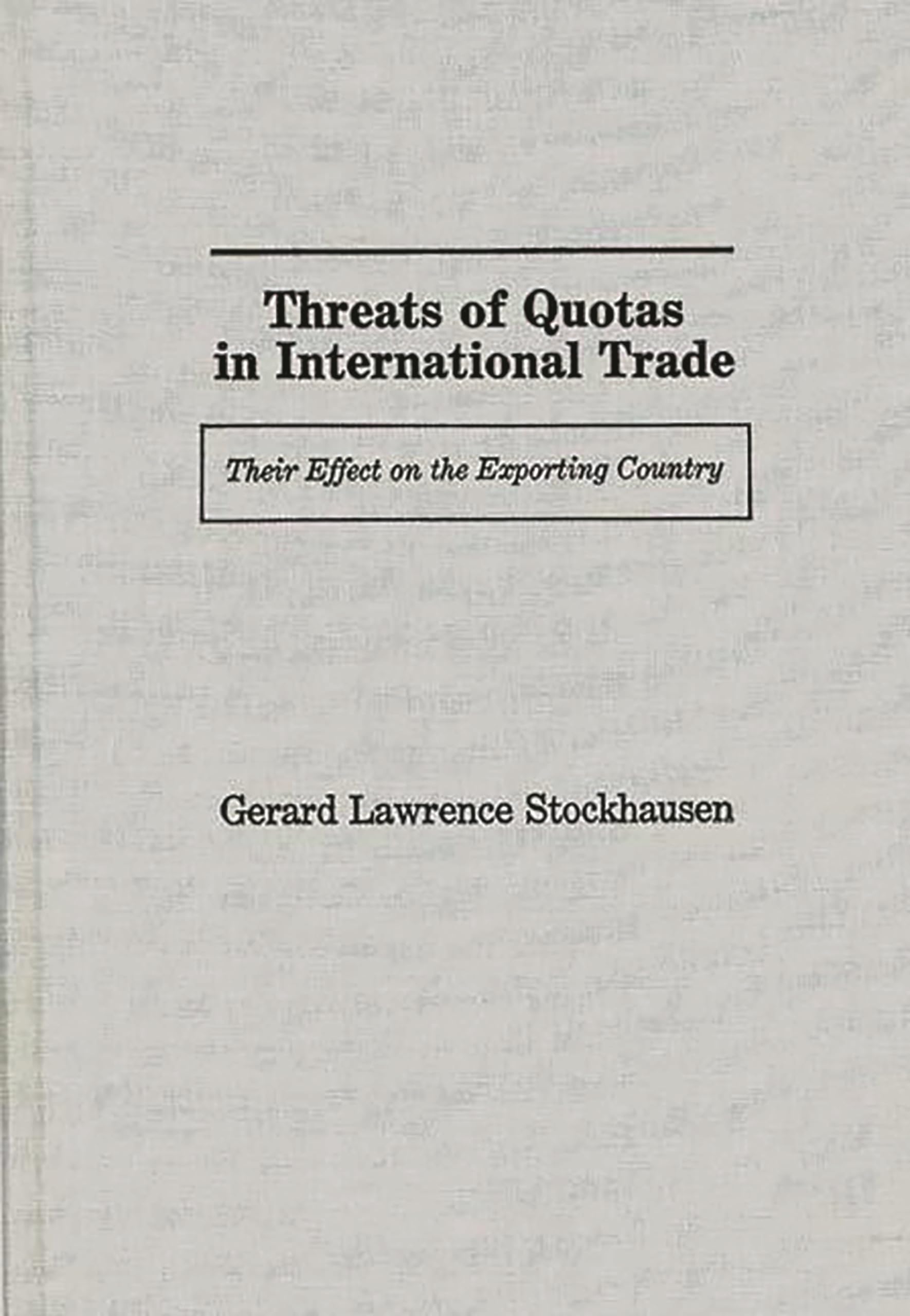
Threats Of Quotas In International Trade: Their Effect On The Exporting Country (Contributions In Economics And Economic History
Sold by Ergodebooks, an authorized reseller.
Returns accepted within 30 days | support@ergodebooks.com
Shipping Information
- Free Standard Shipping — United States only
- Processing Time: 3–5 business days
- Estimated Delivery: 6–10 business days after dispatch
- Double-boxed, fully insured & discreetly packaged
- Tracking number sent via email once dispatched
Returns & Refund
Returns accepted within 30 days of delivery.
Damaged or Defective Item
Free return shipping + replacement or full refund
Wrong Item Received
Free return shipping + replacement or full refund
Change of Mind
Return shipping at customer's expense · 25% restocking fee applies
Payment Option

Product Description Trade disruption and industrial organization are the subject of this penetrating look at the effects of the new protectionism in international trade. This volume provides five case studies of threats and protection in particular industries as a basis for discussion of the political economy of quota threats. Stockhausen analyzes the effects of quota threats on countries with competition in the export industry, on countries with monopoly in the export industry, and on those with duopoly or oligopoly in the export industry. Consideration is given both to largeand smallcountry cases under varying cost structures. The effects of relaxing some of the assumptions in the model, especially allowing for consumers and suppliers from third world countries, are also discussed. Review ?Stockhausen's book tackles a timely and complex issue the use of quotas or threats of quotas to extract concessions and other benefits from trading partners. The author presents an excellent review of recent experience with quotas, concentrating on five cases; textiles, steel, color television, autos, and footwear. Most of the book is devoted to technical models of exportingcountry response to threats of quotas under a variety of scenarios. The models are not always presented in a clear and straightforward fashion and are probably not accessible to undergraduates. The case studies at the beginning and the policy conclusions derived from the models, however, make this book a worthwhile acquisition for solid upperdivision and graduate collections in trade policy.?Choice'Stockhausen's book tackles a timely and complex issue the use of quotas or threats of quotas to extract concessions and other benefits from trading partners. The author presents an excellent review of recent experience with quotas, concentrating on five cases; textiles, steel, color television, autos, and footwear. Most of the book is devoted to technical models of exportingcountry response to threats of quotas under a variety of scenarios. The models are not always presented in a clear and straightforward fashion and are probably not accessible to undergraduates. The case studies at the beginning and the policy conclusions derived from the models, however, make this book a worthwhile acquisition for solid upperdivision and graduate collections in trade policy.'Choice About the Author GERARD LAWRENCE STOCKHAUSEN is Professor of Economics at Creighton University in Omaha, Nebraska.
⚠️ WARNING (California Proposition 65):
This product may contain chemicals known to the State of California to cause cancer, birth defects, or other reproductive harm.
For more information, please visit www.P65Warnings.ca.gov.