If you have any questions, you are always welcome to contact us. We'll get back to you as soon as possible, withing 24 hours on weekdays.
Customer service
All questions about your order, return and delivery must be sent to our customer service team by e-mail at yourstore@yourdomain.com
Sale & Press
If you are interested in selling our products, need more information about our brand or wish to make a collaboration, please contact us at press@yourdomain.com
Help
If you have any questions, you are always welcome to contact us. We'll get back to you as soon as possible, withing 24 hours on weekdays.
Customer service
All questions about your order, return and delivery must be sent to our customer service team by e-mail at yourstore@yourdomain.com
Sale & Press
If you are interested in selling our products, need more information about our brand or wish to make a collaboration, please contact us at press@yourdomain.com
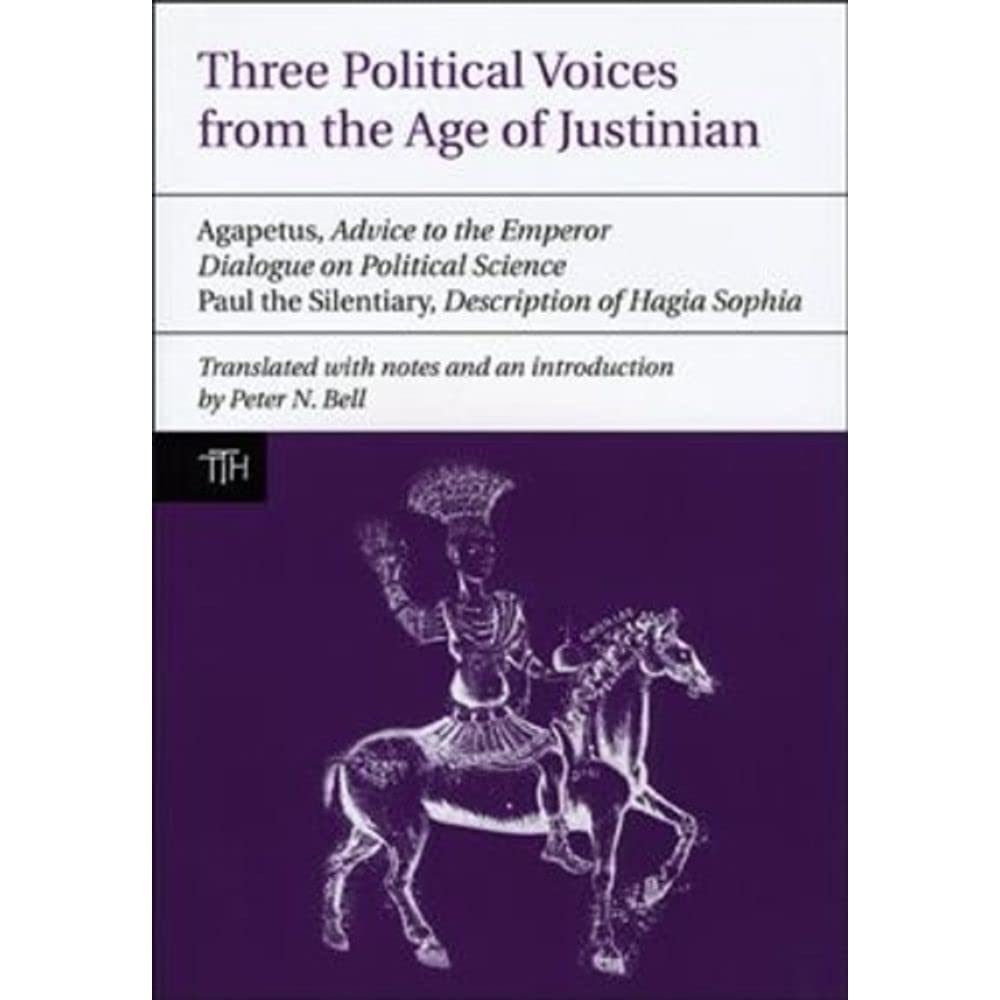
This onevolume translation, with commentary and introduction brings together three important works. All three texts cast great, if generally neglected light on politics and ideology in early Byzantium. Agapetus wrote, c. 52730CE, from a position sympathetic to Justinian, when he had still to consolidate his authority. He sets out what an emperor must do to acquire legitimacy, in terms of government's being the imitation of God. Read in context, his work is much more than a list of pious commonplaces. The Dialogue, written anonymously towards the end the same reign, comprises fragments from Books 45 of a philosophically sophisticated (lost) longer work, setting out requirements for the ideal polity, based on a similar concept of imperial rule, with extensive comment on matters of current political salience but from an implicitly hostile standpoint. Not only does the text reflect the nature of Neoplatonic political philosophy but it also penetrates with its ideas deep into the inner realities of the time, into the political problems of Constantinople during the first half of the sixth century. The third text was written by Paul the Silentiary to mark the rededication of the basilica Hagia Sophia, built thirty years earlier under the orders of Emperor Justinian I. Together the translations provide an important insight into the early Byzantine period.
⚠️ WARNING (California Proposition 65):
This product may contain chemicals known to the State of California to cause cancer,
birth defects, or other reproductive harm.
For MAP (Minimum Advertised Price) violations and Intellectual Property (IP) or Trademark concerns, please contact:
support@ergodebooks.com
⚠️ California Proposition 65 Warning: Some products sold on this website may expose you to chemicals known to the State of California to cause cancer, birth defects, or other reproductive harm. For more information, visit www.P65Warnings.ca.gov.